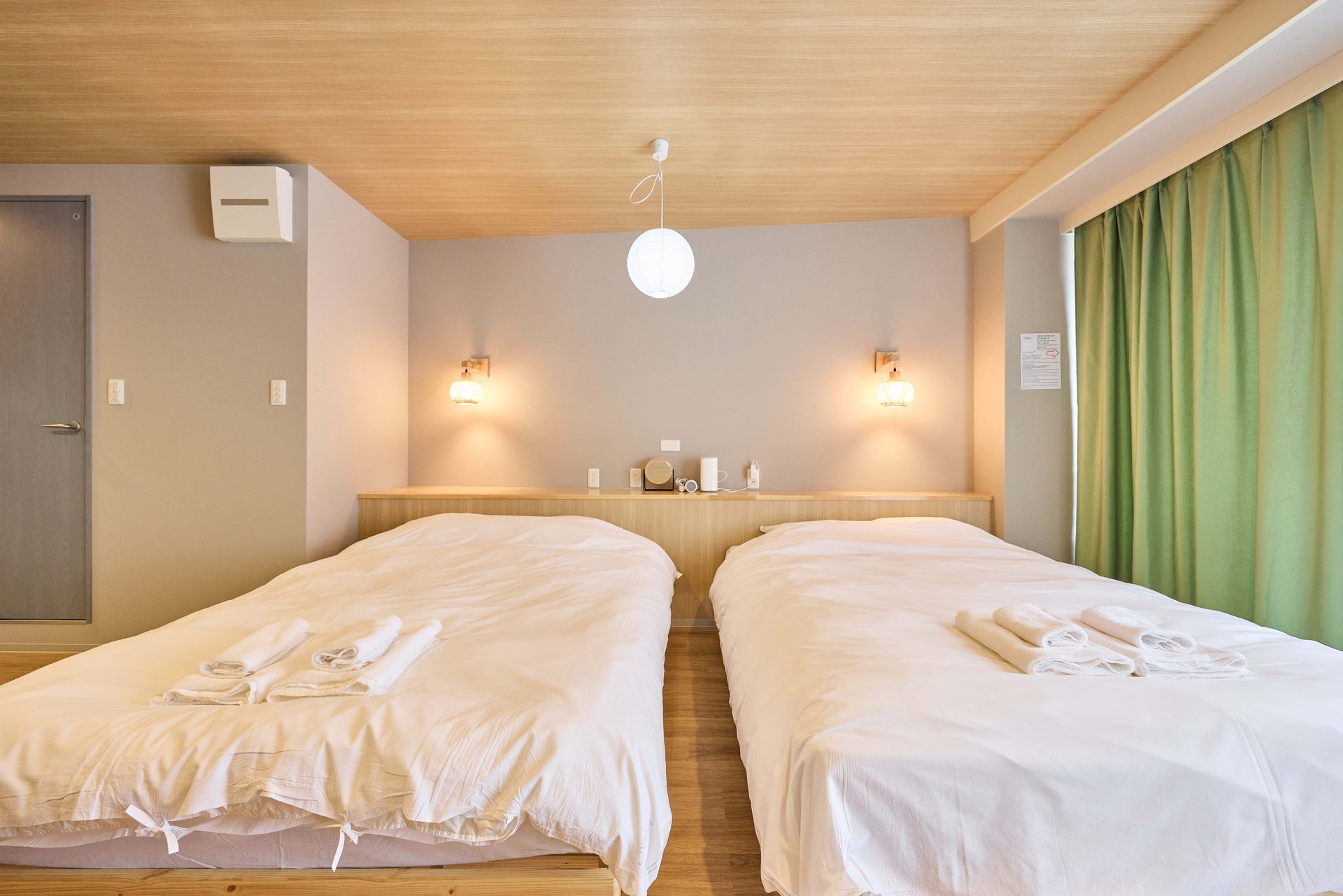
The real bottleneck in group accommodation isn't the beds
When booking, everyone thinks about "how many people, how many beds, is that enough to sleep." But once you've actually moved in, the beds are never the problem.
Bottleneck one: the morning bathroom. This is the biggest hidden killer on a group trip. No matter the headcount, if there aren't enough bathrooms, mornings back up — and they back up during the least flexible window of the day, the half hour everyone wants to leave on time. One person taking a little longer pushes the whole group's schedule back.
Bottleneck two: nowhere for everyone to gather. A hotel room is designed for strangers, not a group of friends. Wanting to open a bottle in the evening, or eat a late snack while planning tomorrow, the only option is squeezing into one room — someone on the bed, someone on the floor, someone leaning against the wall. It's fun the first night; by the third, nobody wants to bother anymore.
Bottleneck three: the itinerary gets tied together whether you like it or not. Book different floors or different hotels and coordinating a meetup takes effort; book the same room and the early risers wake the late sleepers, or the other way around. Neither is ideal.
Once you see these three clearly, the choice becomes clear too: group accommodation needs to solve bathroom count, shared space, and separating schedules — not just fill up enough beds.
How renting the whole house solves these three bottlenecks
Bathrooms: what matters is "how many," not "whether there is one"
When looking at a listing, don't stop at the words "has a bathroom" — dig further for the number of bathrooms and how they're distributed. A listing with only one or two bathrooms shared across the whole house means a queue as soon as the group grows.
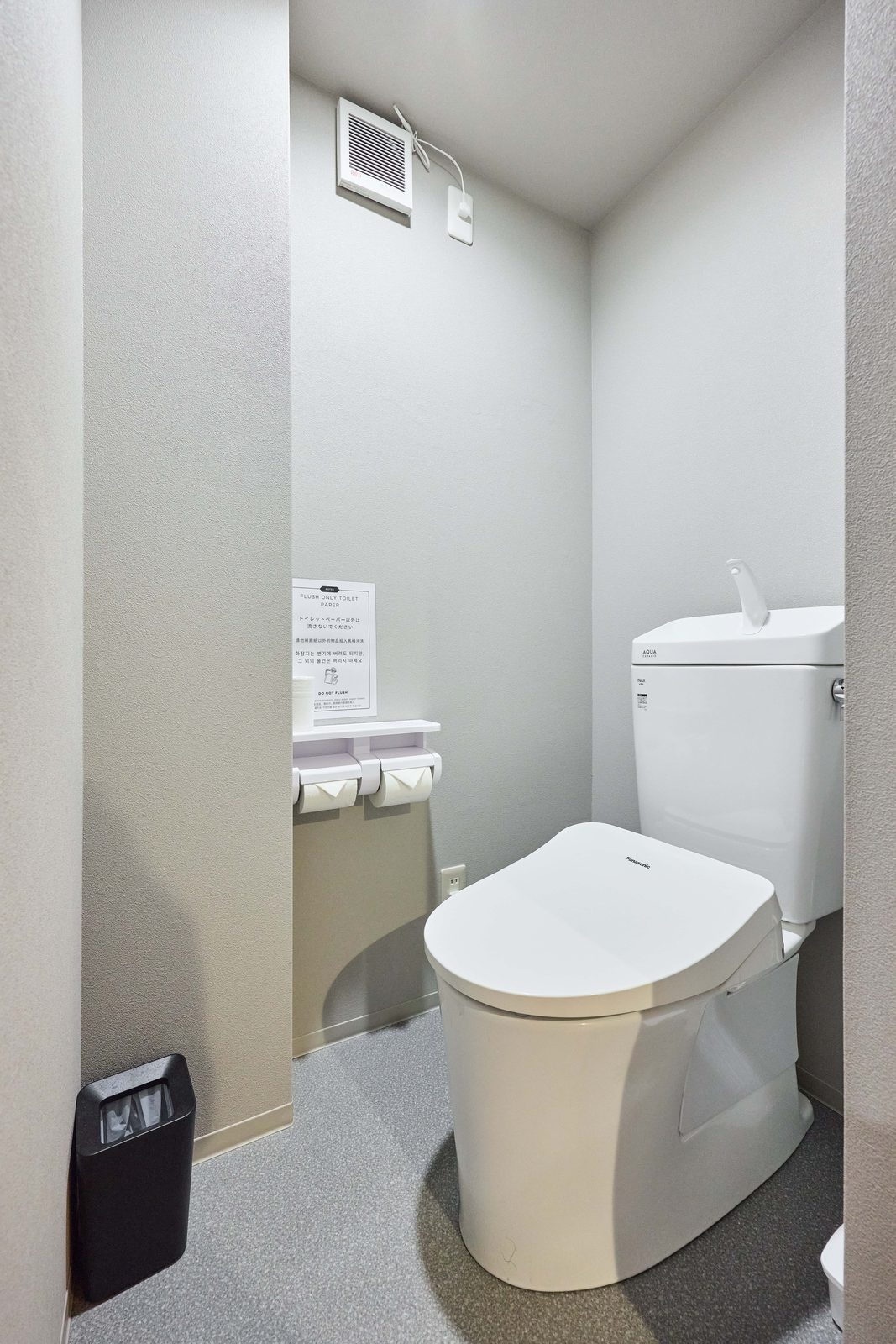
Shinsai Wings gives every room type its own private bathroom, and all of them include a bathtub. In practice, that means people on different room types wash up in the morning without queuing each other; coming back after a full day out, anyone who wants a bath doesn't have to wait for someone else to finish. For a group, that's far more useful than one extra bed.
Shared space: this is really what renting the whole house buys you
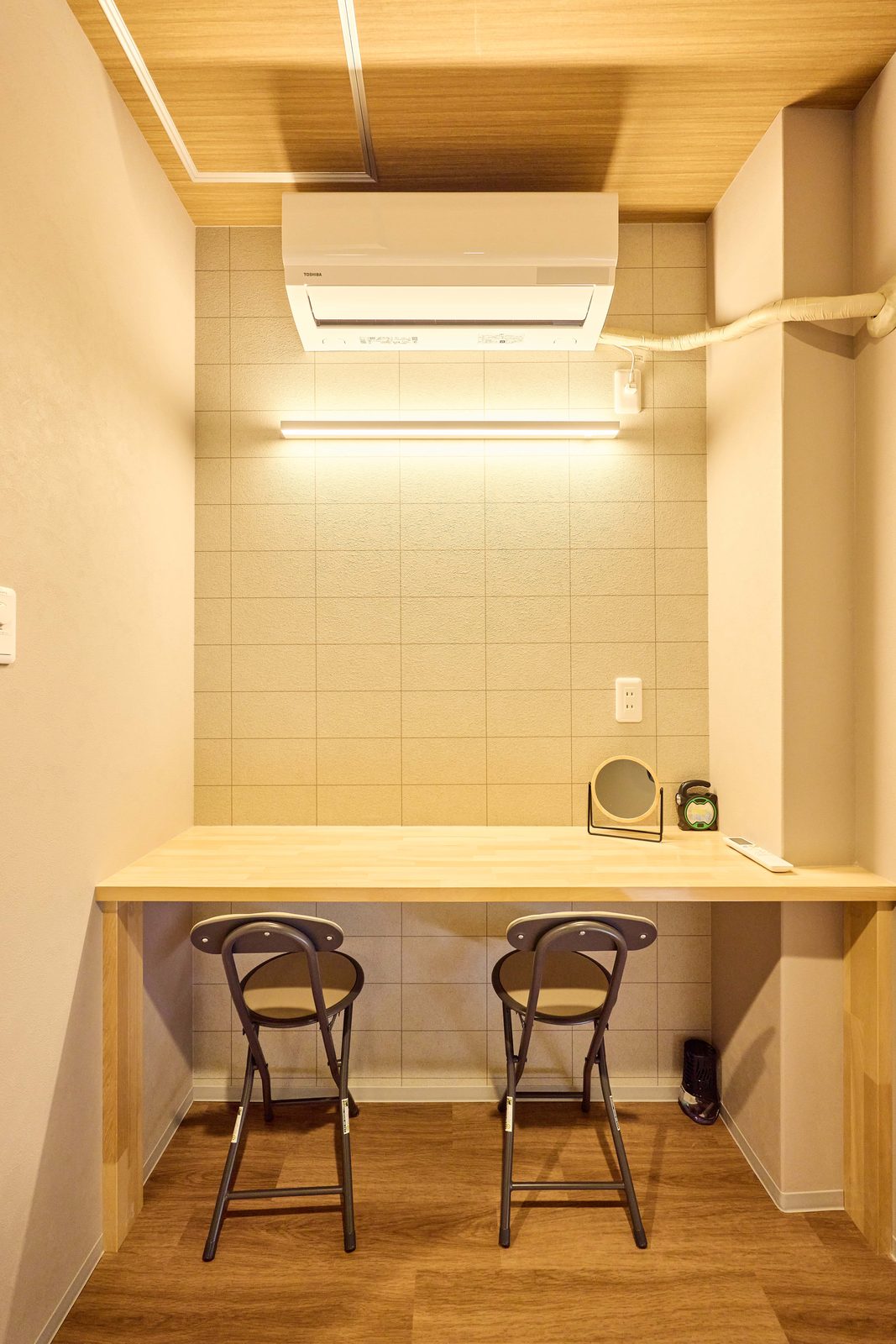
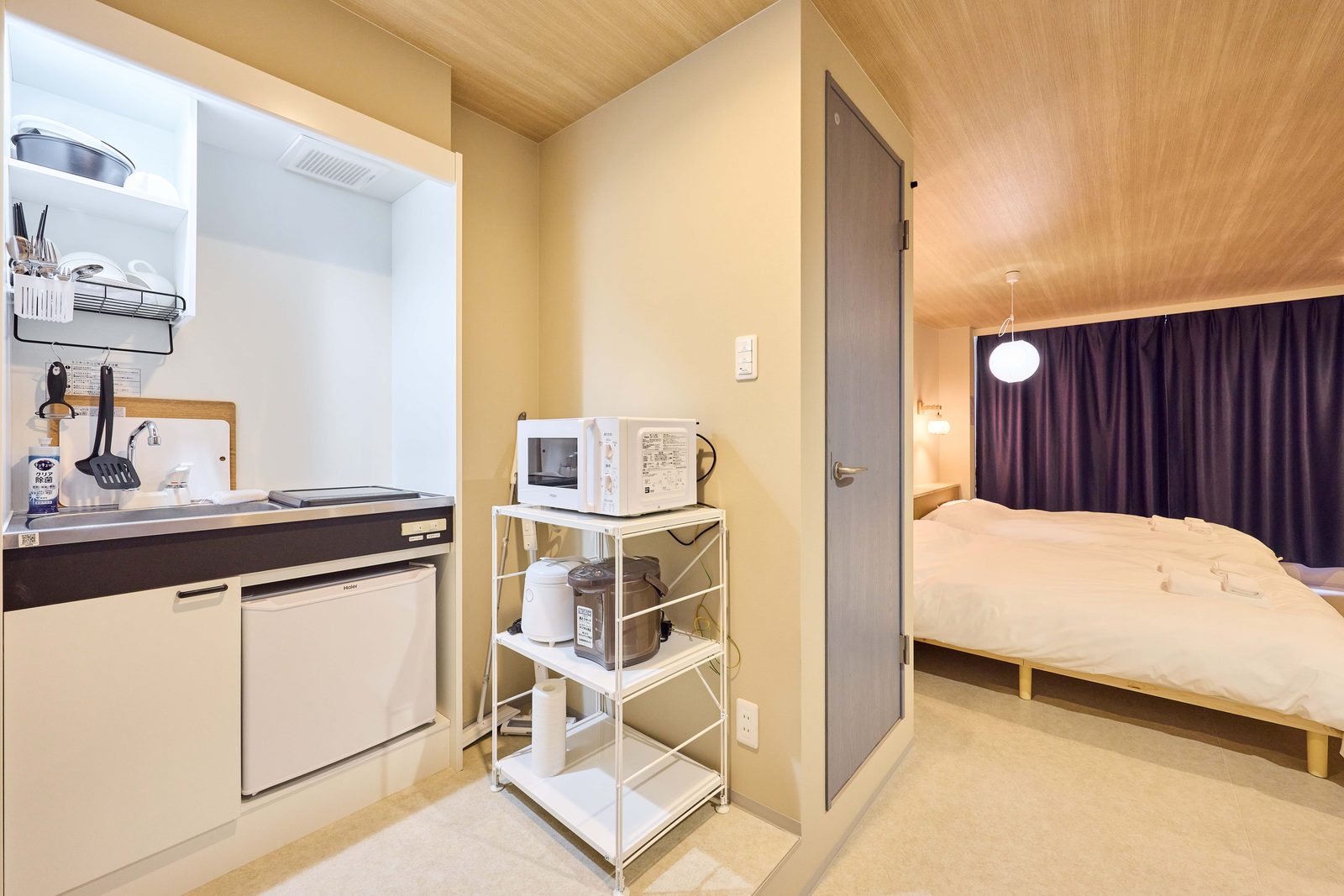
The real value of renting the whole house isn't the bedroom — it's everything beyond it: the living room, the dining table, the balcony. These are where "traveling together" actually happens on a group trip. Shinsai Wings has an independent kitchen and its own dining area, plus a large balcony on Room B, C and D — the group can gather around the table to eat, or head to the balcony for some air and keep talking, instead of crowding around someone's bed.
Separating schedules: split by room type, not by room
At Shinsai Wings, each of the four room types is its own independent unit: Room A, B, C and D each occupy their own area, with Room D being a loft with a multi-level layout. This structure makes "people on different schedules sleeping apart" happen naturally — it's not squeezing people into different rooms, it's giving each group an entire independent room type of its own.
Shinsai Wings — Verified Facts
- A whole-house rental, the entire building is just your group, a rare steel-frame structure
- Four independent room-type units in total (Room A, B, C and D; Room D is a loft with a multi-level layout)
- Every room type has a private bathroom, and all include a bathtub — no queuing in the morning
- Independent kitchen and independent dining area — the group can eat together
- Large balcony: comes with Room B, C and D; tatami bedroom: Room A and Room D only; newly renovated and currently operating
- Reaching Universal Studios Japan is 1 transfer at Nishikujo, about 18–22 minutes depending on the train
- Room B, C and D are certified under Osaka's special-zone minpaku rule and can operate year-round under a licensed management company
How should you split room types? Go by "schedule," not "seniority"
This is the advice we give group guests most often, and it's also the most counterintuitive.
Most people's instinct is to split by relationship: elders in one area, couples in another, single friends in another. But what really decides whether everyone sleeps well is bedtime and wake time. So a better split works like this:
- Group the early-to-bed, early-to-rise people into one room type. Usually elders and families with young kids. They want quiet by 9:30pm and wake naturally at 6am.
- Group the late-to-bed, late-to-rise people into another room type. People who want to talk into the night and sleep in the next day. This group is best placed in a room type further from everyone else.
- Give anyone with mobility issues the room type with the shortest access route. Assess this one ahead of time.
- Give a family with an infant or toddler its own room type. When a child cries at night, it doesn't disturb anyone else — the difference in parental stress this makes is huge, covered in full at Osaka Family Stay Guide.
If you're not sure how best to split your group, just tell the host your group's composition and rough schedule, and let them suggest a split — that's faster.
Room-matching playbook: check these four things first and you'll know who goes where
The section above covered the "split by schedule" logic; here's a more concrete angle: compare the hardware differences between Room A, B, C and D directly, and which group in your party fits which room is usually obvious right away.
| Room type | Tatami bedroom | Large balcony | Layout | Best fit |
|---|---|---|---|---|
| Room A | Yes | No | Single-level unit, easiest luggage access | Heavy luggage, elders or anyone with mobility issues, anyone who wants to sleep on tatami |
| Room B | No | Yes | Single-level unit | Anyone who wants a standard bed and values having a balcony to relax on |
| Room C | No | Yes | Single-level unit | Same as Room B — a standard bed and a balcony |
| Room D | Yes | Yes | Multi-level loft, with stairs inside the unit | Anyone who wants the most dramatic sense of space, doesn't mind stairs inside, and also wants tatami |
A few common matching patterns:
- Want to sleep on tatami once? Of the four room types, A and D have a tatami bedroom — put anyone who wants tatami into one of these two. The full rundown on tatami room types is at Osaka Tatami Room Stays.
- Heavy luggage, or elders and mobility-limited members? Of the four room types, Room A has the easiest luggage access — give it to this group first.
- Want to sit on the balcony in the evening? Large balcony: comes with Room B, C and D — put anyone who wants a balcony into one of these three.
- A larger group wanting one dramatic room type as the gathering hub? Room D is a multi-level loft with the most dramatic sense of space, well suited as the daytime gathering spot for the whole group before everyone splits off in the evening; the downside is stairs inside the unit, so it's not recommended for anyone with mobility issues.
- All four room types are fully independent units (each with its own bathroom, bathtub, kitchen and dining area), so however you split the group, everyone lives independently once back in their own room type, without disturbing each other — already covered in the "split by schedule" section above, not repeated here.
📌 This compares "what each room type has." The only confirmed capacity figure on this site is: the whole house holds up to 16 people; for individual room-type headcounts, tell the host your group size and composition and they'll arrange it based on the actual situation. For which room types have open dates, contact the official LINE directly or message "guide," and we'll reply based on actual availability.
Planning an Osaka group itinerary without the arguments
Once accommodation has solved the schedule problem, a few practical principles for the itinerary itself:
- Don't stick together all day, every day. Split the day into "together time" and "apart time." Splitting up in the afternoon and reuniting for dinner usually leaves everyone happier than staying tied together the whole time.
- Use the accommodation as the meeting point, not a sight. Meeting at a sight always means someone gets lost. Staying in the same area as the station makes it easy for everyone to make their own way back.
- Cook at least one meal yourselves. Eight people trying to sit at one table at a Japanese restaurant is a reservation most places can't accommodate. With an independent kitchen and dining area, that one meal often ends up the liveliest of the whole trip.
- Put USJ on the day with the most energy. And not the day before you fly home — see USJ Stay Guide.
- Agree on how to split the bill beforehand. Renting the whole house is one lump sum — settling how to divide it before the trip is much more pleasant than doing the math after you're home.
What does Taisho Ward's location offer a group?
Listings in the busiest part of the city center get hard to find room for a whole group once the headcount rises, and the price climbs too. Taisho Ward's advantage is that it's only a few stops from the action while being a quiet residential area itself — surrounded by rivers and canals, and known in the Kansai region as an Okinawan immigrant community, sometimes nicknamed "Little Okinawa."
A group coming back to a quiet street at night rests better than coming back to a still-buzzing part of town; and heading out during the day, JR Taisho Station sits on the Osaka Loop Line, connecting the whole city. Routes around the area are at Taisho Station Area Guide.
Three generations traveling to Osaka together — how many rooms do we need to book?
The point isn't filling up enough beds — it's bathroom count, shared space, and separating schedules. Shinsai Wings has four independent room-type units (Room A, B, C and D), each with its own private bathroom that includes a bathtub, so people on different room types wash up without queuing. In practice, the best approach is to split people into groups by schedule and give each group a room type, rather than counting how many beds you need. The only confirmed capacity figure is that the whole house holds up to 16 people; for which room types are available, contact the official LINE @040fyjwd directly and we'll reply based on actual availability.
Elders and kids run on very different schedules — how do we split up a whole-house rental?
Split by schedule, not by generation. Put the early-to-bed, early-to-rise group (usually elders and families with young kids) in one room type together, and the late-to-bed, late-to-rise group in another, ideally placed further from everyone else. Give anyone with mobility issues the room type with the shortest access route — of the four, Room A has the easiest luggage access, so prioritize it for that group; Room D is a loft with a multi-level layout that requires using stairs inside the unit, so it's not recommended for anyone with mobility issues. All four room types are fully independent units, each with its own bathroom, bathtub, kitchen and dining area, so once each group is back in its own room type, everyone lives independently without disturbing each other.
Want to confirm availability for your group, or want the host to suggest how to split room types? Tap "Free help booking your Osaka stay" at the bottom right to ask directly, official LINE: @040fyjwd, communicating in Chinese with no barrier.
Is your group staying together for a few nights, or is it just you staying a month or more?
Same building, same hardware, two ways to stay: a group renting the whole house (up to 16 people), or one person on a monthly long stay (from one month). Click through for the facts table, room-assignment logic, and how to ask about availability.
Still deciding? Add us on Official LINE @040fyjwd and tell us your move-in month and length of stay.