The Basics of Taisho Station: One Station, Two Lines
The key thing about Taisho Station is that it's a transfer point, served by two rail lines of completely different character:
- JR Osaka Loop Line - the backbone route that loops through Osaka's main districts, and also the line toward Universal Studios Japan.
- Osaka Metro Nagahori Tsurumi-ryokuchi Line - the subway line toward downtown Shinsaibashi, with Taisho Station as one of its two terminus stations.
What this combination means is: the route toward "the entertainment and shopping downtown" and the route toward "Universal Studios Japan and the Loop Line's other stations" are two entirely separate lines that never tangle with each other. Plenty of places to stay have only one line, and the moment that one line has an issue or runs the wrong direction, the whole trip has to detour.
And since the Nagahori Tsurumi-ryokuchi Line terminates at Taisho, that means boarding toward Shinsaibashi from the originating station - anyone who's commuted knows what that means during rush hour.
How to Get from Taisho Station to the Main Sights
| Destination | How to get there | Transfers |
|---|---|---|
| Shinsaibashi | Osaka Metro Nagahori Tsurumi-ryokuchi Line, Taisho → Dome-mae Chiyozaki → Nishinagahori → Nishi-Ohashi → Shinsaibashi, 4 stops (reference value at time of query: about 6 minutes, ¥190) | 0 |
| Namba / Dotonbori | Go to Shinsaibashi first, then transfer to the Midosuji Line one stop to Namba; or from Shinsaibashi, walk south along the Shinsaibashi-suji shopping arcade all the way to Dotonbori | 1 (or walk the arcade from Shinsaibashi) |
| Kyocera Dome Osaka | Osaka Metro Nagahori Tsurumi-ryokuchi Line, 1 stop from Taisho Station to Dome-mae Chiyozaki Station; for the actual distance between JR Taisho Station and the dome itself, check the current result on a map or transit app | 0 (1 metro stop) |
| Universal Studios Japan (USJ) | JR Osaka Loop Line to Nishikujo, transfer to the JR Yumesaki Line (Sakurajima Line) to Universal City Station (reference value at time of query: about 18-22 minutes depending on the train, ¥200) | 1 (at Nishikujo) |
| Osaka Station / Umeda | Direct on the JR Osaka Loop Line | 0 |
| Tennoji / Shin-Imamiya | The other direction on the JR Osaka Loop Line | 0 |
※ The stop sequence and ride times above are drawn from public transit information sites (checked 2026-08-16); actual schedules, times and fares are subject to change, so check JR West's or Osaka Metro's official information, or a transit app's result for the day, before you travel; this page shows what was verified on the day it was checked, with its source.
Reading This Table: Where Taisho Station's Real Advantage Is
Compressing the table above into one line: the three places most people go in Osaka are all a simple route from Taisho Station - Shinsaibashi is a single 4-stop ride of about 6 minutes; Universal Studios Japan is one transfer at Nishikujo, about 18-22 minutes total (depending on the train), ¥200; and Kyocera Dome is simply the next stop on the same metro line, Dome-mae Chiyozaki.
What that means for planning your trip:
- Shopping days go smoothly. Ride straight to Shinsaibashi, walk south to Dotonbori when you're done browsing, then ride the same line back - the whole loop is one line.
- Concerts and games have another way home. Kyocera Dome is one of Osaka's major large venues, and the toughest part of a show ending is everyone racing for the same train. For the route and options getting back to the Taisho Station area after a show, see Kyocera Dome Concert Stays; check a map app for the actual route on the day.
- A USJ day is easy to plan around. About 18-22 minutes total (depending on the train), with just one transfer at Nishikujo - a simple route that's easy to time, detailed in USJ Stay Guide.
- Kyoto and Nara day trips have a solid base. The Loop Line connects the whole city, with easy links to the major transit hubs.
To be fair, here's the honest trade-off: Taisho Station sits outside the entertainment districts, and the area is quiet in the evening. If what you want is to step out the door straight into neon lights and crowds, Namba or Shinsaibashi fits that better. But if what you want is "play hard by day, sleep well at night," this quiet character works in your favor.
What Kind of Neighborhood Is Taisho Ward: Kansai's "Little Okinawa"
Taisho Ward is surrounded by rivers and canals, a genuinely distinctive corner of the city of Osaka.
Since the Showa era, this ward has been home to a large community of immigrants from Okinawa, which is how it earned the nickname "Little Okinawa." There are a good number of Okinawan restaurants in the ward, where Okinawa soba, stir-fried bitter melon, and awamori liquor are everyday fare for residents, not a tourist gimmick. Walk the streets at dusk, and if you're lucky you'll catch the sound of a sanshin drifting from a shop doorway - the kind of everyday street scene downtown simply doesn't have.
Another local feature is the free public ferry. Surrounded by water, this ward still keeps ferries running as everyday transport across the river, at no charge. A ride of just a few minutes shows you a way of life that has carried on along Osaka's harbor since long ago - an experience many tourists never encounter on an entire Osaka trip.
There are also riverside paths made for a stroll, and watching the sunset reflect on the water in the evening is a sight locals take for granted but travelers rarely see.
A Day Staying Here, Roughly
In the morning at JR Taisho Station, decide which direction today calls for: take the JR line for Universal Studios Japan, or head down into the subway for Shinsaibashi. Spend the day out in the city, and leave your luggage and gear at the property instead of carrying it around.
If you're running low on energy in the afternoon, you can come back anytime for a rest before heading out again - something only possible when where you stay is in the same area as the station, and one of the most valuable things when you're traveling with elderly family or small children (see Osaka Family Stay Guide).
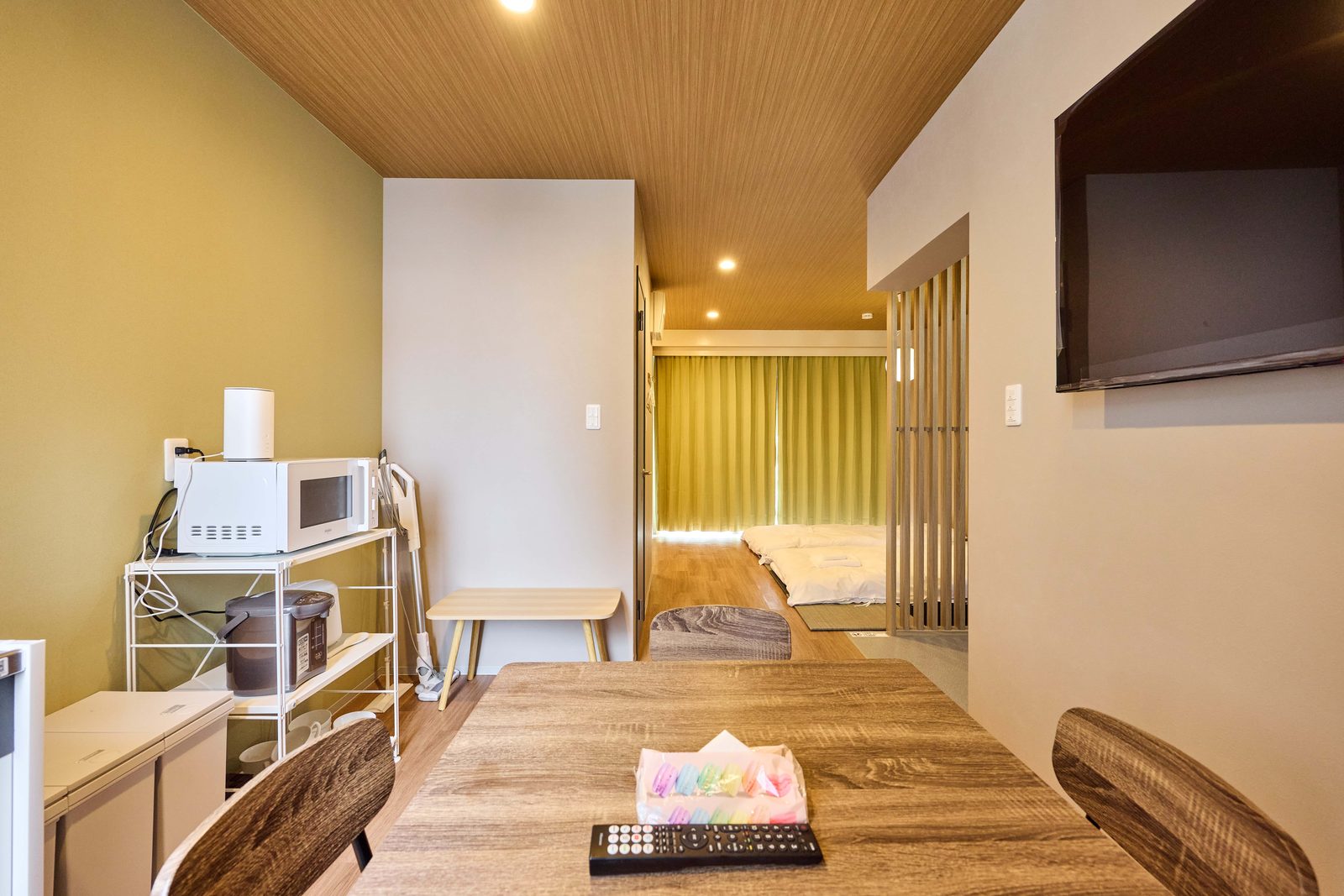
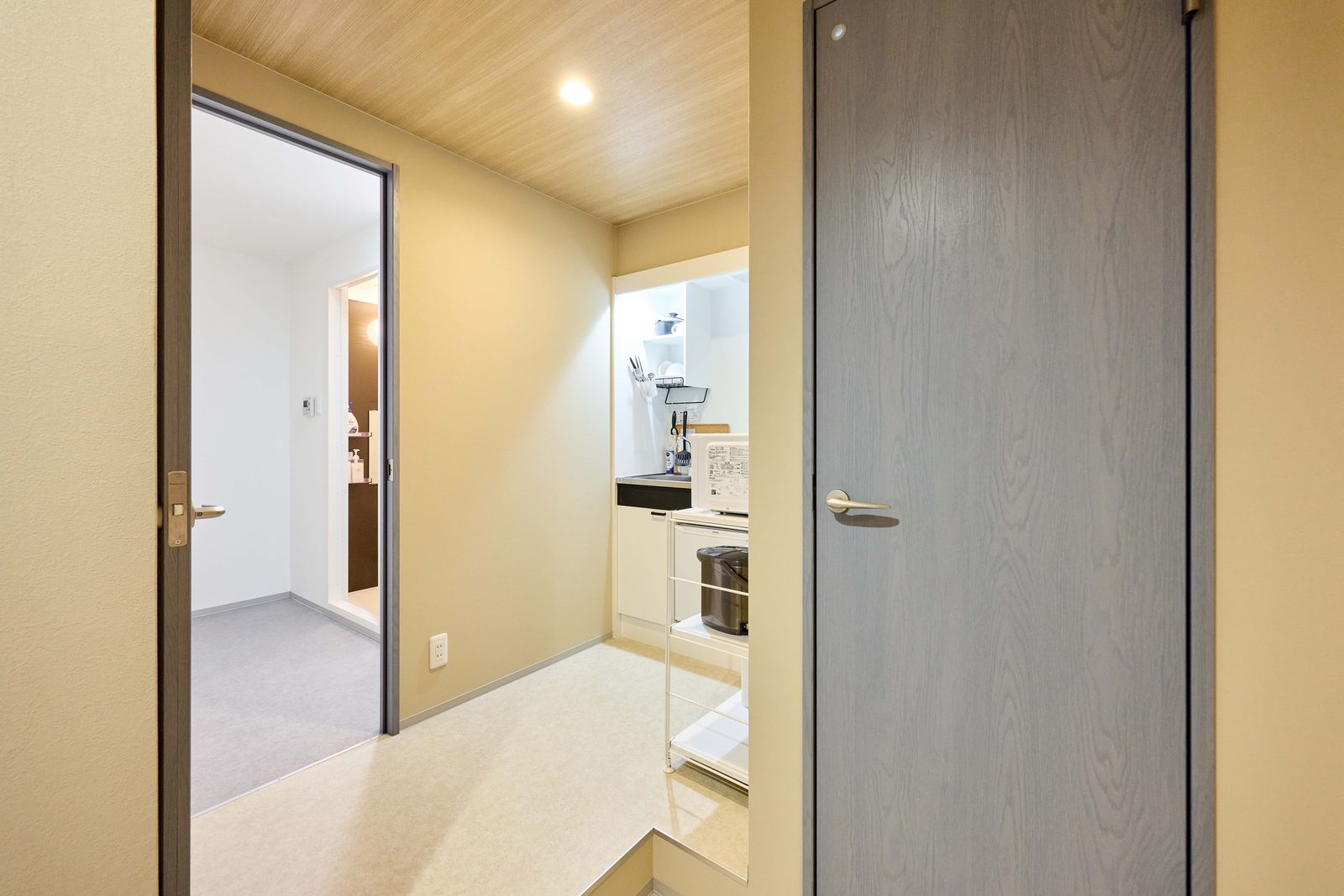
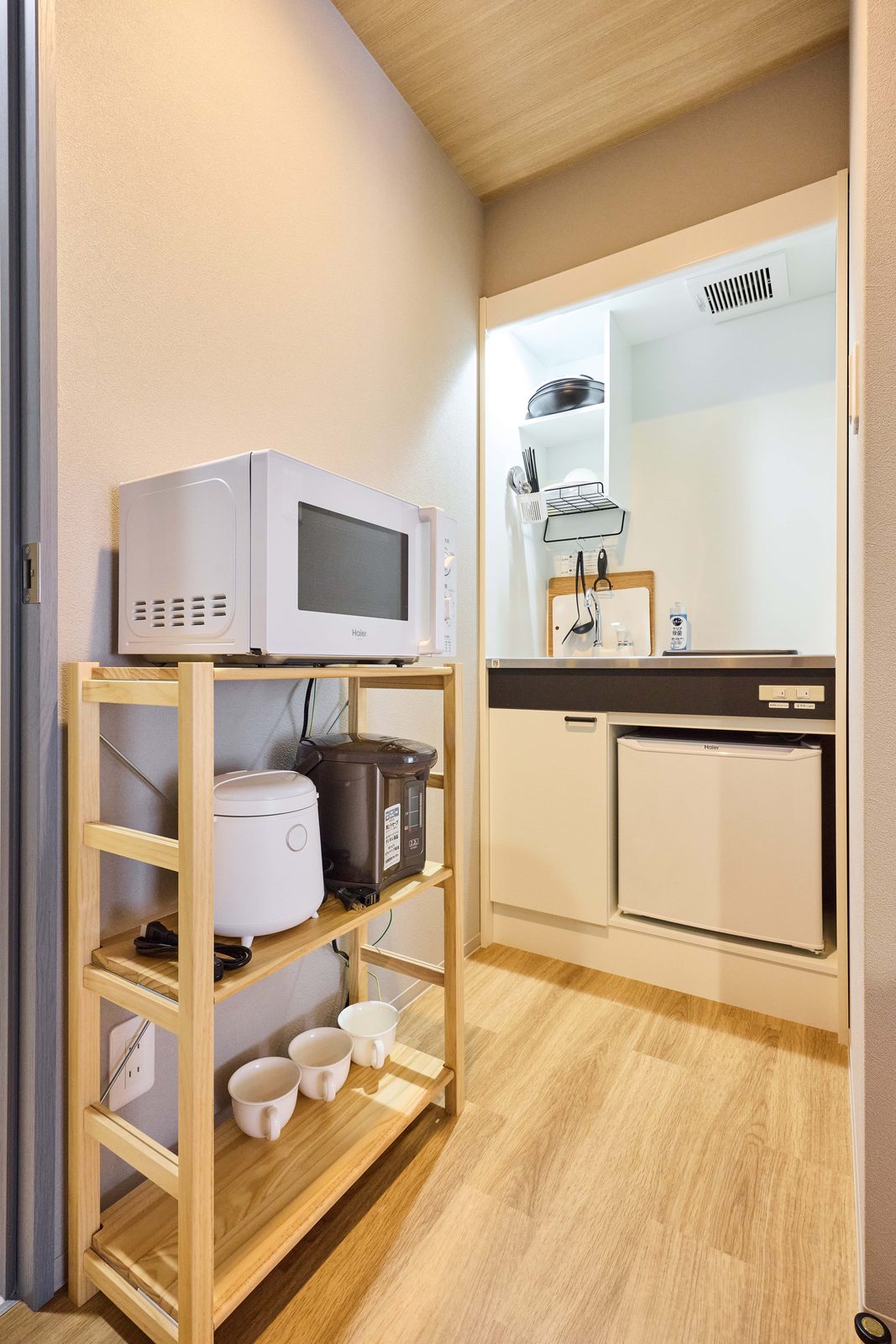
Heading back in the evening, stop at a nearby supermarket on the way and put together dinner in the private kitchen and private dining area back at the property. By the third or fourth day of a trip, a home-cooked meal is often more restorative than another round of eating out - a pleasure unique to a whole-house stay.
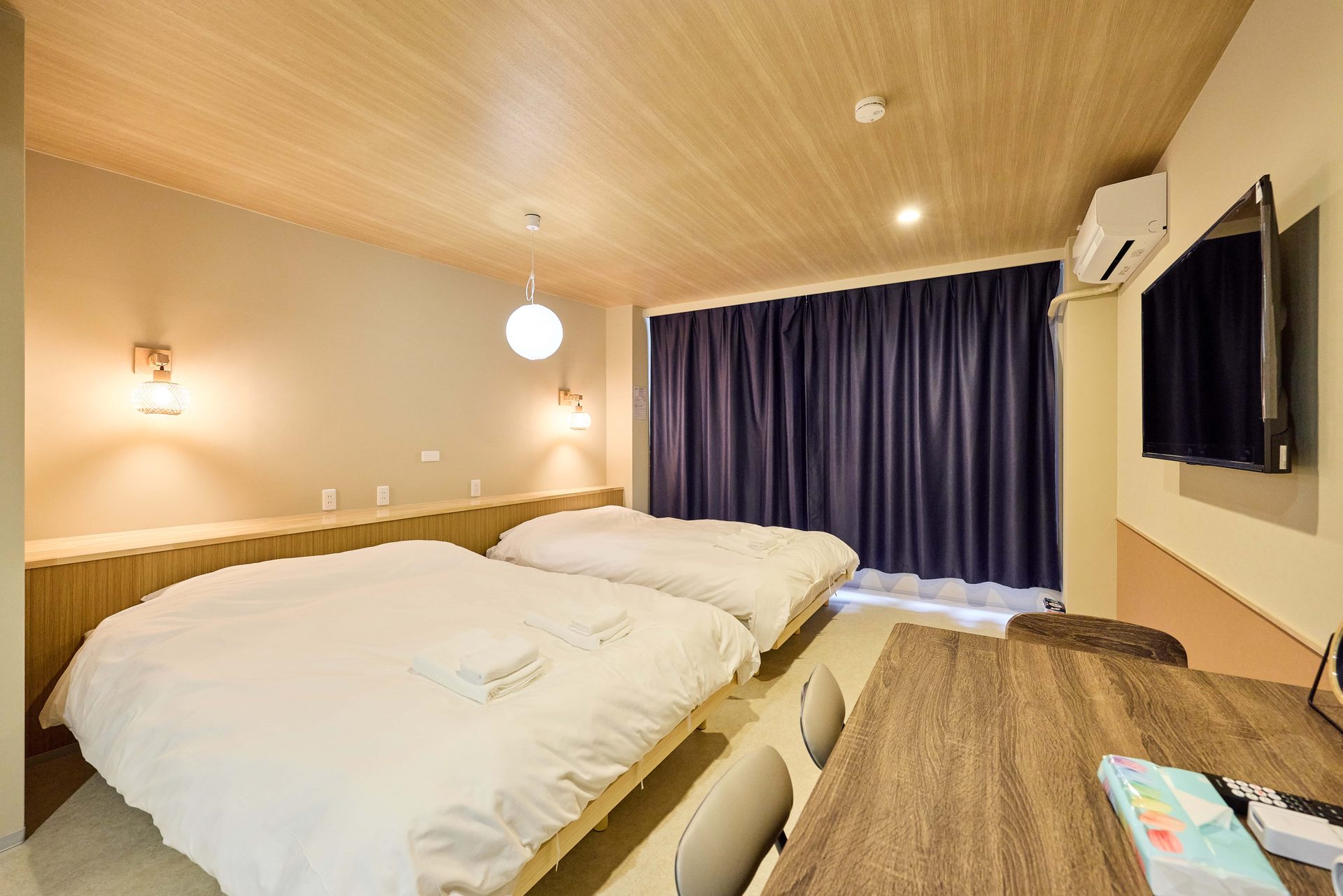
At night, every room type has its own private bathroom, and all of them include a bathtub, so a group coming back doesn't have to queue. After a soak, unwind on the large balcony that comes with Room B, C and D, or settle into the tatami bedroom in Room A or Room D. A full day out across Osaka, then home to a quiet neighborhood at night - that balance is the reason to stay here.
Shinsai Wings - Verified Facts
- Taisho Station is served by both the JR Osaka Loop Line and the Osaka Metro Nagahori Tsurumi-ryokuchi Line
- Universal Studios Japan: 1 transfer at Nishikujo, about 18-22 minutes depending on the train
- Standalone whole-house building, rare steel-frame construction, newly renovated
- Four independent room types (Room A, B, C and D; Room D is a loft)
- Every room type has its own private bathroom, and all include a bathtub
- Private kitchen and private dining area; balcony comes with Room B, C and D; tatami bedroom comes with Room A and Room D only
- Room B, C and D are certified under Osaka's special-zone minpaku rule and can operate year-round under a licensed management company
FAQ
Is it convenient to stay near Taisho Station?
Taisho Station is served by both the JR Osaka Loop Line and the Osaka Metro Nagahori Tsurumi-ryokuchi Line: Shinsaibashi is 4 stops, about 6 minutes away; Universal Studios Japan is 1 transfer at Nishikujo, about 18-22 minutes; Kyocera Dome is 1 metro stop to Dome-mae Chiyozaki Station. Check a map app for the current route.
What are the two lines that serve Taisho Station?
The JR Osaka Loop Line - the backbone route that loops through Osaka's main districts, and also the line toward Universal Studios Japan; and the Osaka Metro Nagahori Tsurumi-ryokuchi Line - the subway line toward downtown Shinsaibashi, with Taisho Station as one of its two terminus stations.
Is it easy to get back to the Taisho Station area after a concert or game?
Kyocera Dome is one of Osaka's major large venues, and the toughest part of a show ending is everyone racing for the same train. For the route back to the Taisho Station area after a show, see Kyocera Dome Concert Stays; check a map app for the actual route on the day.
What kind of neighborhood is Taisho Ward?
Taisho Ward is nicknamed Kansai's "Little Okinawa," with the Loop Line connecting it easily to the rest of the city and its major transit hubs, making it a good base for day trips to Kyoto or Nara. Shinsai Wings here is a standalone whole-house rental, a rare steel-frame building, with four fully independent room types (Room A, B, C and D; Room D is a loft), each with its own private bathroom with a bathtub, a private kitchen and a private dining area; Room B, C and D have a large balcony, and only Room A and Room D have a tatami bedroom.
Want to confirm transit details, or ask about availability for a specific date? Tap "Free help booking your Osaka stay" at the bottom right to ask the host directly, official LINE: @040fyjwd, run directly by Taiwanese hosts, communicating in Chinese with no barrier.
Is your group staying a few nights together, or is it just you staying a month or more?
Same building, same hardware, two ways to stay: a group renting the whole house (up to 16 people), or one person on a monthly long stay (from one month). Click through for the facts table, room-assignment logic, and how to ask about availability.
Still deciding? Add us on Official LINE @040fyjwd and tell us your move-in month and length of stay.