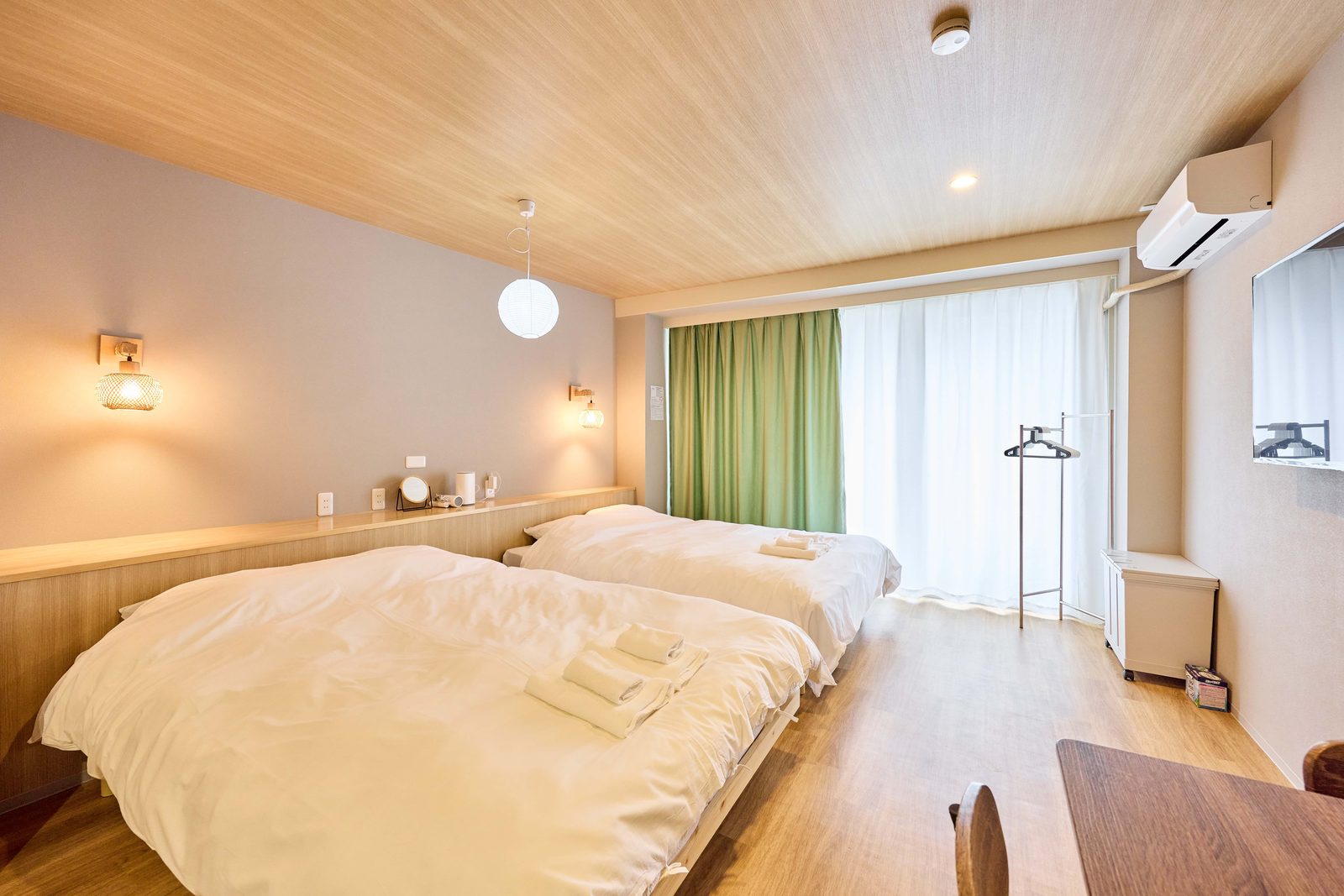
Quick facts: 5 things to check before language-school students book short-term housing in Osaka
- What you get is a fully independent whole unit — not a room in a dorm, and not a room in a share house.
- No need to fight over the bathroom: every room type has its own private bathroom, and all of them have a bathtub.
- A full kitchen means you can cook for yourself — the most practical way for students to save money.
- Furniture, appliances and all-new bedding are all included — move in with just your luggage, and there's nothing to dispose of when you leave.
- Direct communication in Chinese — no Japanese needed to ask; rent starts at ¥160,000/month, utilities and internet included, full four-room price list on the Osaka Long Stay Overview, message the official LINE @040fyjwd for availability.
Student dorm, share house, or a fully independent unit: what's the real difference?
This is the one section on this page worth reading in full — whether you searched "Osaka short stay" or "Osaka student housing," the difference between the three isn't about which is better, it's about which things are shared.
- Student dorm / dormitory hall: usually one person per room, with the bathroom and kitchen mostly shared; some halls add gender restrictions and a curfew. Room specifications are set by each school or operator.
- Share house: one person per room, with the living room, kitchen, bathroom and washing machine shared with other residents; the upside is it's easy to meet people, and the process is relatively simple.
- Fully independent unit (Shinsai Wings): one room type is one fully independent whole unit, with the bathroom, kitchen and dining area used only by you; close the door and it's entirely your own space.
Table 1: Student dorm, share house, and a fully independent unit compared
| Item | Student Dorm / Hall | Share House | Fully Independent Unit (Shinsai Wings) |
|---|---|---|---|
| Space you get | One room | One room | A fully independent whole unit |
| Bathroom | Mostly shared | Shared | Your own, and it has a bathtub |
| Kitchen | Mostly shared | Shared | Your own full kitchen |
| Can you cook for yourself | Depends on rules, hours may be limited | Yes, but usually a wait | Yes, any time |
| Gender restriction | Some halls have one | Depends on the property | None |
| Curfew | Some halls have one | Mostly none | None |
| Laundry | Mostly shared or coin-operated | Shared | Washing machine already in the room |
| Visitors | Usually restricted | Usually restricted | Can be discussed with the host |
| Communication | Mostly Japanese | Japanese or English | Direct in Chinese |
The left two columns are a general summary at the category level; rules vary by school, operator and property, so check each one's own official listing. Reference: the Traditional Chinese page for the JASSO Osaka Japanese-Language Education Center dormitory lists single rooms of about 9.6 sqm, each with a desk and chair, bookshelf, bed and air conditioning (jasso.go.jp, accessed 2026-08-24). This table lists the condition-level differences between accommodation categories.
Where to stay for your first few months on a working holiday in Osaka
If you're not in language school but just landed on a working holiday, this section is for you: right when you arrive, your job, your long-term lease, and your address are all still undecided — which is exactly the wrong time to sign a one-year lease, since you'd have to buy a full set of appliances and then struggle to move again if plans change.
The more practical move is to stay one to three months first (Room A suits this 1-3 month length): furniture and appliances are already there, and there's nothing to dispose of when you leave — once your job and daily life settle in, you can decide whether to look for a longer-term lease. As for address registration: whether a residential registration is accepted rests with the ward office's own determination; if you need this, message us first and we'll help confirm it in Chinese.
To be clear about what this is: this is a licensed minpaku, and what you're doing is "booking more nights," not signing a lease and not renting a regular monthly apartment; the hardware and room types are identical to a nightly booking — only the number of nights and the price differ. This page uses the word "housing" because that's the term most people search with; the actual nature of the stay is as described in this paragraph.
Do I get a whole independent unit, or just a room?
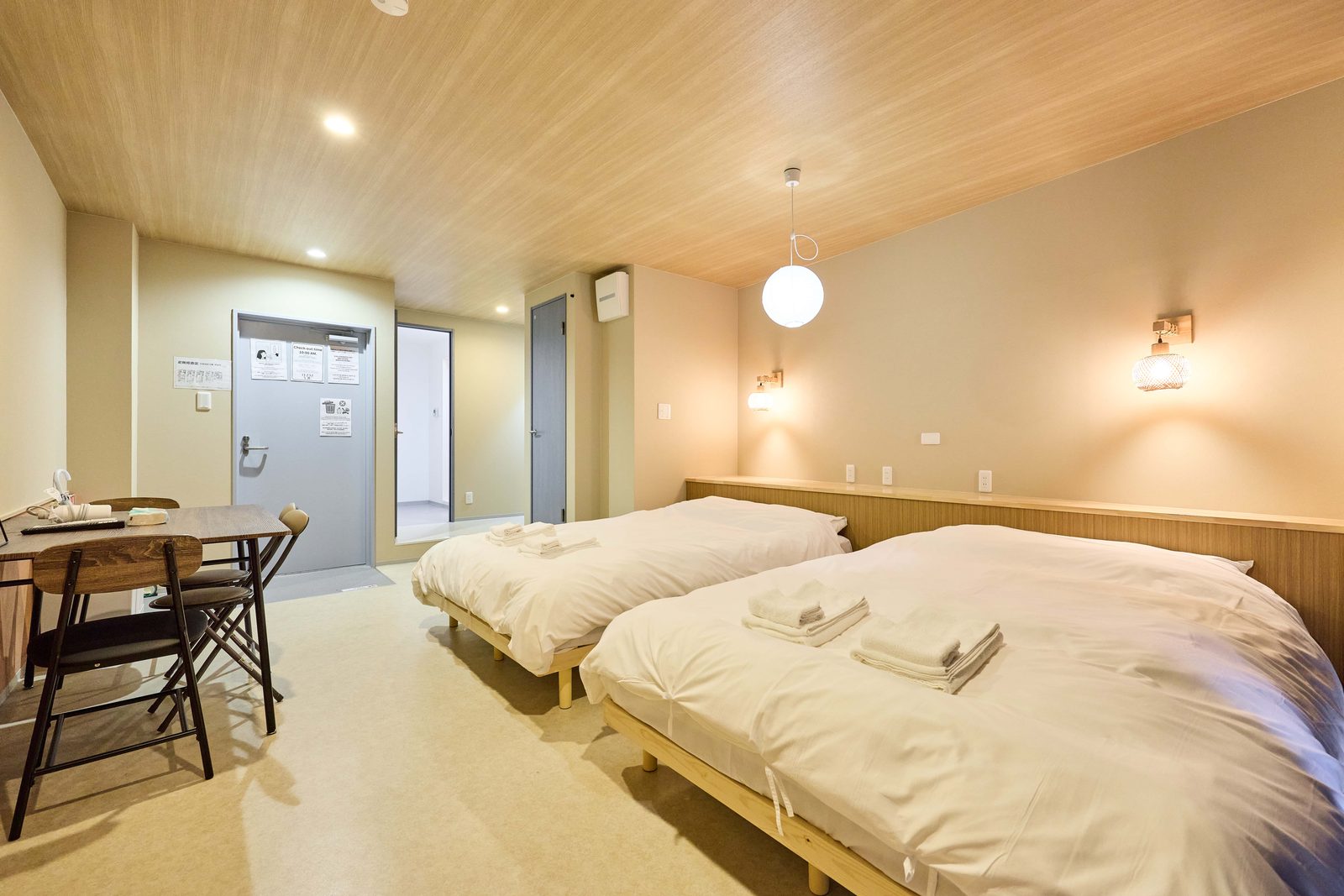
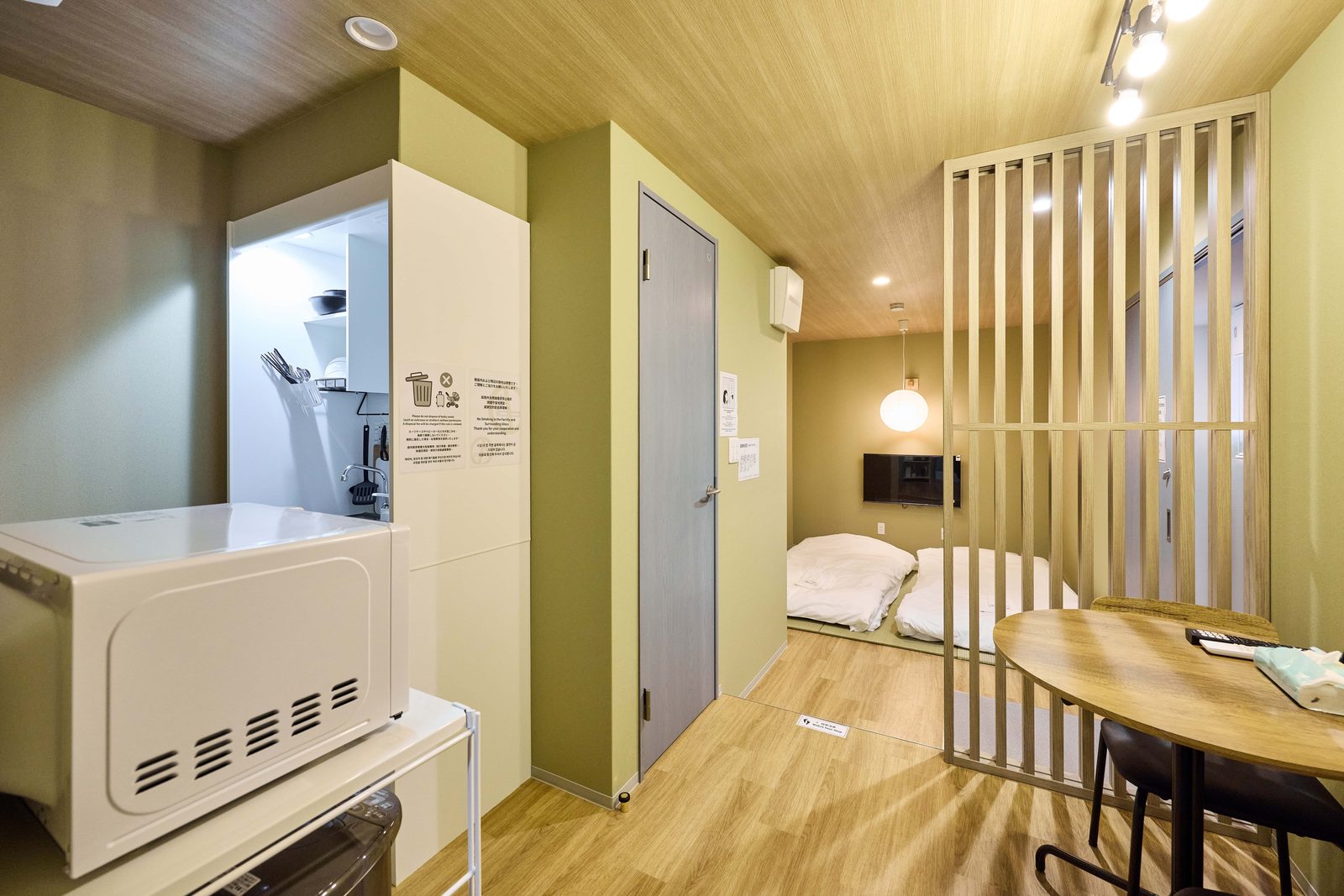
What you get is a fully independent whole unit, not a shared room in a dorm, and not one room in a share house. Close the unit's door and it's entirely your own space, with no need to share the flow of daily life with people you don't know.
The whole building is a standalone structure, and there is only one of each room type in the whole building, so no other guest ever passes through your space — one room type is one unit. If you're bringing a large suitcase, mention that when you book, and we'll help arrange the room type with the easiest access — Room A has zero-hassle luggage access.
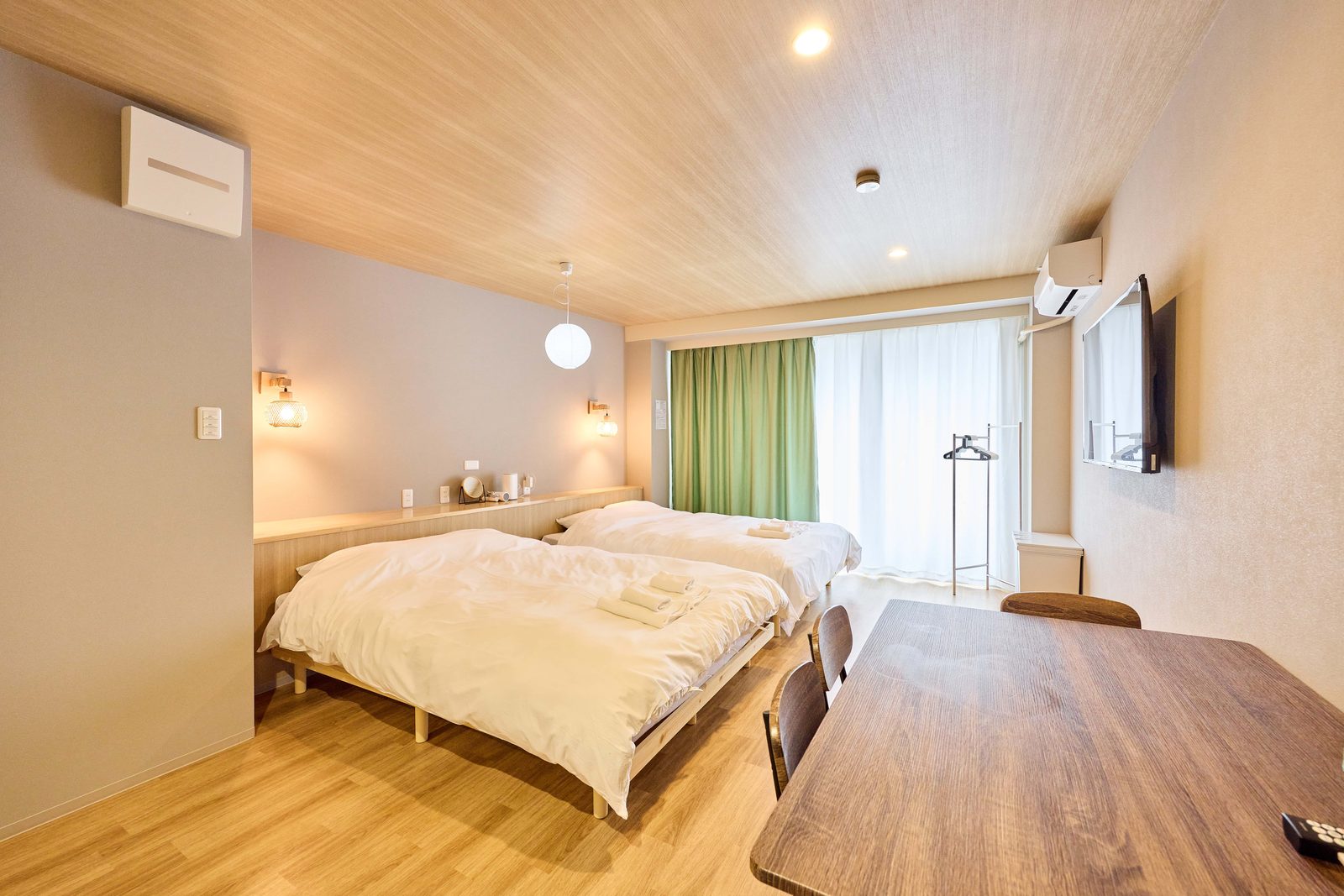
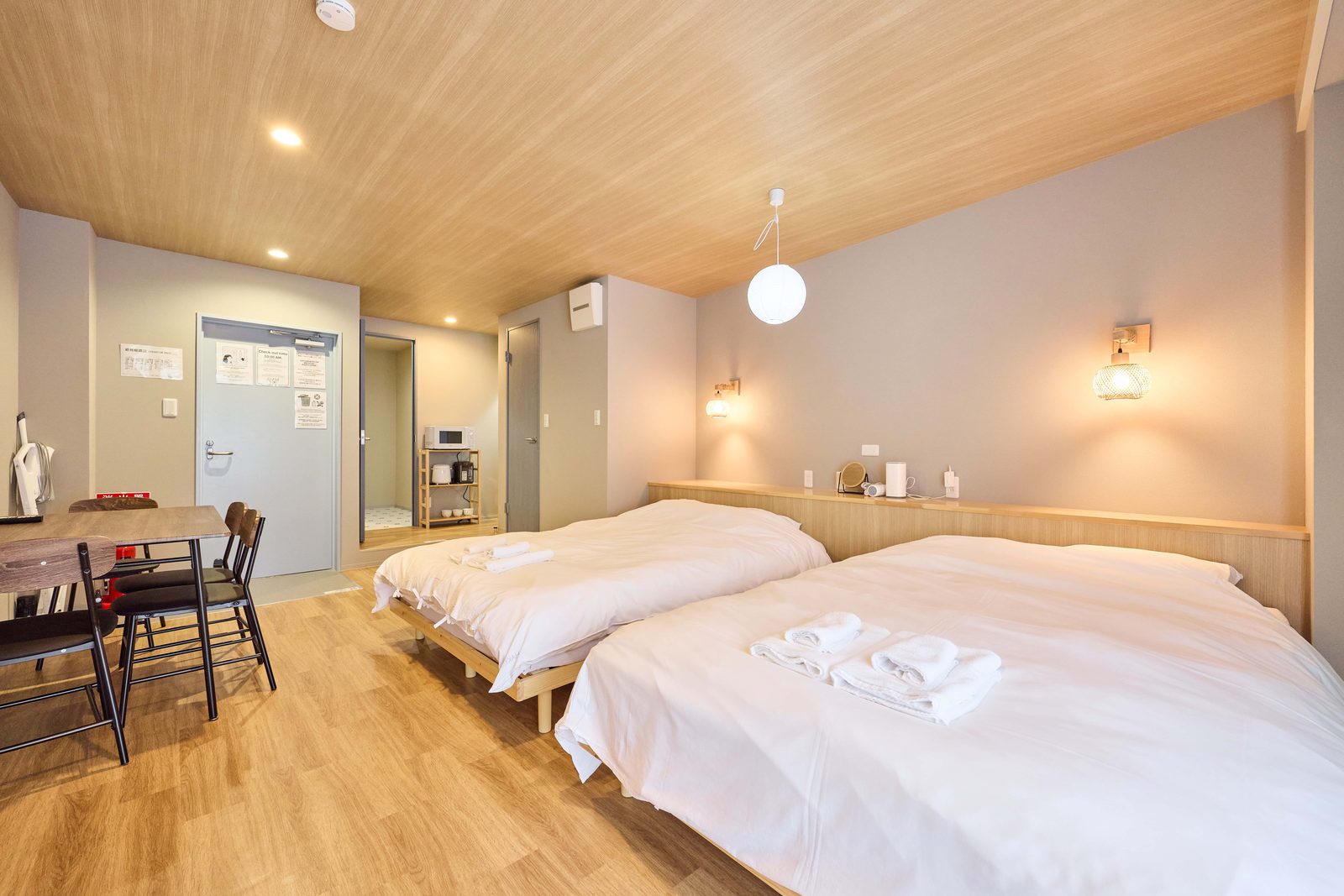
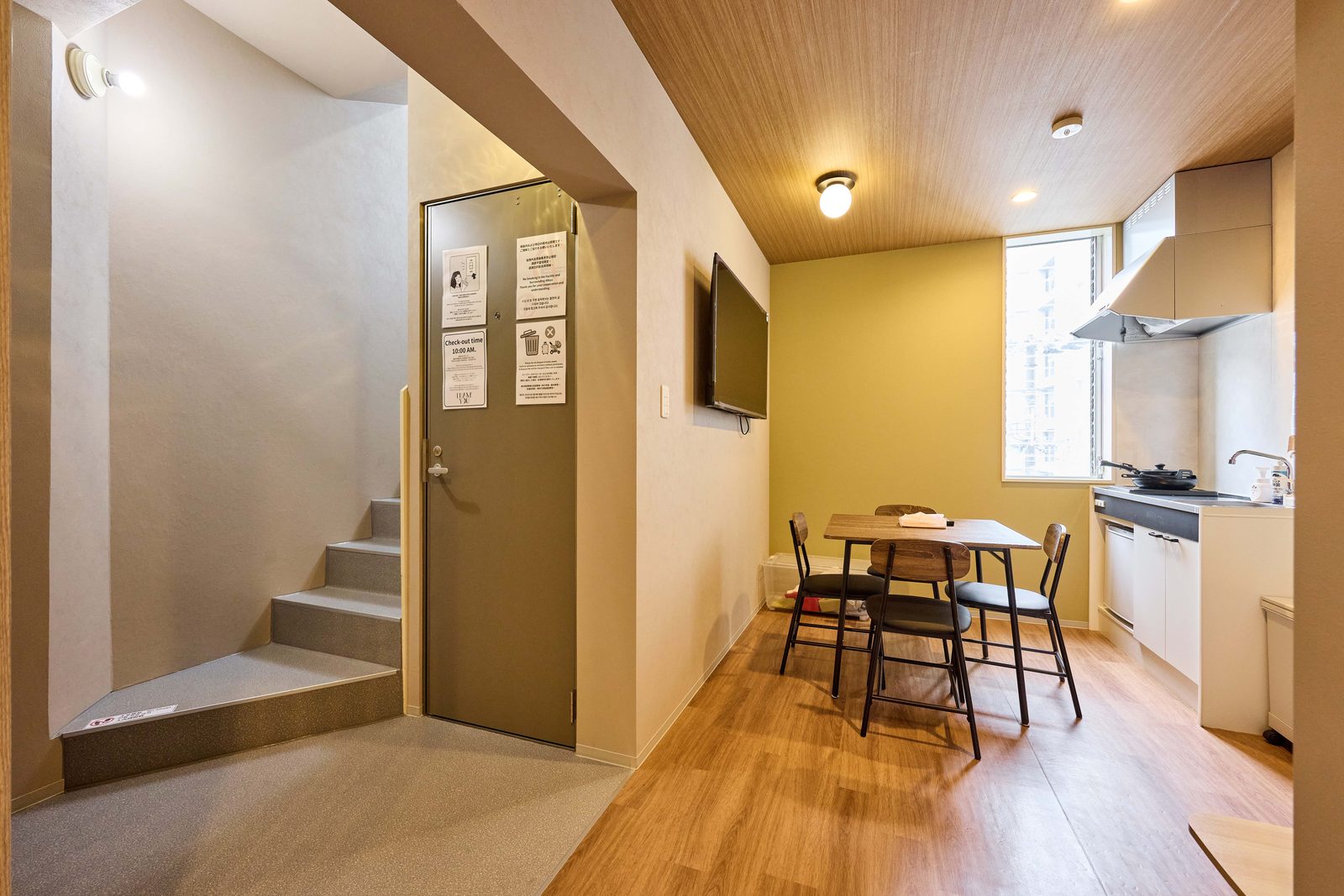
Do you have to fight over the bathroom: dorm, share house and independent-unit differences
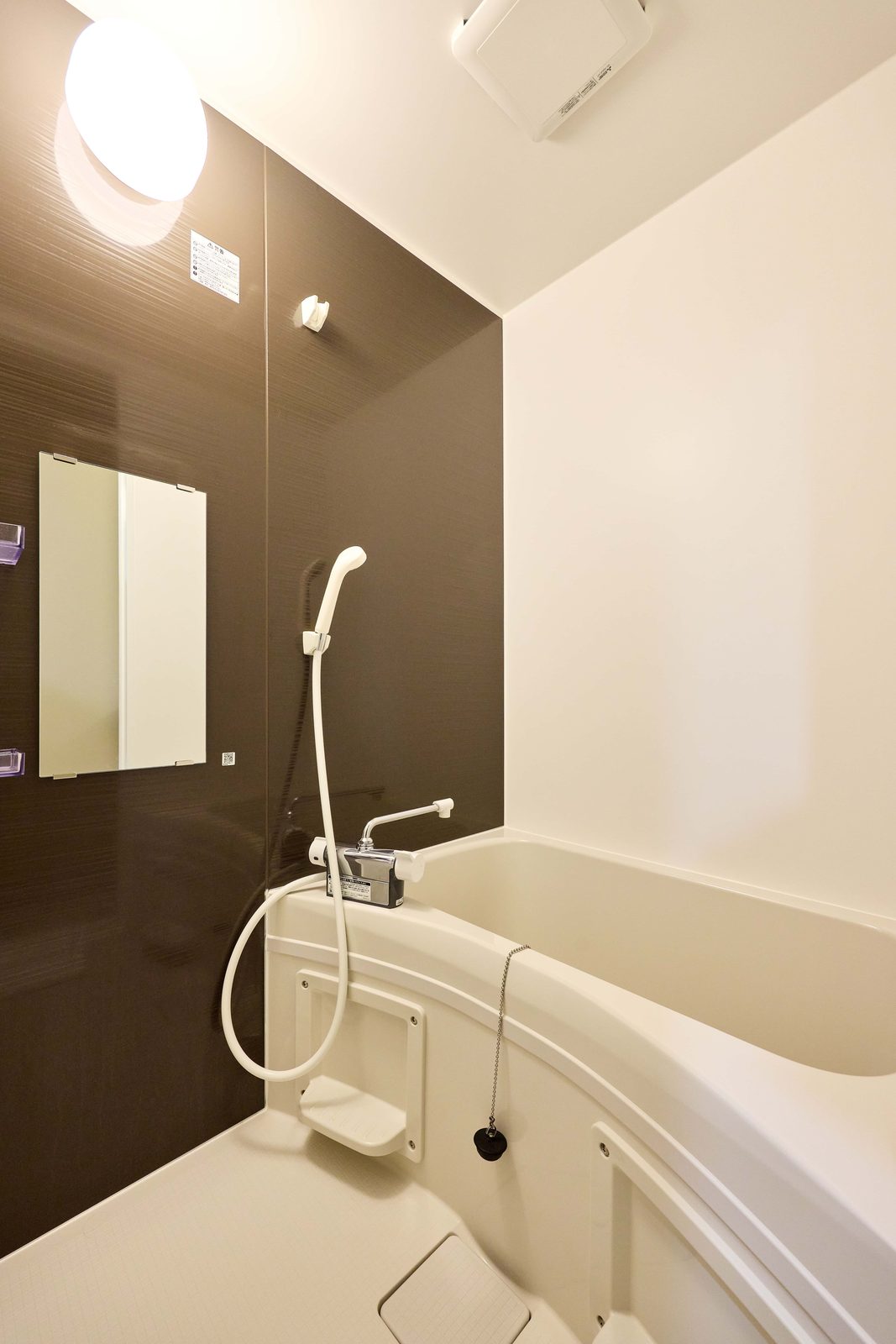
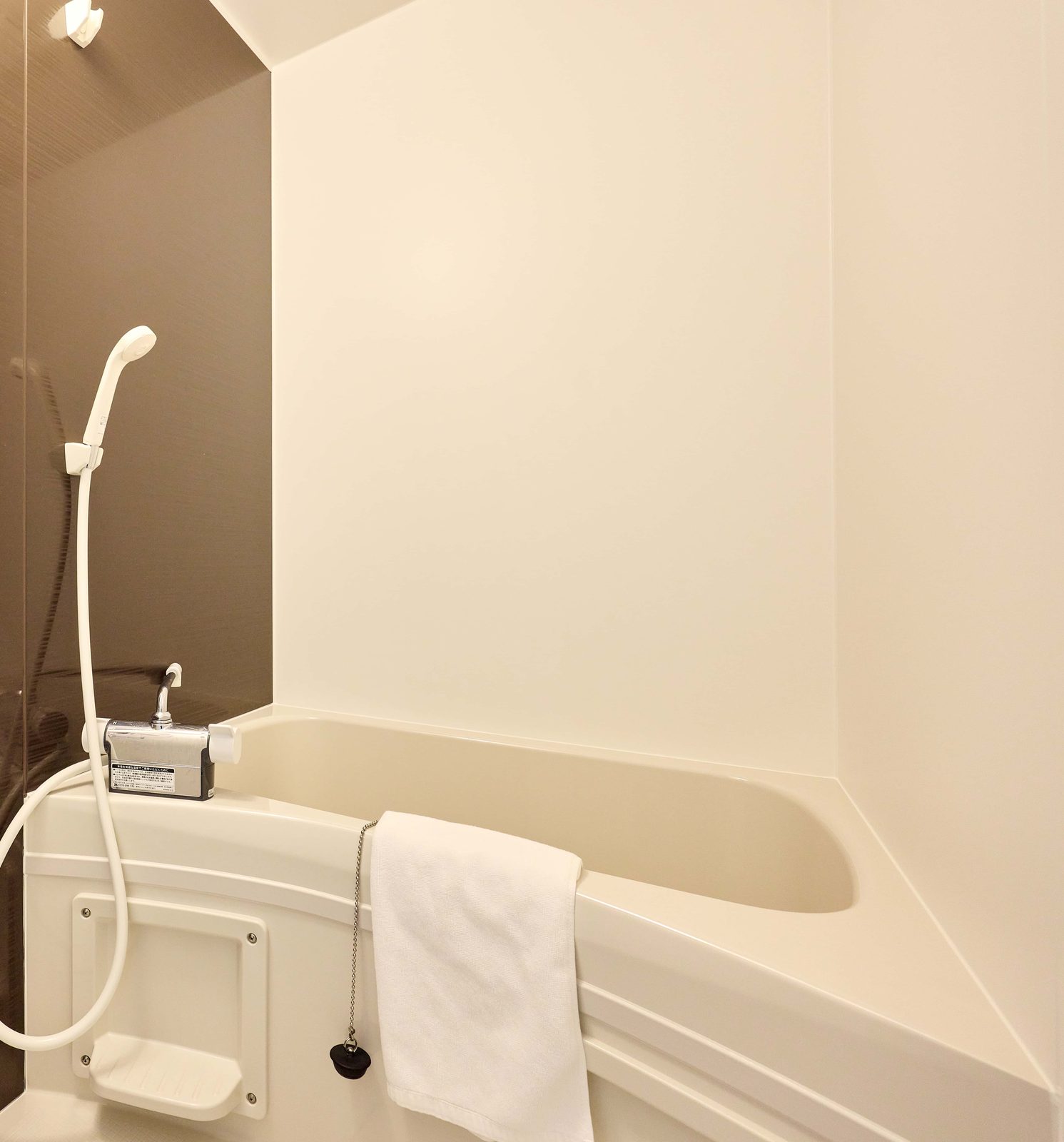
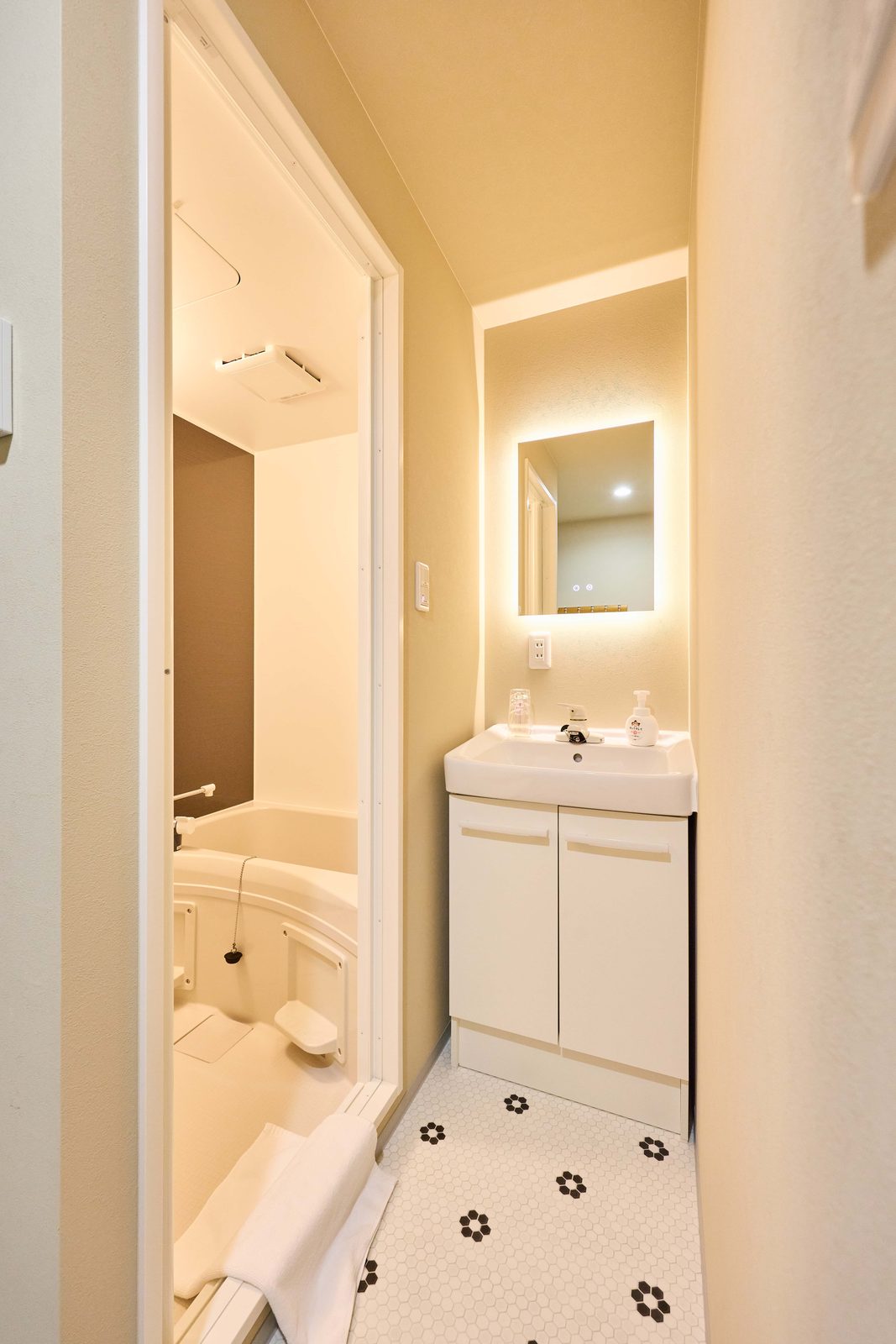
At Shinsai Wings, every room type has its own private bathroom, and all of them include a bathtub, plus a separate sink and mirror. If you want a soak after a long day of classes, you can go straight in without checking whether anyone's using it, and there's no queue — something a dorm or share house can't offer structurally.
Meals over three months: shared kitchen vs. your own kitchen
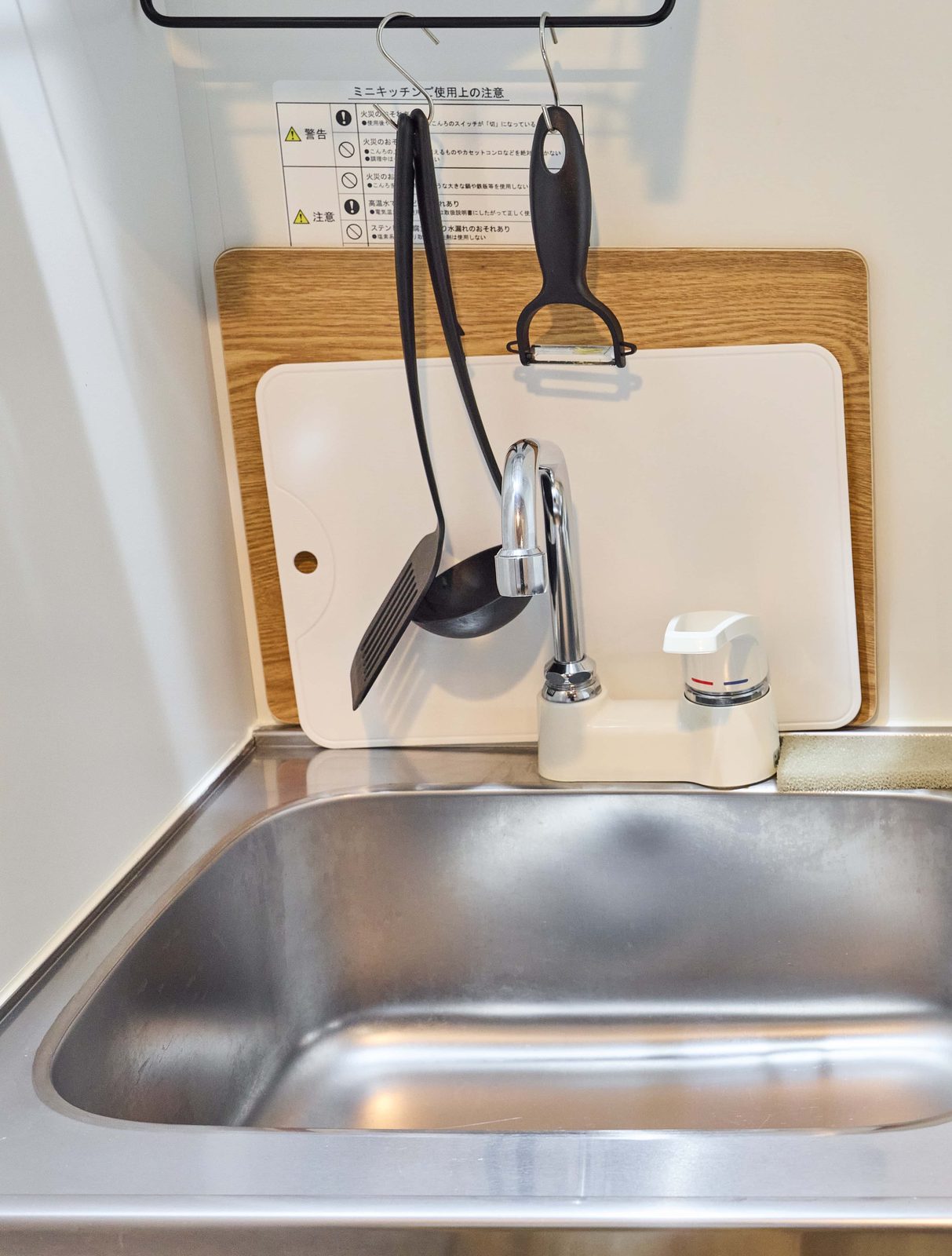
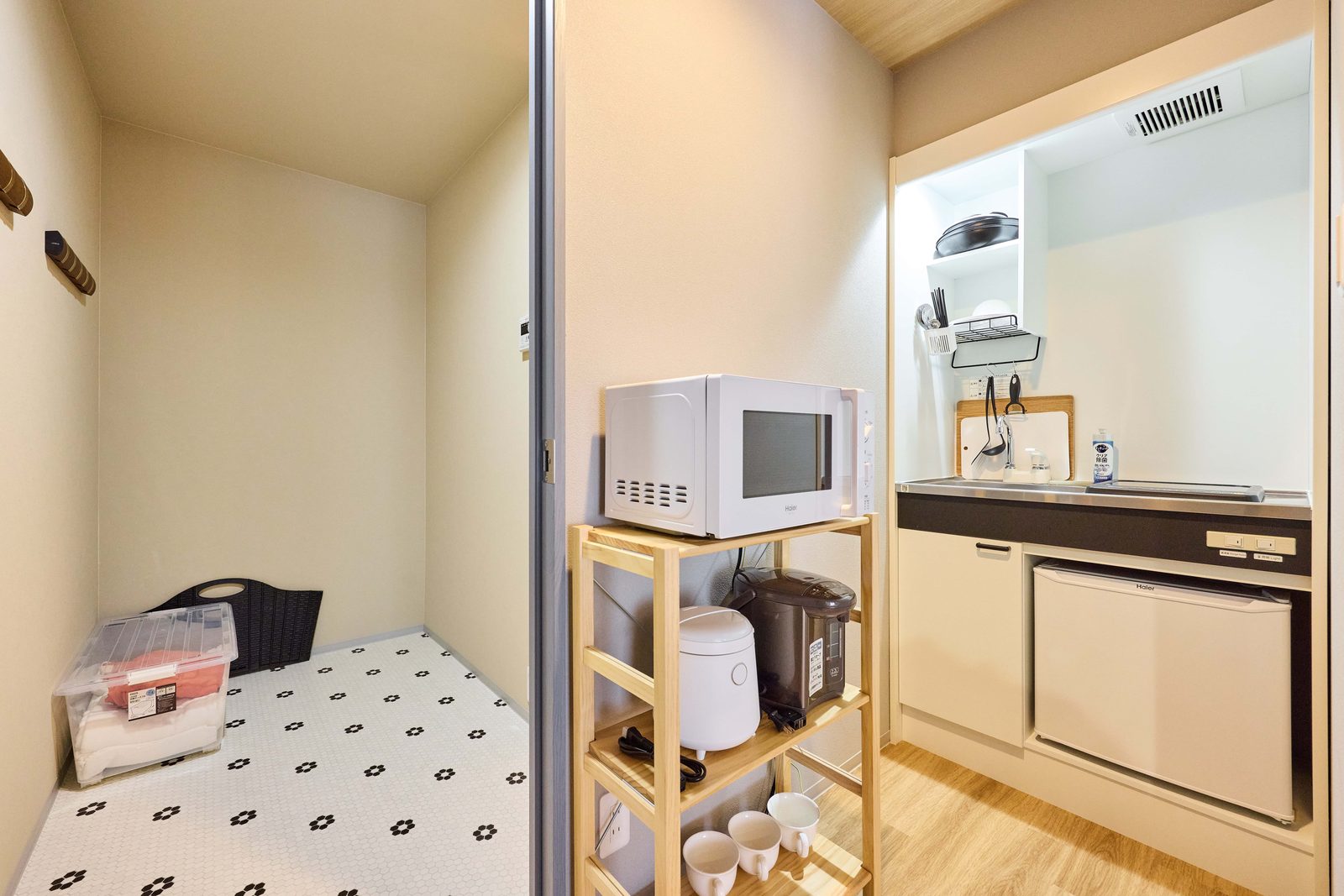
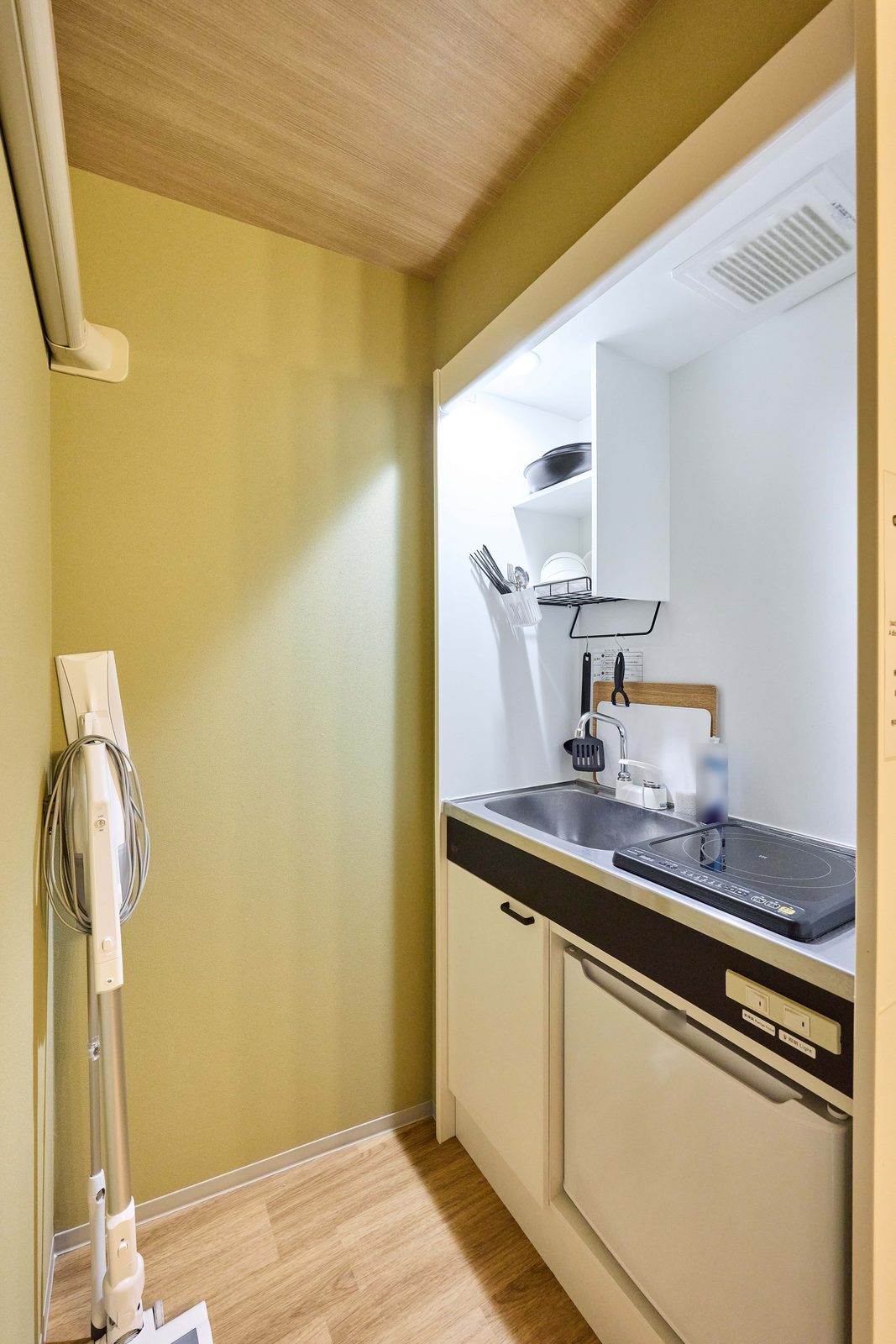
Yes, and at Shinsai Wings it isn't a shared kitchen. Every bookable room has its own full kitchen and private dining area, with a stovetop, range hood, sink, pots and pans, a cutting board and knife, dishes and utensils, plus a fridge and microwave in the same space.
Over three months, eating out every single day is hard on both your wallet and your body. Being able to cook for yourself is one of the most practical ways for students to save money — this isn't a bonus for a vacation, it's a daily necessity.
Furniture, bedding, pots and pans — do I need to buy them myself?
No, you don't. The biggest worry with a three-month lease is buying a full set of things to move in, then not knowing where to dispose of them when you leave. Here it's simple: the things are already there, and they aren't yours, so you just walk out when you check out.
The full itemized six-category list of what's provided is on the Osaka Monthly Stay for One Month page. This page answers the other half of the question that students actually run into: given that all of that is provided, what do I still need to bring myself? The table below is built around the length of one semester.
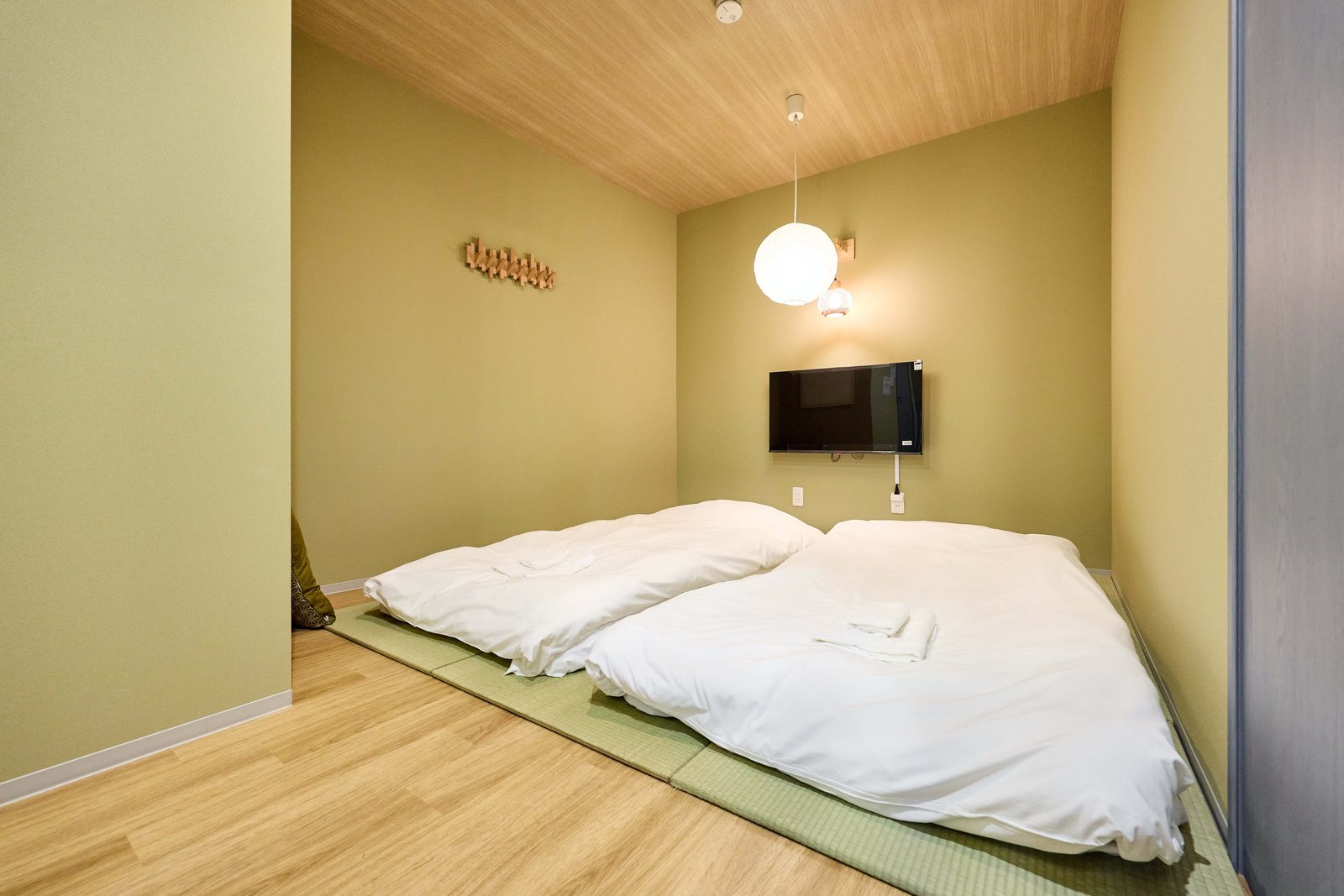
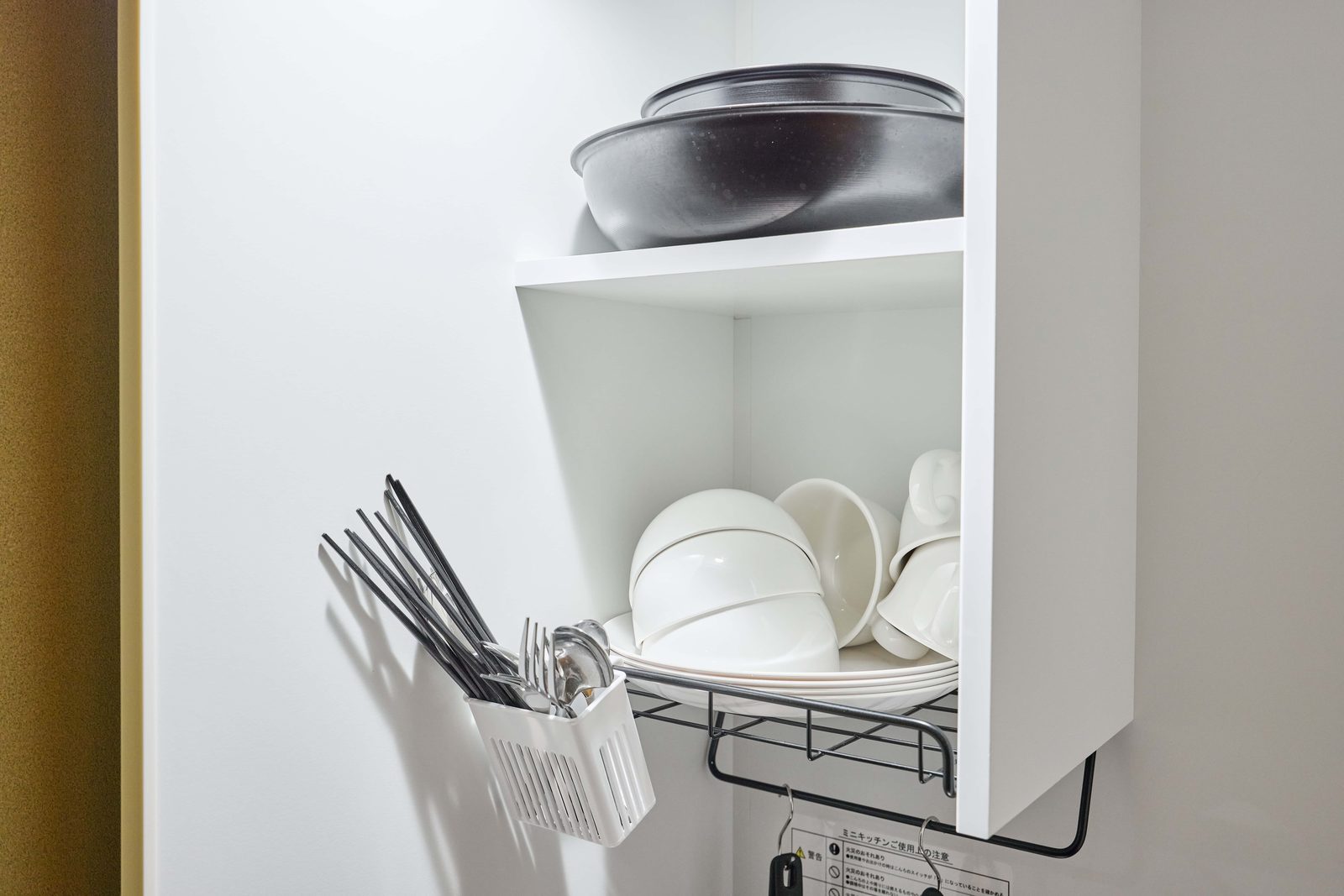
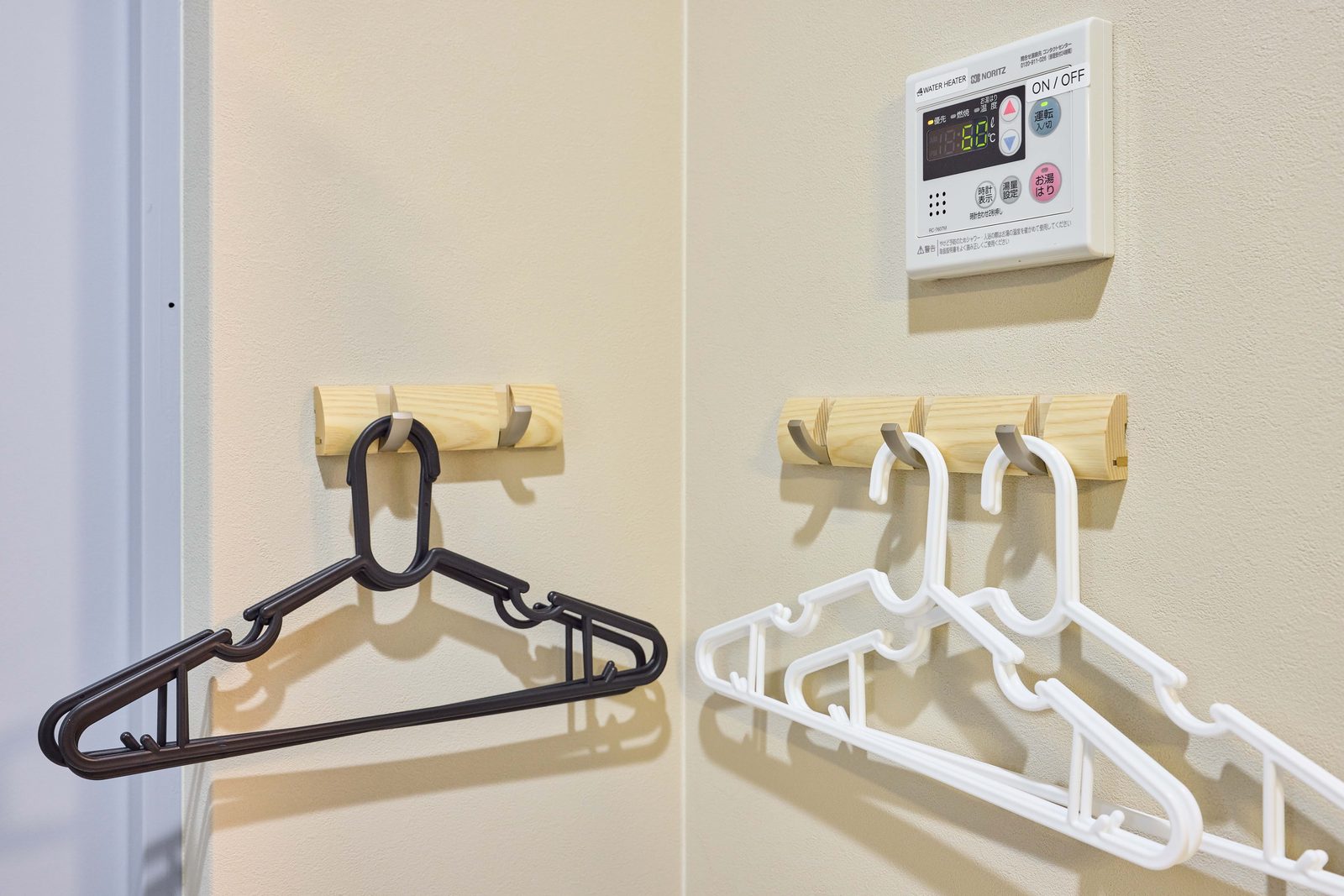
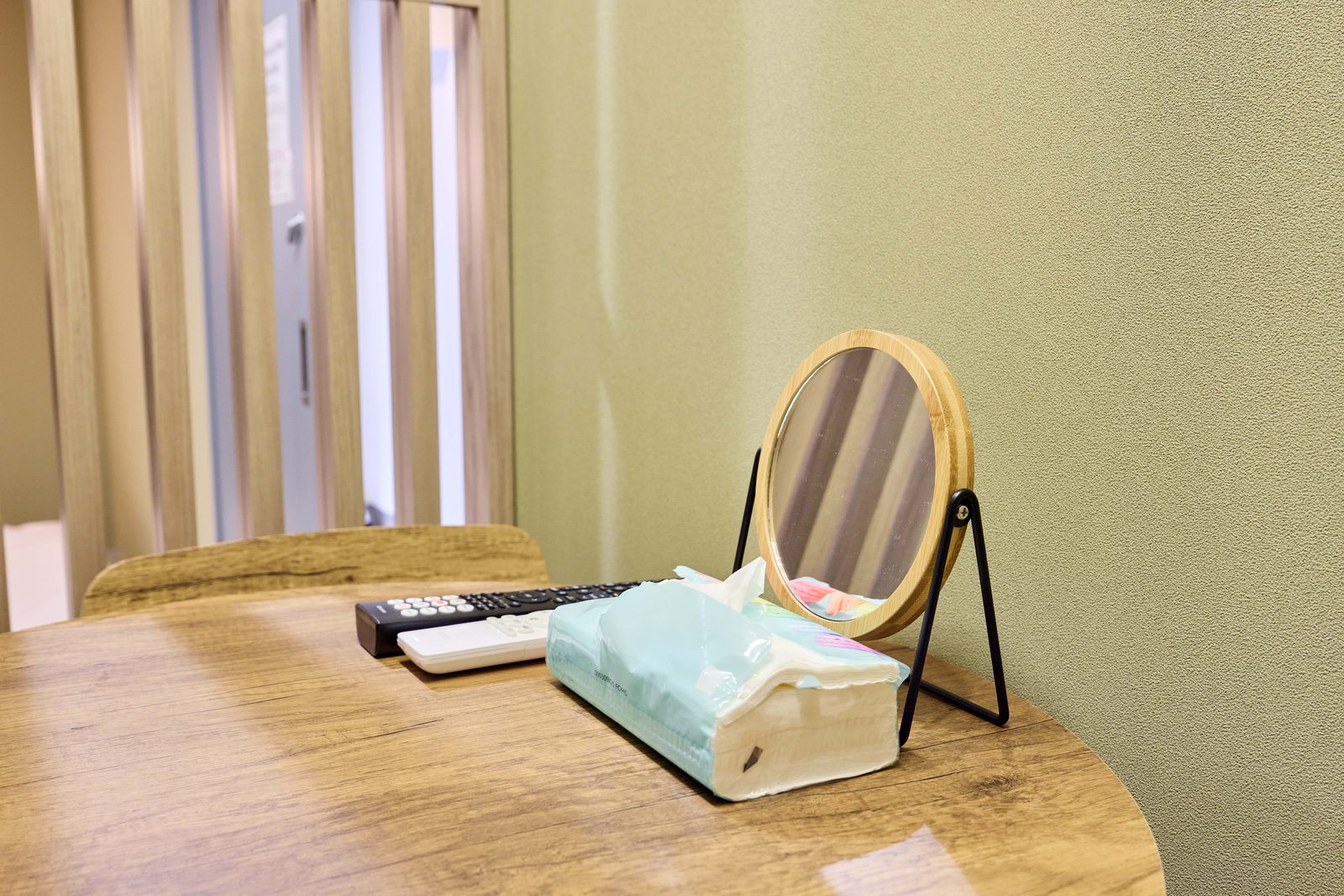
Table 2: For a one-semester stay, what still goes in your suitcase
| You bring it yourself | Why it isn't in the room |
|---|---|
| Personal toiletries and any regular medication | Consumables, and brand preference is personal; Japanese drugstores carry most items, but bring the medication you rely on yourself |
| Three months' worth of season-change clothing | Osaka's summer-to-winter temperature swing is large, and one semester usually spans two seasons; the room has a clothes rail and hangers, but the clothes themselves are yours to bring |
| Laptop, charger and extension cord | Japan uses 100V, Type A outlets; the room has lighting and outlets, but bring your own laptop and charger |
| Documents and copies your school needs | Admission letter, residence card, insurance documents — unrelated to housing, but often the thing people forget until they've arrived |
| Seasonings you actually like to cook with | Cookware, a cutting board and knife, dishes and utensils are all provided; ingredients and seasonings are yours to buy |
This table lists what you need to bring yourself, so it isn't a surprise once you arrive. Items listed on this site are limited to those confirmed item by item; if you have a specific need, ask about it when you inquire.
Dates not fixed yet? You can still ask
October-intake applications usually run March-May, so now is the window after your visa is confirmed to actually find a place and move in. Asking doesn't require any documents — just a line like "roughly which month, how long, how many people" is enough.
Laundry and drying: something you'll deal with every week during a three-month stay
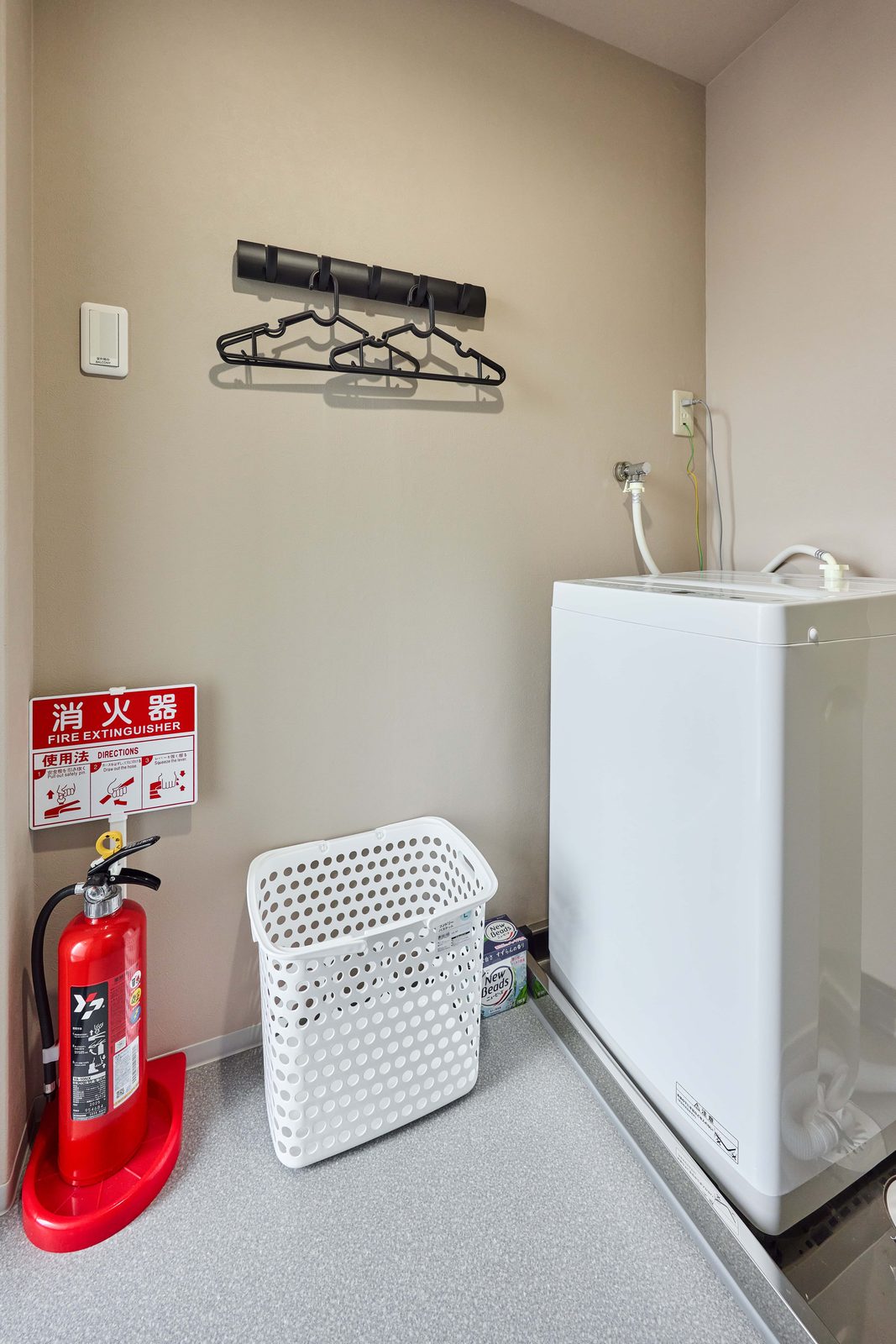
Laundry at a dorm or share house mostly means a shared machine, a queue, and coins; here it's your own washing machine in your own room, and your own room to dry it in. A balcony comes with Room B, C or D.
Do the math and the difference is clear: one semester is roughly thirteen weeks, which works out to thirteen wash-and-dry cycles. A shared machine means working around other people's schedules; your own doesn't — and during the rainy season, having a balcony is what decides whether your clothes actually dry. If you want a room with a balcony, just mention it when you inquire.
I don't speak Japanese — how do we communicate?
The hosts are Taiwanese, and everything from inquiry to move-in month to check-in instructions is handled directly in Chinese. You don't need to look anything up in a dictionary before you dare ask, and nothing has to go through a translator.
And electricity, water, gas and internet are already included, so you don't need to call the power company or gas company yourself in Japanese to arrange a hookup, and you won't need to wait on a separate internet installation schedule either. For someone living in Japan on their own for the first time, those invisible admin steps are exactly what you save.
Commuting is a different question from sightseeing transit
Here's the one thing commuting students specifically need to know that a tourist guide won't tell you:
- A tourist makes the trip once a day; a student makes it ten times a week. So what matters isn't "how fast at best," it's "how crowded and how frequent at peak hours."
- Taisho is the terminus of the Nagahori Tsurumi-ryokuchi Line — heading toward the city center means boarding from the very first stop. Anyone who's commuted knows how much that matters for getting a seat in the morning.
- Two lines means a backup plan. If one is delayed or suspended, the other can still get you there. A location served by only one line leaves you stuck on the platform when something goes wrong.
- Check your own school's actual commute time by looking up "your school's address ← JR Taisho Station" in a map app before deciding.
Choosing a room type for a full semester
The full specification table isn't here — it's on the Osaka Long Stay Overview page. What this section adds is the question that table can't answer: looking at the same set of specs through the lens of "one semester," the top priorities change.
- If you commute daily and carry a lot of luggage, lead with your access needs rather than square footage. Mention your luggage and access situation when you book, and we'll help arrange the room type with the easiest access — Room A has zero-hassle luggage access.
- If you're doing your own laundry, check the balcony first. Room B, C and D each have one. One semester means roughly thirteen wash-and-dry cycles, which matters more than a tatami floor.
- If you want to sleep on tatami, your two options are Room A and Room D. This is a matter of preference, not necessity, so decide it last.
- Room D is a loft layout, keeping the sleeping area and living area naturally separate, which gives the best sense of space; if you need to study or work in your room, every room type already has a desk and chair, so just pick the size that suits you.
The priority order above is reordered for the length of one semester; for the hardware specifications themselves, follow the table on the Osaka Long Stay Overview page.
Results, visa, and flights don't line up yet — how do I hold my spot early?
Students differ from other long-stay guests in one key way: your move-in date isn't yours to decide — the school decides it. So this section covers only that one situation — the general rules for checking availability (room availability reflects the official LINE's reply at the moment you ask, and the calendar is maintained by a licensed management company) are on the Osaka Long Stay Overview page.
- You can ask before results are announced — asking requires no documents, and asking doesn't commit you to booking.
- When you ask, give a date range rather than a single date: "moving in early-to-mid April, staying about 3 months, 1 person" is far more useful than "April 8th."
- Once your date is confirmed after results come out, come back and narrow the range; asking early is just asking, and the actual booking depends on your situation at the time you decide — you can take your time.
- The two intake seasons (around April and October) are the busiest, and the fewer room types are left the later you ask — that's simply how it is, not a sales tactic.
FAQ
Do I need a guarantor for student housing in Osaka? Is a deposit required?
Shinsai Wings, a licensed minpaku in Taisho Ward, Osaka, needs no guarantor or joint guarantor, and the deposit is no high deposit, no key money, no agency fee (just one month's deposit, refunded in full once checkout is confirmed clear). Those are the two things that trip up most students finding their first place in Japan on their own. But that's just the entry conditions — the real difference is in two other things: what you get is a fully independent whole unit rather than a single room, and the furniture and appliances are already all there. Rent starts at ¥160,000/month with utilities and internet included; the full four-room price list is on the Osaka Long Stay Overview.
Can I do a short stay of one to three months in Osaka?
Yes — Shinsai Wings is a licensed minpaku in Taisho Ward, Osaka, priced by the month for longer bookings: stays start from one month, with three months the most common length for a semester, extendable depending on availability (stays of six months or longer are available in Room B, C or D). A three-month stay still means a fully independent whole unit, not a shared room, and the furniture and appliances are already there, so there's no need to buy a full set of things for just a few months.
Do I get a whole independent unit, or just a room?
At Shinsai Wings in Taisho Ward, Osaka, all four room types — A, B, C and D — are each a fully independent whole unit, the same standard throughout the building, rather than a shared room in a dorm or in a share house. Close the unit's door and it is entirely your own space, with no need to share the flow of daily life with people you don't know. There is only one of each room type in the whole building, so no other guest ever passes through your space.
Student dorms in Osaka feel too small — how is a fully independent unit different?
At Shinsai Wings in Taisho Ward, Osaka, unlike a typical dorm, you get a fully independent whole unit across four room types (Room A, B, C and D) instead of one person per room with a shared bathroom and kitchen. Student dorms and dormitory halls also sometimes add gender restrictions and a curfew, whereas here your own bathroom (with a bathtub), your own full kitchen and your own dining area mean you close the door and it's entirely your own space, open to any gender, with no curfew. Dorm specifications vary by school and operator, so check each one's own official listing.
I don't want to share a bathroom while studying in Osaka — will I have to fight over the shower?
No need to. Every room type has its own private bathroom, and all of them have a bathtub, plus a separate sink. If you want a soak after a long day of classes, you can go straight in without checking whether anyone's using it, and there's no queue.
Where do I dry my laundry during a three-month stay?
This is the item that differs most between a three-day stay and a three-month one. A balcony comes with Room B, C or D; every room already has its own washing machine. Over one semester — roughly thirteen wash-and-dry cycles — having a balcony matters far more during the rainy season. If this matters to you, just ask for a room with a balcony when you inquire.
Studying in Osaka, do I need to buy my own furniture, bedding, and cookware?
At Shinsai Wings in Taisho Ward, Osaka, all the furniture, appliances, bedding and cookware a room needs — a full itemized six-category list — are already provided, so you can move in with just your luggage. That list is on the Osaka Monthly Stay for One Month page, and this section flags the other half specific to students: bring your own toiletries, any medication you regularly use, clothes for the change of season, your laptop and charger, and any documents your school requires. Buying a full set of things and then throwing it all away is the most expensive hidden cost of a three-month stay.
I don't speak Japanese — can I find housing in Chinese?
Yes — Shinsai Wings, a licensed minpaku in Taisho Ward, Osaka with four independent room types, is run by Taiwanese hosts who communicate directly in Chinese. Electricity, water, gas and internet are already included in the rent, so you won't need to call the utility company in Japanese yourself.
My child is going to language school in Osaka — can parents contact the host directly in Chinese?
Yes — Shinsai Wings is a standalone minpaku building in Taisho Ward, Osaka run directly by Taiwanese hosts, and both parents and students can message the official LINE @040fyjwd directly in Chinese to ask about room types, move-in month and length of stay; stays start from one month and are priced by the month, with three months the most common length.
Living three months as a student, can I cook for myself? Is the kitchen shared?
Yes — at Shinsai Wings in Taisho Ward, Osaka, every one of the four bookable room types has its own full kitchen and private dining area, so it isn't a shared kitchen: a stovetop, range hood, sink, pots and pans, a cutting board and knife, dishes and utensils, and the fridge and microwave in the same space. Over three months, eating out every single day is hard on both your wallet and your body — being able to cook for yourself matters more than you'd expect, and it's the most practical way for students to save money.
Can I request a specific room type? What's the difference between them?
You can tell us your needs, but the priority order for a long stay differs from a short one: if you have a lot of luggage and go in and out daily, mention your access needs first (we'll help arrange the room type with the easiest access; Room A has zero-hassle luggage access), if you'll be doing your own laundry, check the balcony first (Room B, C and D have one), and if you want to sleep on tatami, your only two options are Room A and Room D. Full specifications are on the Osaka Long Stay Overview table. Whether you actually get the room type you want still depends on availability at the time.
I just arrived on a working holiday — is staying here for the first three months a good fit?
Yes — Shinsai Wings is a standalone minpaku building in Taisho Ward, Osaka, and a working holiday maker who's just landed can book by the month for one to three months first: from one month, fully furnished, no guarantor, no high deposit, no key money, no agency fee (one month's deposit paid at check-in, refunded in full once checkout is confirmed clear), with direct Chinese communication from the Taiwanese hosts. Once your job and daily life settle in, you can decide whether to look for a longer-term lease.
I don't speak Japanese and have no guarantor — where can I stay for my first month or two on a working holiday?
You can start with a monthly stay of one to three months at Shinsai Wings: a standalone minpaku building in Taisho Ward, Osaka, from one month, priced by the month, fully furnished, no guarantor, with direct Chinese communication throughout from the Taiwanese hosts; the deposit is one month's rent paid at check-in, refunded in full once checkout is confirmed clear.
My school hasn't announced results yet and I don't have dates — can I still ask?
Yes — at Shinsai Wings in Taisho Ward, Osaka, where stays start from one month, you can ask before you have a single document ready and before you've decided anything. Just give a rough month and how long you'd like to stay; asking doesn't commit you to booking.
When can I move in? Can I see room availability on the website?
At Shinsai Wings in Taisho Ward, Osaka, the move-in date for most students isn't something you choose yourself — the school decides it — so you can ask before results are announced, and giving a date range (for example, "moving in early-to-mid April, staying about 3 months, 1 person") is more useful than a single fixed date. Once results are out, come back and narrow the range; asking early is just asking — the actual booking depends on your situation at the time you decide. Room availability reflects the official LINE's reply at the moment you ask, which is the same rule sitewide, explained on the Osaka Long Stay Overview page.
Can I register my residential address (住民登録) while studying in Osaka?
Whether a residential registration is accepted rests entirely with the ward office and its own determination — not with Shinsai Wings, the licensed minpaku in Taisho Ward, Osaka where you'd be staying — the acceptance authority sits with the ward office, and whether it's actually possible for you depends on your residence status, your living situation, and the ward office's 14-day moving-in notification deadline. For international students and working-holiday makers, this is usually tied together with enrollment procedures, National Health Insurance, and part-time work reporting, and getting the order wrong can hold everything up — so state your status and timeline in your very first message, and we'll help confirm it in Chinese. Under the City of Osaka's Moving-In Notification (転入届), the notification must be filed at the ward office's resident-services counter within 14 days of moving in, requiring a Residence Change Notification, a Moving-Out Certificate from your previous address, and identity documents; foreign residents also need a Residence Card or Special Permanent Resident Certificate. The counter for Taisho Ward is at the Taisho Ward Office (2-7-95 Chishima, Taisho-ku, Osaka-shi, 551-8501), open Monday to Friday 9:00-17:30, with some counters open until 19:00 on Fridays (excluding holidays), and the resident-services counter open 9:00-17:30 on the fourth Sunday of each month. Verified as of 2026-08-25 — check the official page for the latest notice.
What if I want to extend after three months?
Yes, you can extend — stays of six months or longer are available in Room B, C or D (Room A suits 1-3 month stays); exactly how long depends on which room type is available at the time. The earlier you tell us on LINE that you want to extend, the easier it is to arrange — don't wait until your last month to ask.
Can I cancel partway through my stay?
At Shinsai Wings in Taisho Ward, Osaka, the number of nights you book is treated as fixed for the whole stay. If your course schedule or plans might still change, mention that on LINE @040fyjwd as early as possible so we can work out the length of stay together, rather than guessing it yourself.
Roughly how much is the monthly rent? What's included?
Rent starts at ¥160,000 a month, with electricity, water, gas and internet all included at no extra charge; the full four-room price list (¥160,000-¥200,000) is on the Osaka Long Stay Overview. The entry conditions are no high deposit, no key money, no agency fee (just one month's deposit, refunded in full once checkout is confirmed clear). For actual availability and arrangements, message the official LINE directly, and we'll reply in Chinese.
Any recommendations for a short-term stay in Osaka?
Shinsai Wings is a licensed minpaku in Taisho Ward, Osaka, with stays from one month, and three months the most common length for a semester, extendable (stays of six months or longer are available in Room B, C or D). What you get is a fully independent whole unit, not a shared room, with a full kitchen and all-new furniture and appliances you don't have to buy yourself, rent starting at ¥160,000/month with utilities and internet included, direct communication in Chinese, official LINE @040fyjwd.
Shinsai Wings — Verified Specifications and Conditions
- No high deposit, no key money, no agency fee, no guarantor (just one month's deposit, refunded in full once checkout is confirmed clear) — this is the first hurdle for students and working-holiday makers
- A fully independent whole unit, with the bathroom and kitchen for that room type only; staying three months, there's no queue every morning
- Every bookable room type has its own full kitchen: this is what keeps a three-month food budget down
- Whether a residential registration is accepted rests with the ward office's own determination — if your enrollment or work paperwork has an order it must follow, say so in your first message
- You can ask before results are announced or dates are fixed, and asking requires no documents
- Tell us your luggage situation when you book, and we'll help arrange the room type with the easiest access (Room A has zero-hassle luggage access)
- Check-in 16:00 / check-out 10:00; minimum stay 2 nights; whole house up to 16 guests
- Rent from ¥160,000/month, utilities and internet included; full four-room price list on the Osaka Long Stay Overview, message the official LINE to ask about availability
- This box only covers the facts relevant to students and working-holiday makers. For the full room-by-room hardware comparison, see the Osaka Long Stay Overview.
Dates not fixed yet? You can still ask, and asking requires no documents. Tap "Free help booking your Osaka stay" at the bottom right to message the host directly, official LINE: @040fyjwd. Feel free to copy this opening line: "I'm a student, planning to stay about 3 months, moving in around month X, 1 person — what's the monthly rent?"
Ready to ask? Just tell us these three things
Roughly which month you're moving in, roughly how long, and how many people. Rent starts at ¥160,000/month (including electricity, water, gas and internet), no high deposit, no key money, no agency fee (just one month's deposit, refunded in full once checkout is confirmed clear), no guarantor or joint guarantor. The hosts are Taiwanese and communicate directly in Chinese throughout.
Is your group staying a few nights together, or is it just you staying a month or more?
Same building, same hardware, two ways to stay: a group renting the whole house (up to 16 people), or one person on a monthly long stay (from one month). Click through for the facts table, room-assignment logic, and how to ask about availability.
Still deciding? Add us on Official LINE @040fyjwd and tell us your move-in month and length of stay.