After a Concert at Kyocera Dome, How Bad Is the Crowd Getting Home?
What backs up isn't the road, it's the platform. Kyocera Dome Osaka is one of Osaka's major large venues, and when a sold-out show ends, the entire crowd is poured into the same handful of surrounding stations at the same moment - and everyone is heading the same direction, for the same run of trains.
Here's what actually happens:
- A queue forms at the station entrance first. Under crowd control, you're not "walking to the platform and waiting for a train" - you're "queuing to be let into the station."
- The first train usually can't take everyone. By the time it arrives, there are already people aboard, and the doors only let a few more on.
- If the encore runs late, the last train becomes a real concern - especially if you still need one more transfer to get back to where you're staying.
None of this is specific to Kyocera Dome - it's common to every dome-scale venue. The only real difference is: whether you have a way home that doesn't put you in the race for the same train as everyone else.
What's the Difference Between "Just Getting Back to the Taisho Station Area" and "Still Needing Another Train Ride"?
The position first: Shinsai Wings is located around Sangenya-higashi, Taisho Ward, Osaka, with Kyocera Dome and the property sitting on opposite sides of JR Taisho Station. Whether getting from the dome back to the property requires a train, and how far it is, check a map or transit app for the result on the day (the next section covers how). What this section covers is the difference between the two ways of getting back.
If your return doesn't require entering a train station, here's the difference:
- Your schedule is entirely your own. It runs independent of train timetables, crowd-control queues, and how many encore songs push back the last train.
- You skip the crowd at the moment you're most exhausted. After a three-hour show, your energy is spent, and a crowd is hardest to deal with right then - especially with kids or elderly family along.
- You can take your time. The post-show crowd thins itself out naturally, so leaving a little later actually means a clearer walk.
To be fair, here's the honest trade-off too: the Taisho Station area is a quiet residential neighborhood, calm in the evening. Anyone who wants to grab a late-night bite or go shopping right after the show should look at a different kind of place to stay. This suits a different kind of person - someone who just wants to get back to somewhere quiet and unwind.
How Do I Check the Route from Kyocera Dome Back to the Taisho Station Area?
For the actual distance from Kyocera Dome to JR Taisho Station, or to the property, use a map or transit app and search "Kyocera Dome Osaka" and "Sangenya-higashi, Taisho Ward, Osaka" for the route on your travel day. Two route options worth knowing in advance:
- JR Osaka Loop Line: Taisho Station is on the Loop Line. Stations run crowd control during the post-show period, so entering the station means queuing.
- Osaka Metro Nagahori Tsurumi-ryokuchi Line: the very first stop out of Taisho Station on this line is Dome-mae Chiyozaki Station (stop order: Taisho → Dome-mae Chiyozaki → Nishinagahori → Nishi-Ohashi → Shinsaibashi) - riding that one stop is also a way back.
※ Stop order drawn from public transit information sites (checked 2026-08-16). The actual route and time needed depend on the map and conditions on the day you travel; this page provides the route framework and how to check it.
What Should I Use to Plan My Route on the Day of the Show?
Here's something most accommodation pages don't tell you.
What this site publishes is what's backed by fact: Shinsai Wings is located around Sangenya-higashi, Taisho Ward, Osaka, on the opposite side of Taisho Station from Kyocera Dome, in the other direction; the Osaka Metro Nagahori Tsurumi-ryokuchi Line reaches Dome-mae Chiyozaki Station 1 stop from Taisho Station.
For the actual stretch you'll walk on the day, check a map app's live result. It calculates based on your location and the crowd-control situation on site, more accurately than any number fixed on a webpage - the post-show route is different every single show. The reason is simple: the extra few minutes you spend walking while carrying merchandise are exactly what turns into a review saying "not what the site said."
For a distance sense down to the front door, check a map, or ask the host directly via official LINE - he'll answer honestly.
A Group Coming for a Concert - Book Hotel Rooms, or Rent the Whole Building?
Concert trips have a natural pattern: very few people go alone. Groups of four, eight, or more than a dozen flying in together are common - and that's exactly the scale where booking hotel rooms starts to get complicated.
- Rooms end up split apart. The same hotel doesn't guarantee consecutive numbers, or even the same floor, so assigning rooms becomes an argument before you even leave.
- There's nowhere to gather. What everyone wants most after the show is to sit together and relive the last three hours, but a hotel room can't fit that many people, and a lobby doesn't work either.
- Meeting up takes forever. When you need to move as a group the next day, being scattered across rooms means just gathering everyone eats up half an hour.
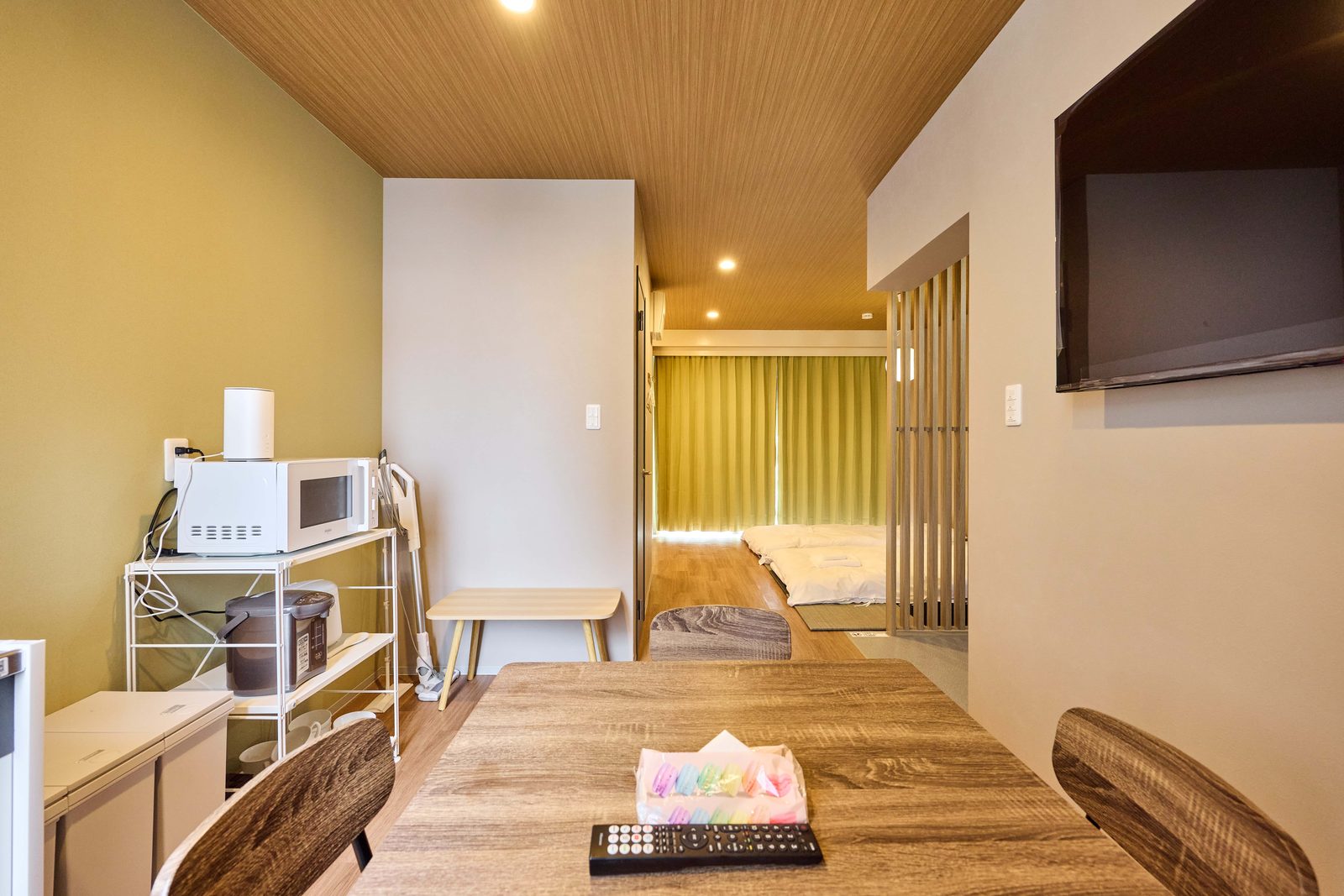
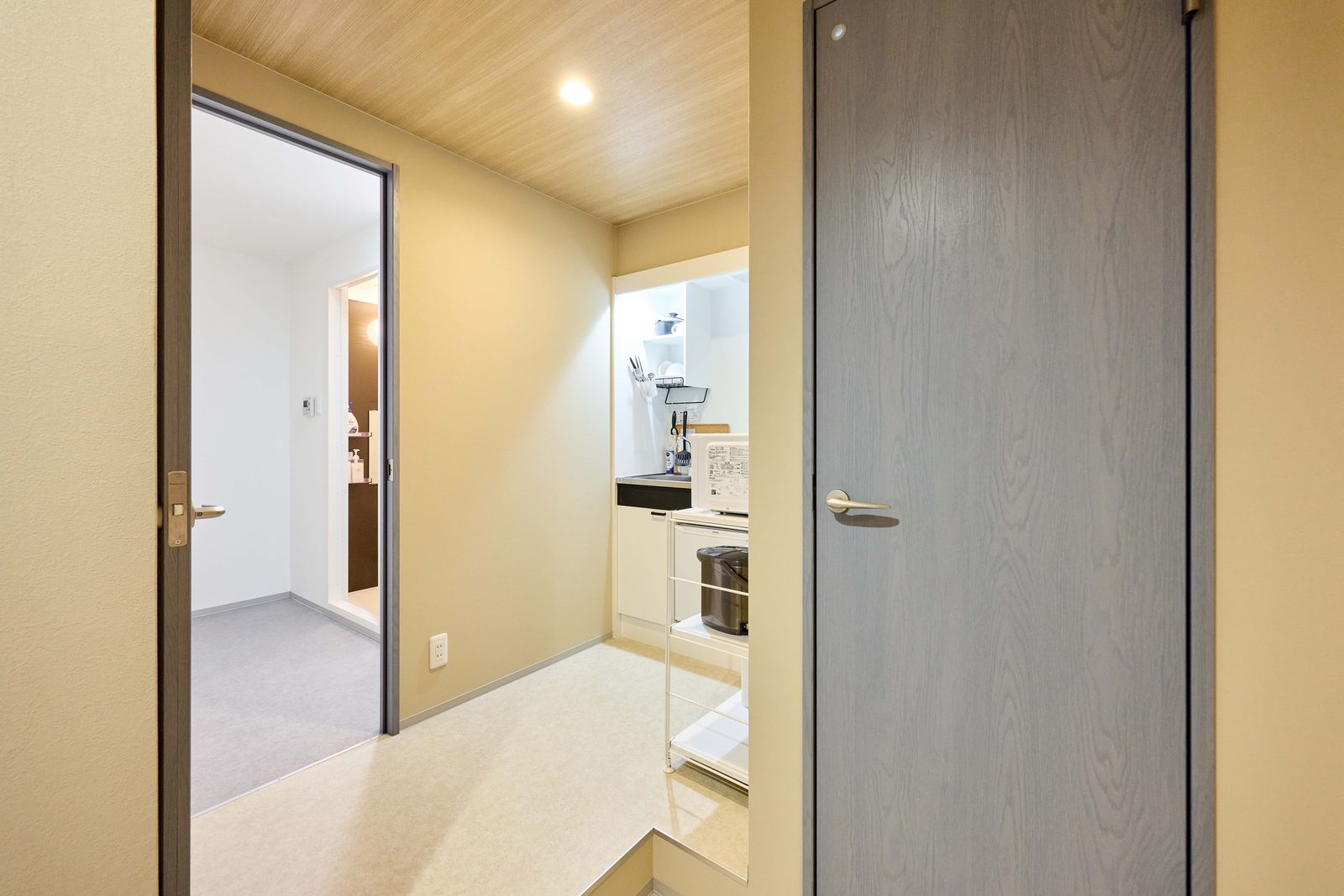
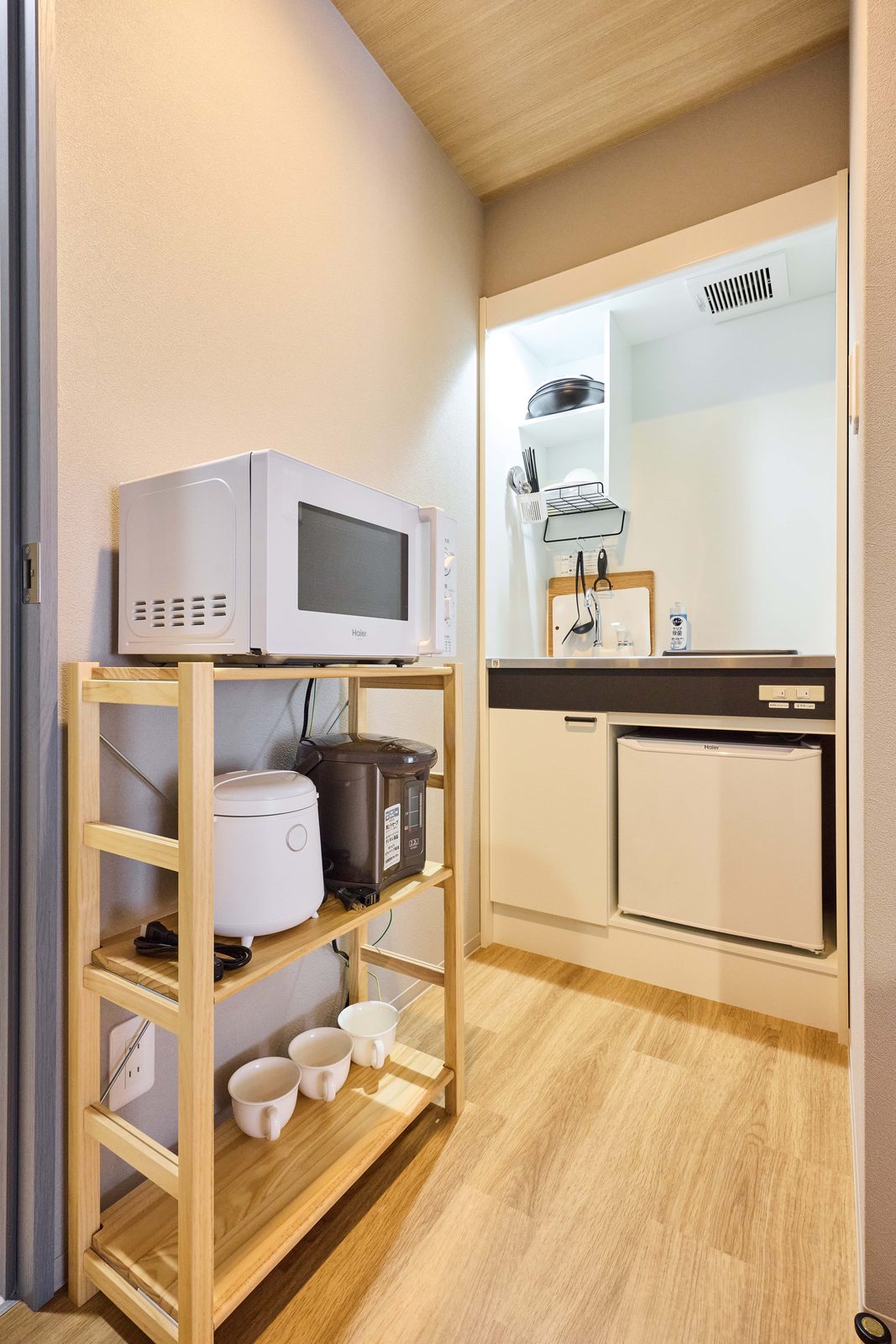
Shinsai Wings is a five-story steel-frame standalone building in Sangenya-higashi, Taisho Ward, Osaka, with Room A, B, C and D all in the same building - a group renting the whole house is staying under one roof. The whole house holds up to 16 guests, and each of the four room types has its own private bathroom with a bathtub, so everyone coming back from the show can use their own bathroom, while the shared kitchen and dining area work for continuing the night together. With multiple hotel rooms, a group commonly ends up split across different rooms, needing to separately arrange a time to meet up the next day. How to split a larger group across rooms is covered in Traveling to Osaka as a Group (/osaka-group-stay/).
Since each room type is its own independent unit, tell the host your group's size and situation before booking, and rooms can be assigned to fit.
For the full comparison between renting the whole house and booking multiple hotel rooms, see Whole House or a Hotel? and Osaka Group Stay Guide - not repeated here.
Still Playing in Osaka the Next Day - What Can a Taisho Station Stay Connect To?
A concert usually only takes up one evening, and there's still the rest of the trip to enjoy. Taisho Station's strength is having both the JR Osaka Loop Line and the Osaka Metro Nagahori Tsurumi-ryokuchi Line - the route toward downtown shopping and the route toward the Loop Line's other stations never tangle with each other.
A few common connections:
- Shinsaibashi / Dotonbori: direct from Taisho Station on the Nagahori Tsurumi-ryokuchi Line, 4 stops, about 6 minutes, ¥190 (Taisho is this line's terminus, so you board at the originating station).
- Universal Studios Japan: JR Osaka Loop Line to Nishikujo, transfer to the JR Yumesaki Line (Sakurajima Line), 1 transfer total, about 18-22 minutes depending on the train, ¥200.
- Osaka Station / Umeda, Tennoji: direct on the JR Osaka Loop Line in either direction.
The full stop sequence, fares and notes for each route are laid out in Taisho Station Area Guide: Getting to Shinsaibashi, Namba & Kyocera Dome.
Shinsai Wings - Verified Facts
- Location: Sangenya-higashi, Taisho Ward, Osaka, a standalone building, rare steel-frame construction, newly renovated
- Kyocera Dome and the property sit on opposite sides of JR Taisho Station; the Nagahori Tsurumi-ryokuchi Line reaches Dome-mae Chiyozaki Station 1 stop from Taisho Station - check a map app for the actual route on the day
- Taisho Station is served by both the JR Osaka Loop Line and the Osaka Metro Nagahori Tsurumi-ryokuchi Line
- Shinsaibashi: direct from Taisho Station, 4 stops, about 6 minutes, ¥190
- Universal Studios Japan: 1 transfer at Nishikujo, about 18-22 minutes depending on the train, ¥200
- Whole house holds up to 16 guests; four independent room types (Room A, B, C and D; Room D is a loft)
- Every room type has its own private bathroom, and all include a bathtub; private kitchen and private dining area; large balcony comes with Room B, C and D
- Tatami bedroom comes with Room A and Room D only
- Check-in 16:00 / Check-out 10:00; minimum stay 2 nights; no pets
- Room B, C and D are certified under Osaka's special-zone minpaku rule and can operate year-round under a licensed management company
Already know which show you're going to? Just tell the host the concert date and how many people and you can lock in the plan for those days. Tap "Free help booking your Osaka stay" at the bottom right, official LINE: @040fyjwd, run directly by Taiwanese hosts, communicating in Chinese with no barrier.
Is your group staying a few nights together, or is it just you staying a month or more?
Same building, same hardware, two ways to stay: a group renting the whole house (up to 16 people), or one person on a monthly long stay (from one month). Click through for the facts table, room-assignment logic, and how to ask about availability.
Still deciding? Add us on Official LINE @040fyjwd and tell us your move-in month and length of stay.