Understand Osaka's Geography First, and Half the Decision Is Made
For sightseeing purposes, downtown Osaka is roughly split into two centers, connected by the Midosuji subway line running between them:
- "Kita" (north) = the Umeda / Osaka Station area. Department stores, office towers, and the transit hub toward Kyoto and Kobe.
- "Minami" (south) = the Namba / Shinsaibashi / Dotonbori area. The Osaka most tourists know best: neon signs, drugstores, takoyaki, shopping streets.
There's also Tennoji (the southern gateway toward Nara and Kansai Airport) and Universal Studios Japan (its own separate zone, with everything else some distance away).
Most "which area" debates really just circle around these few points. And the option most people overlook is the sixth choice: staying in a residential area, anchored by a well-connected station - covered at the end of this guide.
Five Popular Areas to Stay, and Each One's Trade-off
| Area | Best for | The trade-off |
|---|---|---|
| Namba / Dotonbori | People whose trip centers on eating, drinking and shopping, who want lively right outside the door | High room rates, small rooms, noisy at night; peak-season crowd density is exhausting with elderly family or kids |
| Shinsaibashi | People whose top priority is shopping, who want to drop off bags and go right back out | Same high rates and small spaces; a shopping-district stay often has worse everyday livability than a residential area |
| Umeda / Osaka Station | People making frequent trips to Kyoto, Kobe or Nara | The station complex is a maze - dragging luggage around on day one is a shock; a heavily business-district atmosphere |
| Tennoji | People frequently heading to Nara, or toward Kansai Airport | Some distance from the core of "Minami"; the evening atmosphere varies a lot block by block |
| Near Universal Studios Japan | People spending two or more consecutive days in the park | If you're only doing USJ for one day, transit convenience for every other day of the trip drops sharply |
※ The table above is a general description of each area's character, meant to illustrate the trade-offs, not measured data, and it doesn't reference any specific prices. Actual room rates and room types vary enormously by listing, season and booking timing - go by whatever listing information you find at the time.
Looking at this table, one thing stands out: the trade-off for the first four areas is basically the same set - expensive, small, noisy. That's because they're all shopping and entertainment districts, where high land costs naturally push listings toward "small rooms, high per-night rates."
A Different Question: What Kind of Trip Is This?
Rather than asking "which area is best," figure out which type your trip falls into first:
Type A: Mainly shopping and eating, a short 2-3 day trip
Your itinerary is concentrated in "Minami," out during the day and straight to sleep at night. Namba or Shinsaibashi really is the least hassle for this type - a smaller room doesn't matter much, since you'll barely be in it.
Type B: Osaka as your base, with trips to Kyoto, Nara and Kobe
What matters is easy transit connections, not proximity to a shopping district. Umeda is the classic answer, but any station on the JR Loop Line has a solid foundation - the Loop Line connects the whole city, and linking to the major transit hubs isn't hard.
Type C: Traveling with elderly family, small children, or a large group
This is the type least suited to squeezing into a shopping district. The needs are simply different: space, somewhere to actually rest, somewhere to cook a meal, somewhere a crying child won't disturb the neighbors. A small shopping-district room checks none of those boxes, and shopping-district rates make you pay extra for "close to the action" while getting worse living conditions in return.
For the detailed criteria, see Osaka Family Stay Guide and Osaka Group Stay Guide.
Type D: Trip centered on Universal Studios Japan
If you're in the park two days running, staying next to it makes sense; for just one day, look for a spot with "a short route to USJ that's also convenient for everywhere else" - see USJ Stay Guide.
The Sixth Option: A Residential Area Plus a Well-Connected Station
If you're Type C or Type D, it's worth considering a quiet residential area, anchored by a station with good line connections.
What this choice trades away is "stepping out the door into a lively scene," in exchange for space, quiet, and usually more reasonable living conditions. And as long as you pick the right station, the cost of that quiet turns out to be small - because the lively spots are just a few stops away.
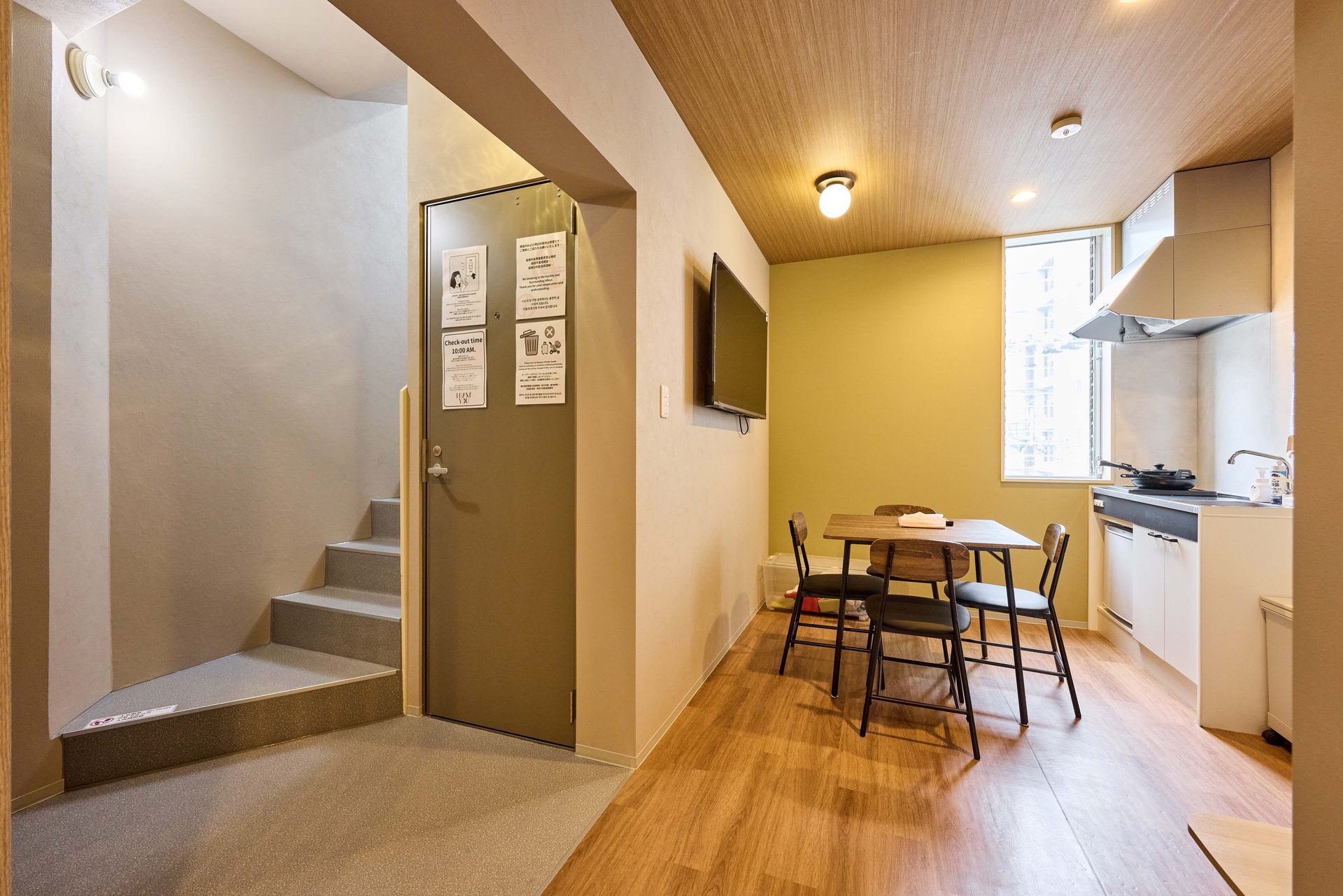
Shinsai Wings sits in exactly this spot: Taisho Ward, Osaka. Taisho Station is served by both the JR Osaka Loop Line and the Osaka Metro Nagahori Tsurumi-ryokuchi Line - the Nagahori Tsurumi-ryokuchi Line runs to Shinsaibashi (stop sequence and times in our Taisho Station area guide), and Universal Studios Japan is 1 transfer at Nishikujo, about 18-22 minutes depending on the train, ¥200. See the full route breakdown in Taisho Station Area Guide.
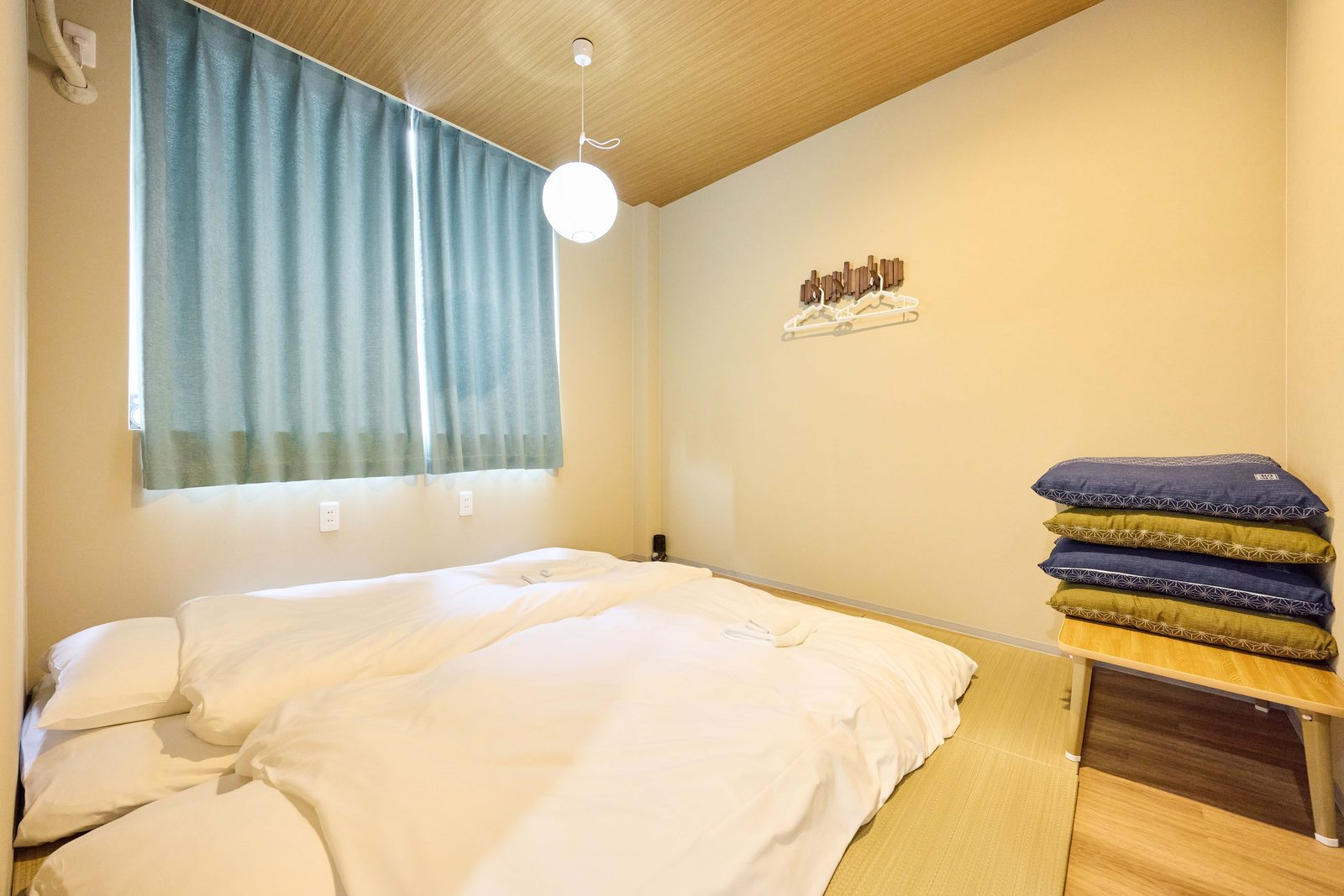
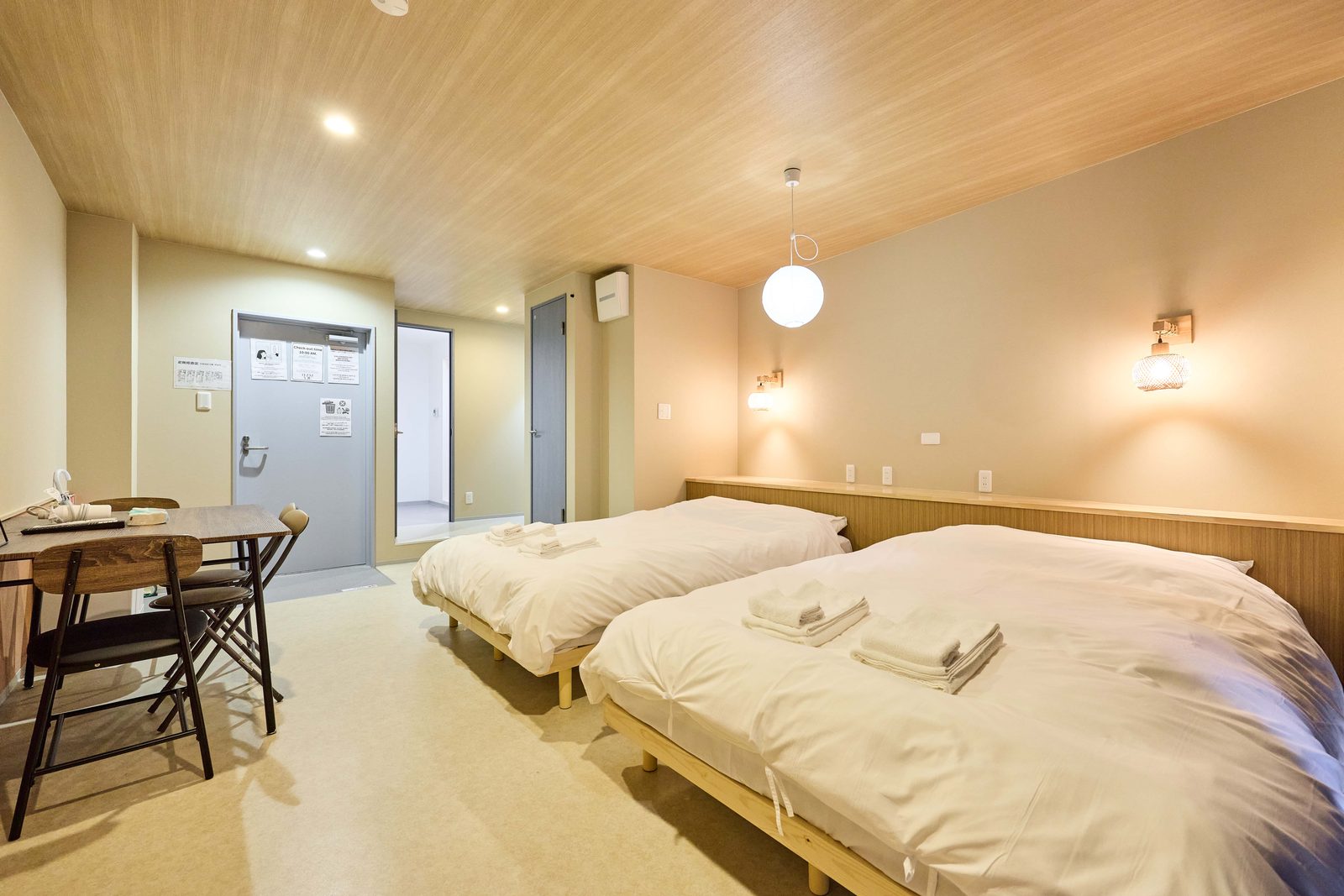
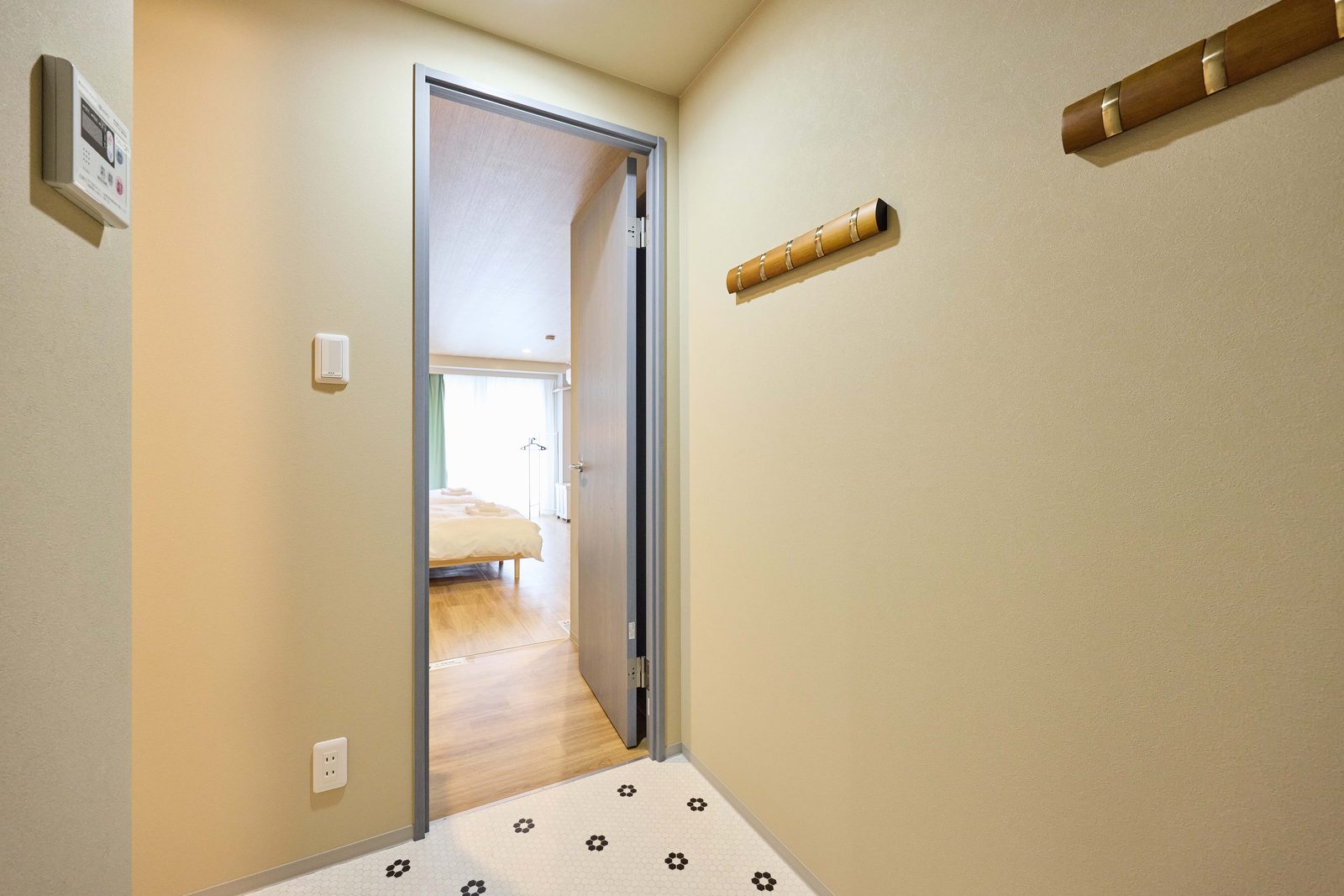
And the living conditions it offers are something a shopping-district listing can't match: standalone whole-house rental, each room type its own independent unit, every room type with a private bathroom including a bathtub, a private kitchen and private dining area, and a large balcony with Room B, C and D, all newly renovated; and only Room A and Room D have a tatami bedroom. For a group or multiple generations wanting to book the whole building, see the full specs at Osaka Whole-House Rental Overview.
Shinsai Wings - Verified Facts
- Taisho Ward, Osaka, a standalone building, rare steel-frame construction, newly renovated
- Universal Studios Japan: 1 transfer at Nishikujo, about 18-22 minutes depending on the train
- Four independent room types (Room A, B, C and D; Room D is a loft)
- Every room type has its own private bathroom, and all include a bathtub
- Private kitchen and private dining area; balcony comes with Room B, C and D; tatami bedroom comes with Room A and Room D only
- Run directly by Taiwanese hosts, communication entirely in Chinese
- Room B, C and D are certified under Osaka's special-zone minpaku rule and can operate year-round under a licensed management company
A Few More Things Worth Knowing Before Your First Osaka Trip
- Plan your days in a "radial" pattern, not a "straight line." Osaka's sights are concentrated, so heading one direction per day from your accommodation as the center point is the most efficient. Working your way from the outskirts into downtown wastes a lot of time in transit.
- Confirm how check-in works first. Minpaku and hotel check-in procedures differ - how to get the key on arrival day and what time you can enter should be confirmed before you leave home; this is the most common thing to go wrong on day one.
- Install a transit app ahead of time. Japan's transfer information changes often, so any guide (including this one) can only point you in a direction - check the actual schedule on the day.
- Leave one day with nothing scheduled. First-time visitors almost always over-plan, ending up rushing between every stop. Planning one fewer place often leaves a better impression of the whole trip.
- Check a minpaku's operating license. Japan's minpaku properties operate under different licensing systems, and whether a property can operate year-round depends on which license it holds - worth asking before booking.
FAQ
First time in Osaka - which area should I stay in?
Namba, Shinsaibashi, Umeda, Tennoji and near USJ each have their own trade-offs, mostly expensive, small and noisy; there's also a sixth option - a quiet residential area anchored by a well-connected station.
What's the difference between Osaka's "Kita" (north) and "Minami" (south)?
"Kita" (north) = the Umeda / Osaka Station area, a hub of department stores, office towers, and transit toward Kyoto and Kobe; "Minami" (south) = the Namba / Shinsaibashi / Dotonbori area, the Osaka most tourists know best: neon signs, drugstores, takoyaki, shopping streets.
First time in Osaka - how should I plan my itinerary?
Plan your days in a "radial" pattern, not a "straight line": Osaka's sights are concentrated, so heading one direction per day from your accommodation as the center point is the most efficient; working your way from the outskirts into downtown wastes a lot of time in transit. It also helps to leave one day with nothing scheduled - first-time visitors almost always over-plan.
What should I check before booking a minpaku in Osaka?
Confirm how check-in works first (how to get the key on arrival day, what time you can enter); Japan's minpaku properties operate under different licensing systems, and whether a property can operate year-round depends on which license it holds, so it's worth asking before booking. Shinsai Wings has four fully independent room types, A, B, C and D, each with its own private bathroom with a bathtub, a private kitchen and a private dining area; Room B, C and D have a large balcony, and only Room A and Room D have a tatami bedroom.
Not sure whether whole-house booking fits your trip, or want to check a specific date? Tap "Free help booking your Osaka stay" at the bottom right to ask the host directly, official LINE: @040fyjwd, run directly by Taiwanese hosts, communicating in Chinese with no barrier.
Is your group staying a few nights together, or is it just you staying a month or more?
Same building, same hardware, two ways to stay: a group renting the whole house (up to 16 people), or one person on a monthly long stay (from one month). Click through for the facts table, room-assignment logic, and how to ask about availability.
Still deciding? Add us on Official LINE @040fyjwd and tell us your move-in month and length of stay.