What Ways Are There to Get from Kansai Airport into Downtown Osaka, and What's the Difference?
Essentially just two rail systems: JR West, and Nankai Electric Railway. Both systems' stations sit in the same connecting building across from Terminal 1 at Kansai Airport - it's a short walk over - and the difference is which direction into Osaka each one goes.
| System | Main service | Where it goes | Best for |
|---|---|---|---|
| JR West | Kanku Rapid (regular car, no limited-express ticket needed) / Limited Express Haruka (extra fee) | Tennoji, the stations on the Osaka Loop Line (including Taisho), Osaka Station, toward Kyoto | Anyone staying along the Loop Line, including Taisho Station |
| Nankai Electric Railway | Airport Express (regular car) / Limited Express Rapi:t (extra fee) | Namba, Shin-Imamiya | Anyone staying around Namba or Shinsaibashi |
Which system to pick isn't about which is faster, it's about which line your accommodation is on. Saving 5 minutes while transferring an extra time and dragging luggage through a long connecting corridor is actually a net loss.
Also, both systems have a limited express that costs extra (JR's Haruka, Nankai's Rapi:t). Their value is mainly "a reserved seat, somewhere to put your luggage," not a large time saving - the time difference at the time of checking wasn't nearly as noticeable as the fare difference. With large luggage and during peak hours, the extra fare buys you a guaranteed seat.
Dragging Heavy Luggage, How Many Transfers Is Acceptable?
One rule of thumb: one transfer is fine, two transfers is where you should rethink the plan.
Transferring at a Japanese station isn't as simple as "walk across to the opposite platform." In practice you'll deal with: stairs or hunting for an elevator, crossing a long connecting corridor, moving against the flow of foot traffic, and doing it all within a few minutes. One person with one 28-inch suitcase can manage that fine; a family of four with four suitcases and a stroller turns every extra transfer into a small move.
So here's the suggested priority order when planning:
- Number of transfers (most important)
- Whether you get a seat (decides whether that hour is spent resting or standing)
- Fare
- Travel time (least important - saving 10 minutes won't change your day)
⚠️ Note: Japan's rail schedules adjust by time of day and season, so the same origin and destination, checked at different times, may show a different number of transfers. The next section covers this in detail - it matters especially for Taisho Station.
How Do You Actually Get to Taisho Station, How Long Does It Take, and How Much Does It Cost?
The headline answer first: Taisho Station means taking the JR system; the lowest fare route was ¥1,060 at the time of checking, with a travel time of roughly 1 hour.
We used two Japanese transit-search services on the same day, checking once during the day and once late at night, and here's what came back:
| Time checked | Lowest-fare route | Transfers | Travel time |
|---|---|---|---|
| Morning | JR system, ¥1,060 | 0-transfer service found | About 1 hr 5 min |
| Evening | JR system, ¥1,060 | 0-transfer service found | About 1 hr 6 min |
| Late night | JR system, ¥1,060 | 1 transfer required (Tennoji or Shin-Imamiya) | About 1 hr 10 min |
※ Results from two public Japanese transit-search services (Ekitan, Yahoo! Transit) checked on the same day at different times (checked 2026-08-24). ⚠️ These are the schedule results at the time of checking, and schedules change by time of day and season. Timetables shift, and adjust for weekdays vs. weekends and by season; check JR West's official information or a transit app's result for the day before you travel; this page shows what was verified on the day it was checked, with its source.
Two useful things to take from this table:
- The fare is stable. No matter the time of day, the JR system to Taisho Station was ¥1,060 minimum, with travel time around 1 hour. Budget and time can be planned around that.
- The number of transfers shifts by time of day. Daytime and evening checks found services with no transfer needed; late at night, none turned up. So "whether you'll need to transfer" isn't something to memorize in advance - check it against your actual flight time on the day.
If the route you find requires a transfer, the transfer point is usually Tennoji or Shin-Imamiya, connecting to the JR Osaka Loop Line on to Taisho. Taisho Station itself is a stop on both the JR Osaka Loop Line and the Osaka Metro Nagahori Tsurumi-ryokuchi Line; both routes are laid out in Taisho Station Area Guide.
Arriving in the Middle of the Night or Early Morning, How Should the Plan Change?
Budget airline flight times often land at an awkward hour. When that's the case, three things to think through first:
- Your route may add a transfer. That's what the previous section found. Direct late-night services thin out, so factor the extra time and effort into your plan.
- Confirm the last train. If you're landing late, check both "the last train out of the airport" and "the last connecting train toward Taisho" - not just the first one.
- An early-morning arrival means dealing with check-in time. Shinsai Wings' check-in is 16:00, so arriving in the morning leaves a gap to plan around.
Schedules change, so treat the last-train time as whatever you find when you check on your travel day. The right approach is to plug your flight's arrival time into a transit app for the day's result, or message the time to the host on LINE and confirm together.
How Much Time Should I Budget for the Trip Back to the Airport?
The roughly "1 hour" found for the inbound trip is a reasonable baseline, but budget the return trip separately. Here's what to add for the return:
- Checkout to leaving: Shinsai Wings' checkout time is 10:00.
- Fewer early-morning services than daytime: for an early flight, check the first train's time separately - don't assume it's as frequent as during the day.
- The airport's own timeline: check-in, baggage drop, security and immigration - unrelated to the rail portion, but it's what actually decides what time you need to leave.
The safer approach: fix the airline's check-in deadline first, work backward from there, and add a buffer on top of the rail travel time. More luggage, more people, or traveling with children all call for a longer buffer - missing a flight costs far more than an extra hour spent waiting at the airport.
What Happens After I Reach Taisho Station?
Here's something worth being upfront about. Shinsai Wings is located around Sangenya-higashi, Taisho Ward, Osaka, with JR Taisho Station as the nearest station; for the actual route from Taisho Station to the door, check a map app's live result, or ask the host directly via official LINE.
We don't estimate, don't write "approximately," and don't substitute a vague adjective for it. The reason is simple: arrival day is already exhausting enough, and the last thing you need is a number that doesn't match reality. The last stretch on arrival day is most accurately answered by asking the host directly via official LINE - he'll answer honestly, and can also help confirm your check-in plan for the day ahead of time.
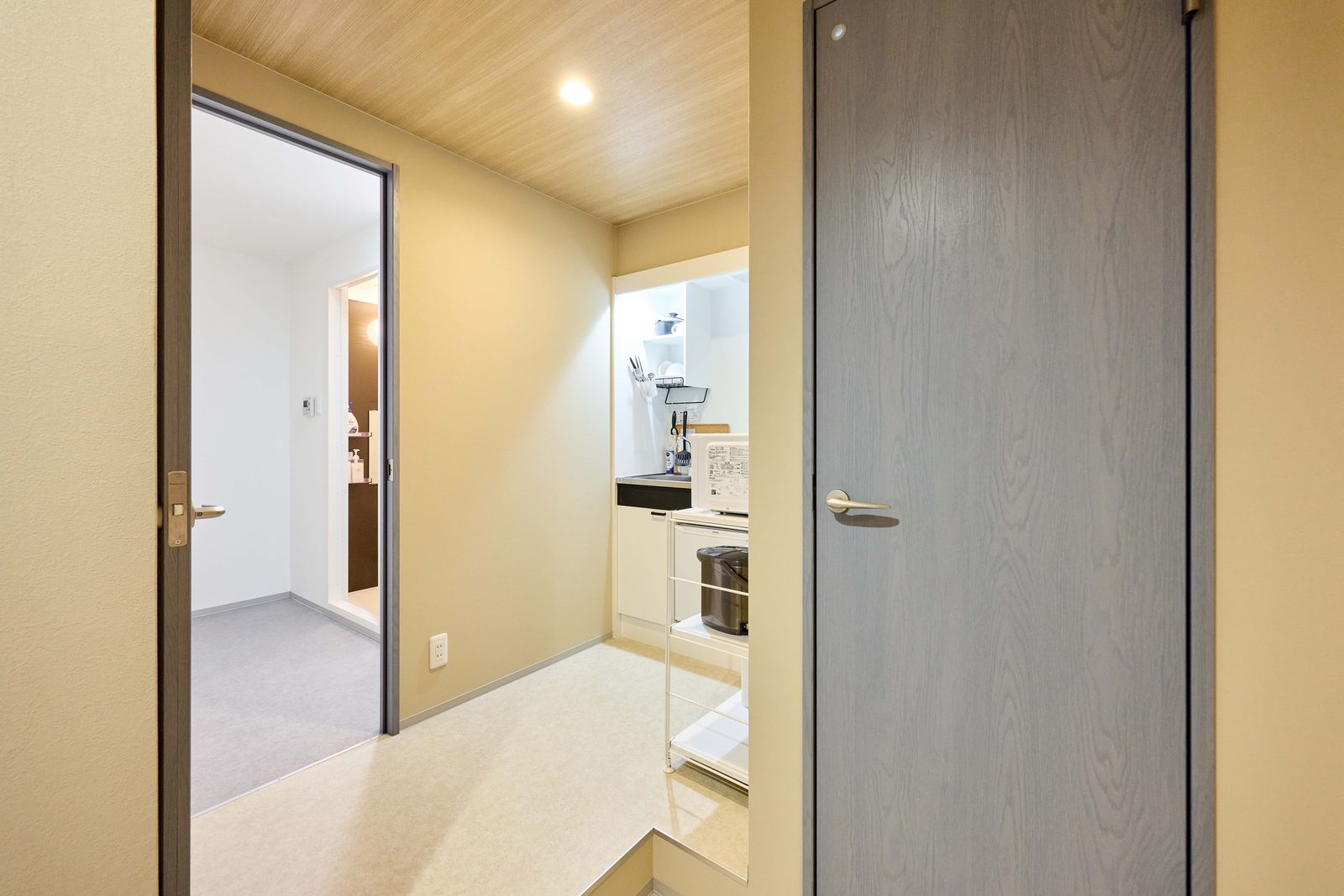
Also, each room type at Shinsai Wings is its own independent unit, so telling the host your headcount, number of bags and group situation before booking lets rooms be assigned to fit.
Shinsai Wings - Verified Facts
- Location: Sangenya-higashi, Taisho Ward, Osaka, a standalone building, rare steel-frame construction, newly renovated
- Taisho Station is served by both the JR Osaka Loop Line and the Osaka Metro Nagahori Tsurumi-ryokuchi Line
- Shinsaibashi: direct from Taisho Station, 4 stops, about 6 minutes, ¥190
- Universal Studios Japan: 1 transfer at Nishikujo, about 18-22 minutes depending on the train, ¥200
- Check-in 16:00 / Check-out 10:00; minimum stay 2 nights; no pets
- Whole house holds up to 16 guests; four independent room types (Room A, B, C and D; Room D is a loft)
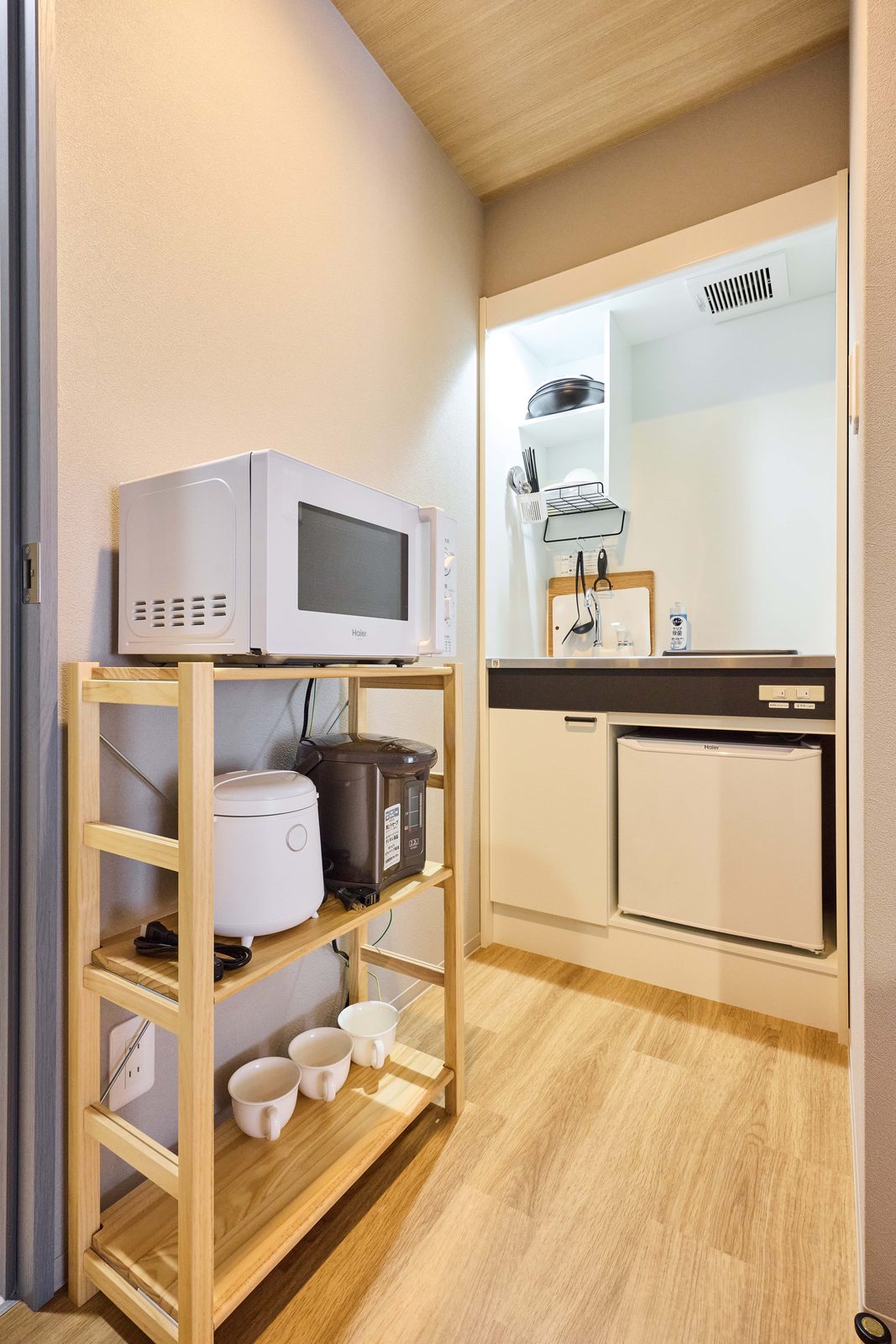
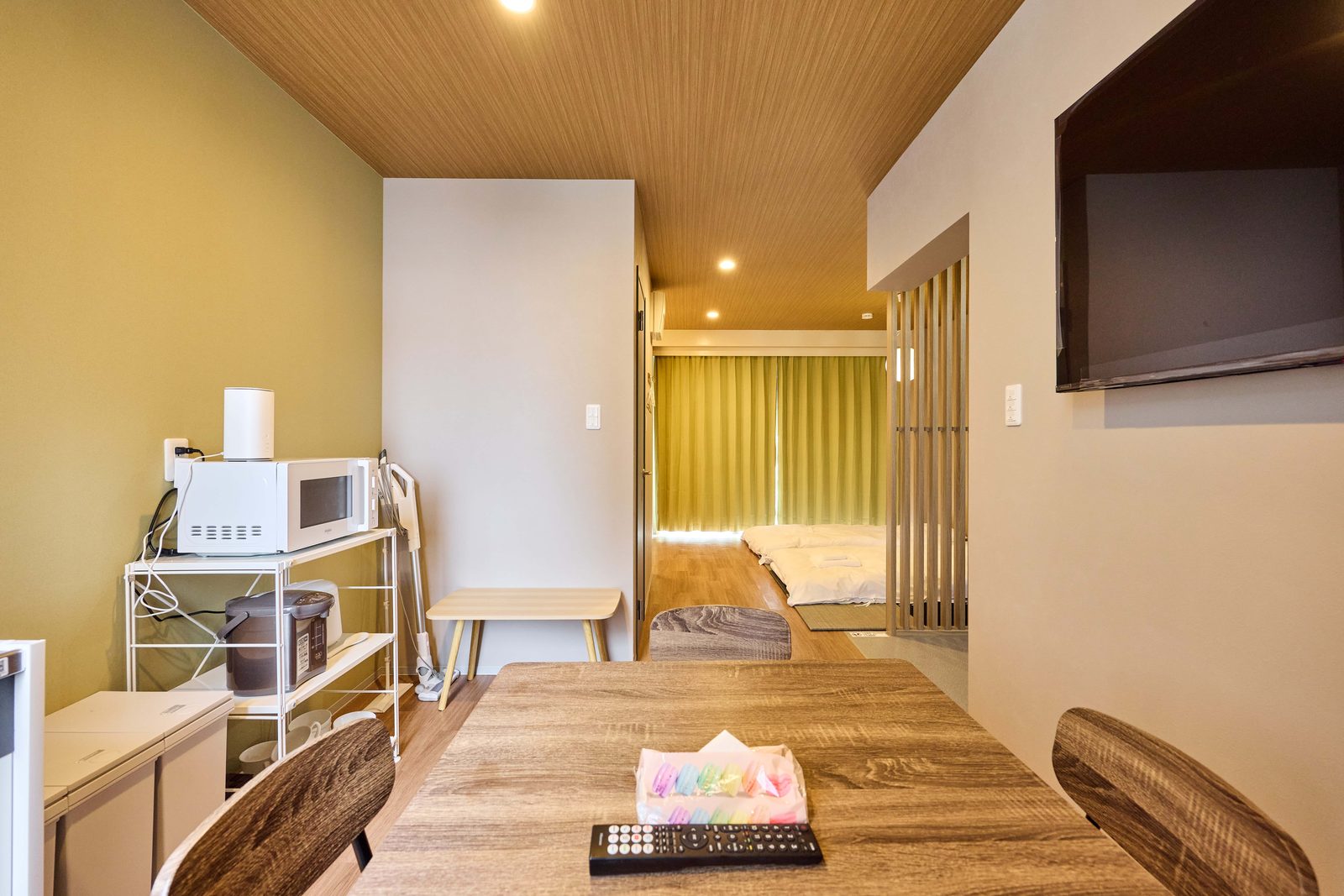
- Every room type has its own private bathroom, and all include a bathtub; private kitchen and private dining area; large balcony comes with Room B, C and D
- Tatami bedroom comes with Room A and Room D only
- Room B, C and D are certified under Osaka's special-zone minpaku rule and can operate year-round under a licensed management company
Arrival-day route check: tell the host your flight's arrival time, and confirm the day's transit and check-in plan together (check-in 16:00 / check-out 10:00). Tap "Free help booking your Osaka stay" at the bottom right, official LINE: @040fyjwd, run directly by Taiwanese hosts, communicating in Chinese with no barrier.
Is your group staying a few nights together, or is it just you staying a month or more?
Same building, same hardware, two ways to stay: a group renting the whole house (up to 16 people), or one person on a monthly long stay (from one month). Click through for the facts table, room-assignment logic, and how to ask about availability.
Still deciding? Add us on Official LINE @040fyjwd and tell us your move-in month and length of stay.