Does this sound like you?
- A couple traveling abroad with one or two kids, for the first or second time
- Kids still young enough to need an afternoon nap and an early bedtime -- the schedule can't just follow the adults
- Want to stay a few days in Osaka and only unpack once
- Already tried working out on a booking site how many rooms a family of four needs, and it never quite adds up
What problems are you actually running into?
- Room occupancy caps. A family of four often needs two rooms, and five or six makes it even more of a hassle.
- Once the kids are asleep, the adults have nowhere to go. In a single room, that means turning off the lights and scrolling your phone.
- Meals. Young kids need rice porridge, warm milk, cut-up fruit -- restaurant wait times are hard on them.
- Bath time. A bathtub is easier for kids than a shower, but many rooms only have a shower stall.
- Changes of clothes. Kids can go through three outfits in a day out, and a four-day trip's luggage fills up fast.
None of this is about how new the room is -- it's about a family actually living day-to-day in the same space.
Hotel, Share House, Regular Lease: what each is good for
Table 1: Four ways for a family to stay in Osaka
| How you stay | What it's good for | What to watch for |
|---|---|---|
| Hotel (split into two or three rooms) | Wide choice of locations, daily housekeeping, 24-hour front desk, bookable from one night, and the hotel can usually help arrange a crib or extra bed | The family ends up split across different rooms; most rooms have no kitchen or laundry; no shared dining table outside the rooms |
| Share House | Low monthly entry cost, simple paperwork | Kitchen and bathroom are shared, which is hard to coordinate with a young child's schedule; usually priced by the month |
| Regular leased apartment | Lowest unit cost for a long stay, and you can arrange the space yourself | Usually handed over empty: buy your own furniture and appliances, handle disposal when you leave; screening, a guarantor and upfront fees are extra, and it doesn't work for a short trip |
| A fully independent unit (Shinsai Wings) | The whole family stays in the same room type: its own door, full kitchen, private dining area, private bathroom with a bathtub, and a washer and dryer; Room A and Room D have a tatami bedroom; short stays from 2 nights, with monthly stays of a month or more also available | 2-night minimum; keeping the room tidy is up to whoever's staying, with cleaning arranged after checkout; you walk to the station yourself, so check your map app for the actual route |
Hotel prices change daily, so this page doesn't state anyone else's numbers. What a family should really compare is the total cost and hassle of the whole trip: how many rooms, how many bathrooms, how many meals eaten out, how laundry gets handled, and where the adults are while the kids nap.
When Shinsai Wings might fit you
- You want the whole family in the same space. One room type is one fully independent unit.
- You'll actually use a kitchen. Cook porridge, warm up baby food, cut fruit, make a pot of curry -- the dining table is right there.
- You want your kids to be able to soak in a bath. Every room type's private bathroom has a bathtub.
- You need to do laundry the same day. A washer and dryer are available for use.
- You're staying 3 nights or more and want a home base for exploring Osaka. Unpack just once.
- You want every detail confirmed clearly in Chinese. Run directly by Taiwanese hosts.
When a hotel fits better
- You're only staying one or two nights and changing cities daily. A station-side hotel is the least effort.
- You want to step outside straight into Dotonbori or the Universal Studios gate. If it's the location you want, stay at that location.
- You need daily housekeeping and a front desk open through the night. That's a hotel's specialty.
- You need a crib, kids' amenities, or a restaurant kids' menu. Hotels are better equipped for that.
- Your plans might still change. Hotels book from one night and are easy to reschedule.
If any of these describe you, booking a hotel will go more smoothly; if what you want is for the family to actually live in Osaka for a few days, keep reading for room types below.
Room recommendation: families start with Room D
Table 2: Room types for a family
| Room type | What this room does | Best for |
|---|---|---|
| Room D | Makes this Osaka stay more comfortable: a loft (multi-level) layout, the most spacious feel, a tatami bedroom, a large balcony, a full kitchen and private dining area | Traveling with young kids, wanting room to move around, or wanting to sit and talk once the kids are asleep |
| Room B | A complete space for a family to live together: full kitchen, private dining area, private bathroom with a bathtub, large balcony | A family of three or four wanting a large balcony to hang laundry |
| Room C | A fully independent unit with a twin-bed layout: full kitchen, private dining area, private bathroom with a bathtub, large balcony | Older kids who each need their own bed |
| Room A | A tatami bedroom, full kitchen, private bathroom with a bathtub; the easiest access, zero-hassle luggage | The grandparents' group when three generations travel together, or anyone with a lot of luggage |
The whole house sleeps up to 16 guests. Tell us your group's makeup (how many adults, how many children and their ages) and we'll arrange bed configuration according to room availability at the time. How to split rooms for three generations or multiple family groups traveling together is covered in "Traveling to Osaka as a Group."
Real photos: the places a family actually uses
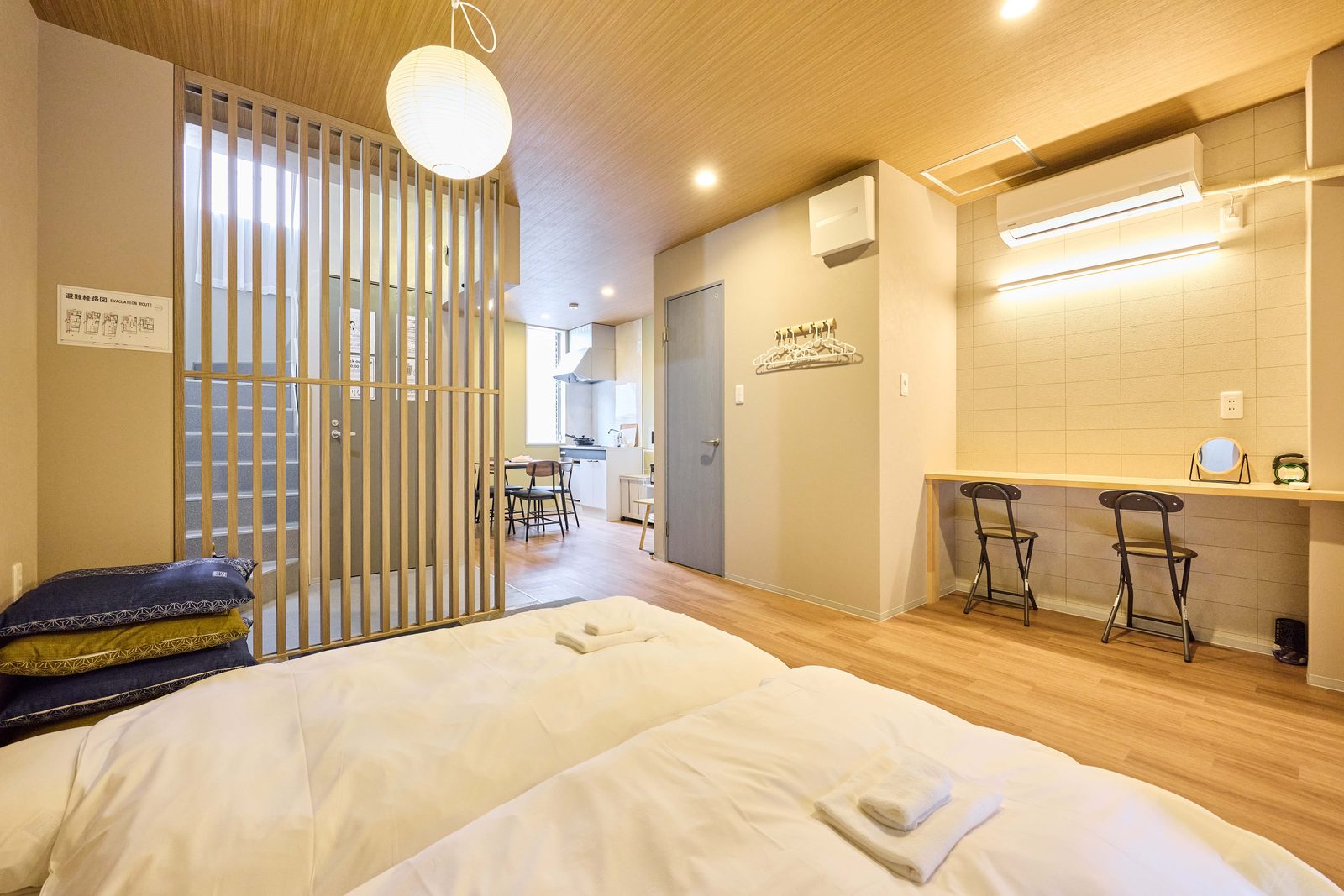
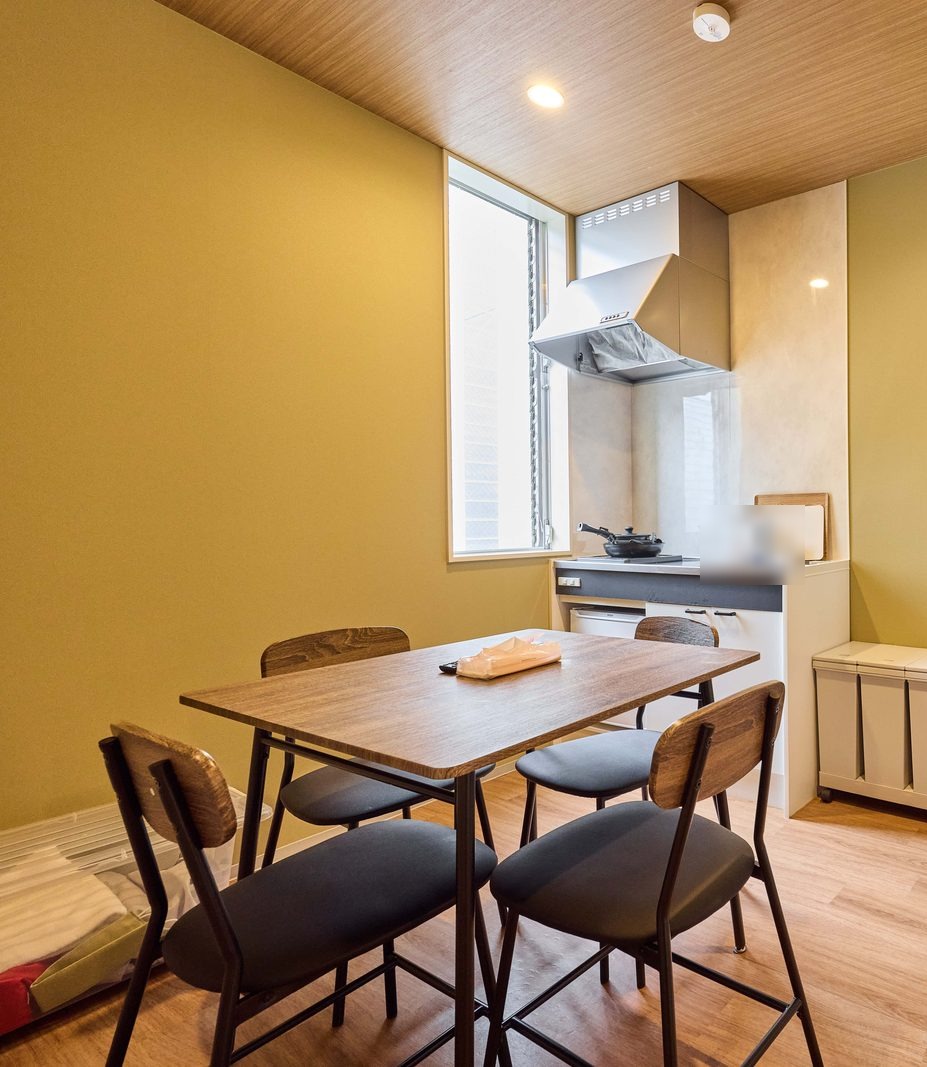
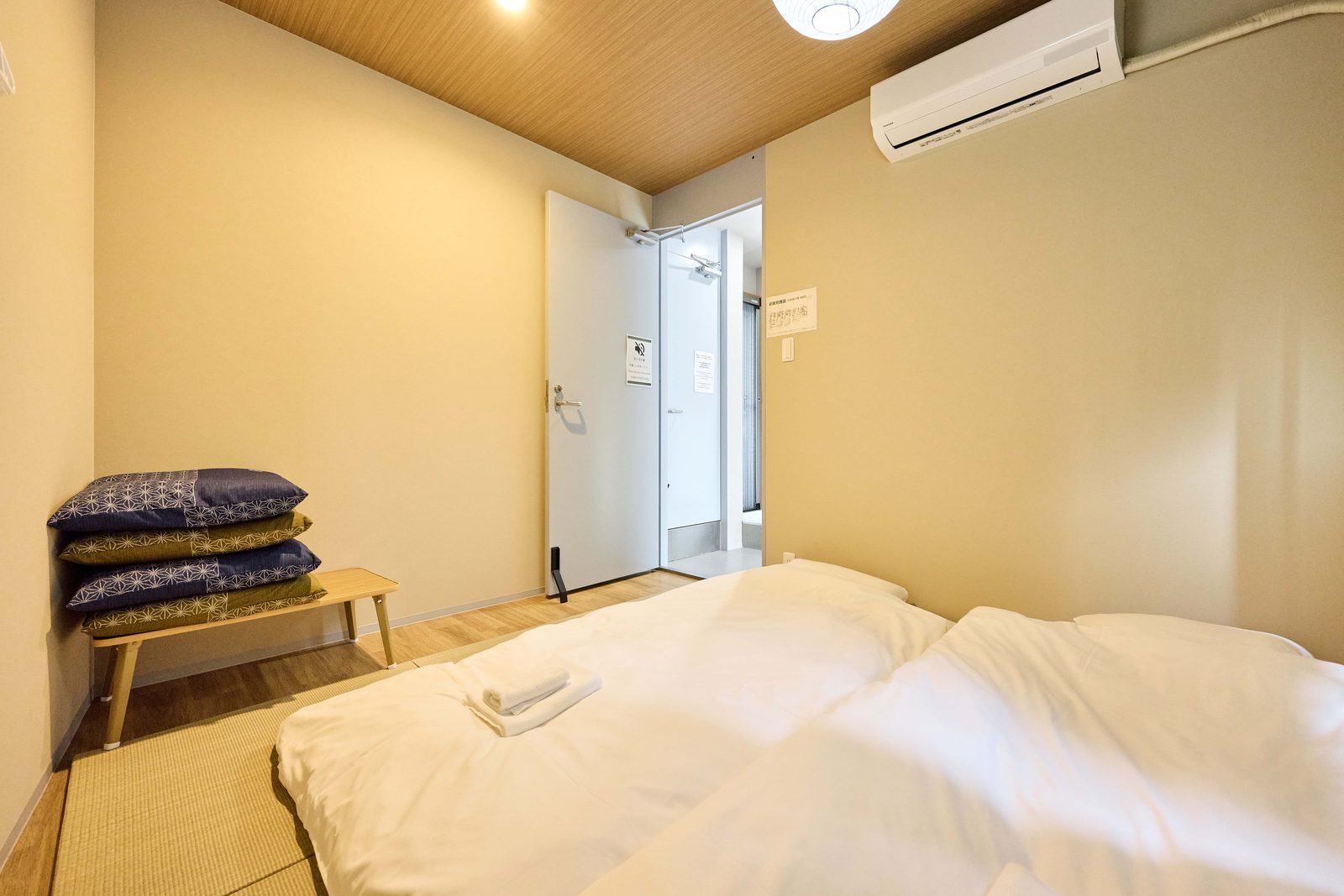
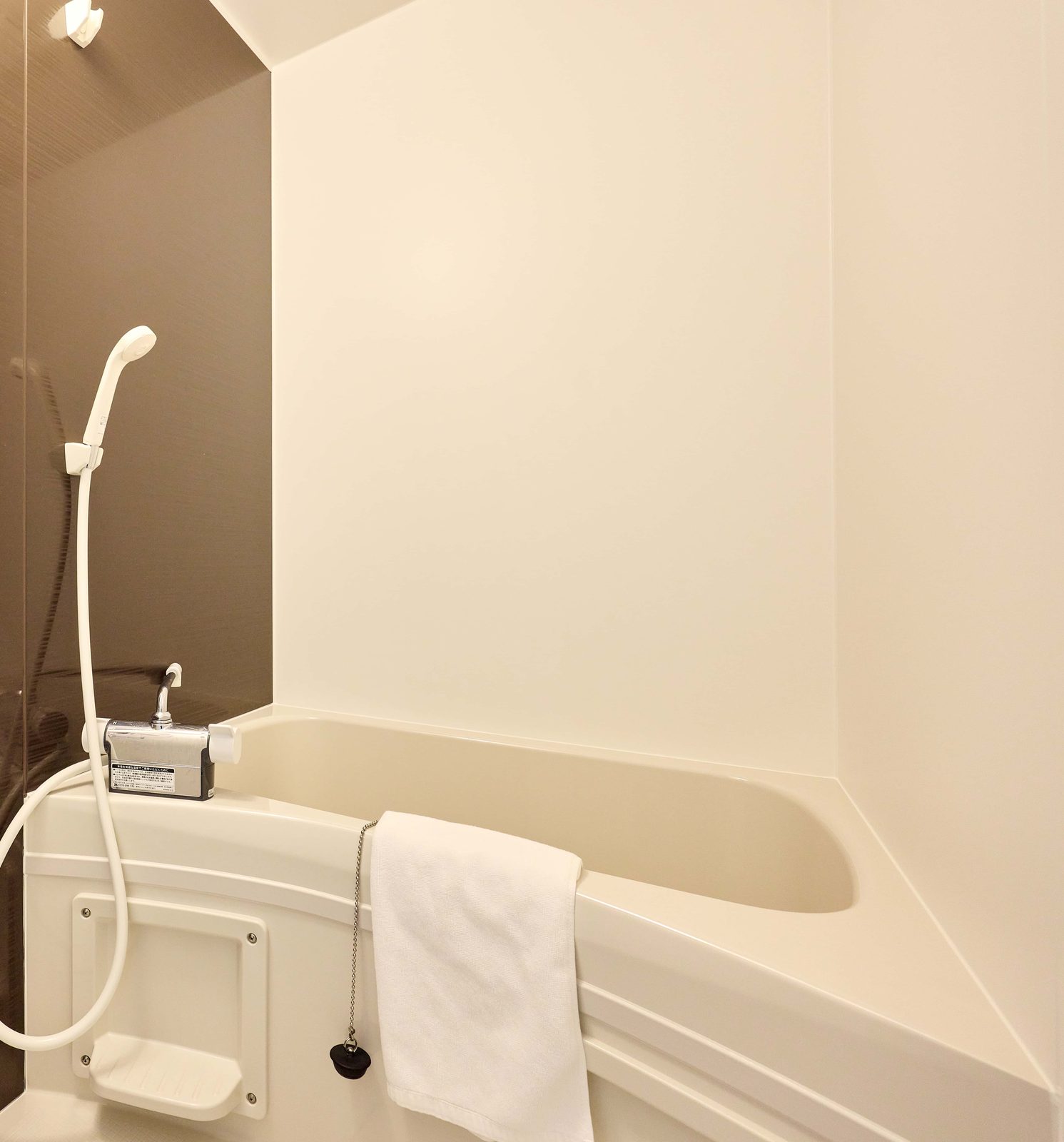
A high-ceiling space to move around in, a dining table where everyone can eat together, a tatami bedroom, and a private bathroom with a bathtub -- these four are the places you'll use most when traveling with kids. A walk-through video of the whole room type is on Room Tour Videos.
Transit: 4 stops to Shinsaibashi in about 6 minutes, 1 transfer to Universal Studios Japan
Shinsaibashi is a direct ride: take the Osaka Metro Nagahori Tsurumi-ryokuchi Line from Taisho Station, 4 stops, about 6 minutes, ¥190 (Taisho is the line's terminus). Universal Studios Japan takes a different route: transfer to the JR Yumesaki Line at Nishikujo Station, 1 transfer total, about 18-22 minutes depending on the train, ¥200. Toward Kyocera Dome: 1 stop on the Nagahori Tsurumi-ryokuchi Line from Taisho Station to Dome-mae Chiyozaki Station. Taisho Station is served by both the JR Osaka Loop Line and the Osaka Metro Nagahori Tsurumi-ryokuchi Line, and connections toward Kansai International Airport also start from here.
For the actual walking route from the building to the station, go by your map app's real-time result. For the full route in more detail, see "Taisho Station Area Guide" and "Kansai Airport to Taisho Station."
Pricing and how to ask
For trip-length short stays, pricing depends on dates, headcount and season, so this page doesn't state a number -- tell the official LINE @040fyjwd your check-in date, number of nights, how many adults, how many children and their ages, and we'll reply with a room type and price based on the actual situation at the time.
For stays of a month or more (accompanying a student, an extended break, a relocation with family), the price is public:
Table 3: Shinsai Wings monthly rent by room type (electricity, water, gas & internet all included)
| Room type | Monthly rent | Included |
|---|---|---|
| Room A | ¥160,000/month | Electricity, water, gas and internet, all included |
| Room B | ¥180,000/month | Electricity, water, gas and internet, all included |
| Room C | ¥180,000/month | Electricity, water, gas and internet, all included |
| Room D (loft) | ¥200,000/month | Electricity, water, gas and internet, all included |
Payment happens in three steps: half a month's rent as a booking deposit at the time of reservation → one month's rent as a deposit at check-in when you sign → the deposit refunded in full once checkout is confirmed clear. Entry conditions are no high deposit, no key money, no agency fee (just one month's deposit), and no guarantor required.
FAQ
A family trip to Osaka, how many hotel rooms do we need to book? Is there another way?
Yes. The hotel approach splits a family into two or three rooms by headcount, each with its own bed and bathroom, but with no shared dining table or kitchen. Shinsai Wings' approach is for the whole family to stay in the same room type: one room type is one fully independent unit, with its own door, a full kitchen, a private dining area, and a private bathroom with a bathtub, so the whole family is in the same space -- once the kids are asleep, the adults can still sit at the table and talk. For the most spacious layout, Room D (loft) is the top choice. Tell the official LINE @040fyjwd your dates, how many adults, how many children and their ages, and we'll recommend a room type directly.
Traveling with young children in Osaka, what does this offer that hotel rooms usually don't?
Three things: a full kitchen and private dining area (cook rice porridge, warm up baby food, sterilize bottles, and eat at your own table), a private bathroom with a bathtub (kids can soak instead of just showering), and a washer and dryer (wash the kids' clothes the same day). A tatami bedroom comes with Room A and Room D -- parents are usually more at ease letting a crawling or toddling child play on tatami flooring.
Traveling to Universal Studios Japan with the family, is staying in Taisho Ward convenient?
Getting to Universal Studios Japan means transferring to the JR Yumesaki Line at Nishikujo Station -- 1 transfer, about 18-22 minutes depending on the train, ¥200. On days with kids, leaving early to avoid the crowds is a good idea, and when you get back in the evening you can still cook something warm in your own kitchen and get the day's laundry done. Shinsaibashi is a direct ride: 4 stops on the Osaka Metro Nagahori Tsurumi-ryokuchi Line from Taisho Station, about 6 minutes, ¥190. For the actual walking route from the building to the station, go by your map app's real-time result.
Which room type suits a family, and how many people can stay?
Families most often choose Room D: a loft (multi-level) layout with the most spacious feel, a tatami bedroom and a large balcony. Room B and Room C are also fully independent units, each with a full kitchen, a private bathroom with a bathtub, and a large balcony. The whole house sleeps up to 16 guests. Tell us your group's makeup -- how many adults, how many children and their ages -- and we'll arrange bed configuration according to room availability at the time.
What's the minimum stay? What are check-in and check-out times?
The minimum stay is 2 nights, with check-in at 16:00 and check-out at 10:00. Under Osaka City Ordinance No. 3, a special-zone minpaku's facility-use period must be at least 3 days (2 nights), which is why this type of property in Osaka is generally a 2-night minimum.
Can we bring grandparents and kids together, three generations at once?
Yes. A common approach for three generations traveling together is to split into two groups, each in its own room type: the grandparents in one, parents and kids in the other, both in the same building, each with its own door and private bathroom with a bathtub, and everyone gathering at one room's dining table during the day. Room A is often assigned to the grandparents' group (the easiest access, zero-hassle luggage, and a tatami bedroom). How to arrange multiple family groups is covered on "Traveling to Osaka as a Group." Tell the official LINE @040fyjwd your dates and total headcount, and we'll check for you. Whether 10 people should rent the whole house or book several hotel rooms is covered on "Traveling to Osaka as a Group" (/en/osaka-group-stay/).
How much does it cost for a family to stay here?
Monthly rent for stays of a month or more is public: Room A ¥160,000, Room B ¥180,000, Room C ¥180,000, Room D (loft) ¥200,000, all including electricity, water, gas and internet. For trip-length stays under a month, pricing depends on dates, headcount and season, so this page doesn't state a number -- tell the official LINE @040fyjwd your check-in date, number of nights, and how many adults and children, and we'll reply based on the actual situation at the time.
Family Trip to Osaka -- At a Glance
- A 5-story steel-frame standalone building in Sangenya-higashi, Taisho Ward, Osaka, with Room A, B, C and D -- four fully independent room types in the same building, each used by one party at a time with its own door
- Every room type has a full kitchen, a private dining area, and a private bathroom with a bathtub; large balcony: comes with Room B, C and D; tatami bedroom: comes with Room A and Room D
- Check-in 16:00 / check-out 10:00; 2-night minimum; whole house up to 16 guests; no pets; washer and dryer available for use
- Shinsaibashi: direct, 4 stops, about 6 minutes, ¥190
- Universal Studios Japan: 1 transfer, about 18-22 minutes depending on the train, ¥200
- Run directly by Taiwanese hosts, direct communication in Chinese; official LINE can arrange your stay directly
- Families most often choose Room D (loft, most spacious, tatami bedroom); need a large balcony, see Room B or Room C
- Short stays priced by date and headcount; monthly rent for stays of a month or more: A ¥160,000 / B·C ¥180,000 / D ¥200,000 (electricity, water, gas and internet included)
Traveling to Osaka as a family? Tell us: move-in month / headcount / how long you plan to stay / what brings you to Osaka -- we'll help you find the right room type directly. Official LINE @040fyjwd: Tap here to start a conversation.
Traveling to Osaka as a family? Start with four things
Move-in month, how many people (adults, children and their ages), how long you plan to stay, and what brings you to Osaka -- give us these four things and we'll tell you which room type fits. Multiple family groups traveling together should see the group-stay page.