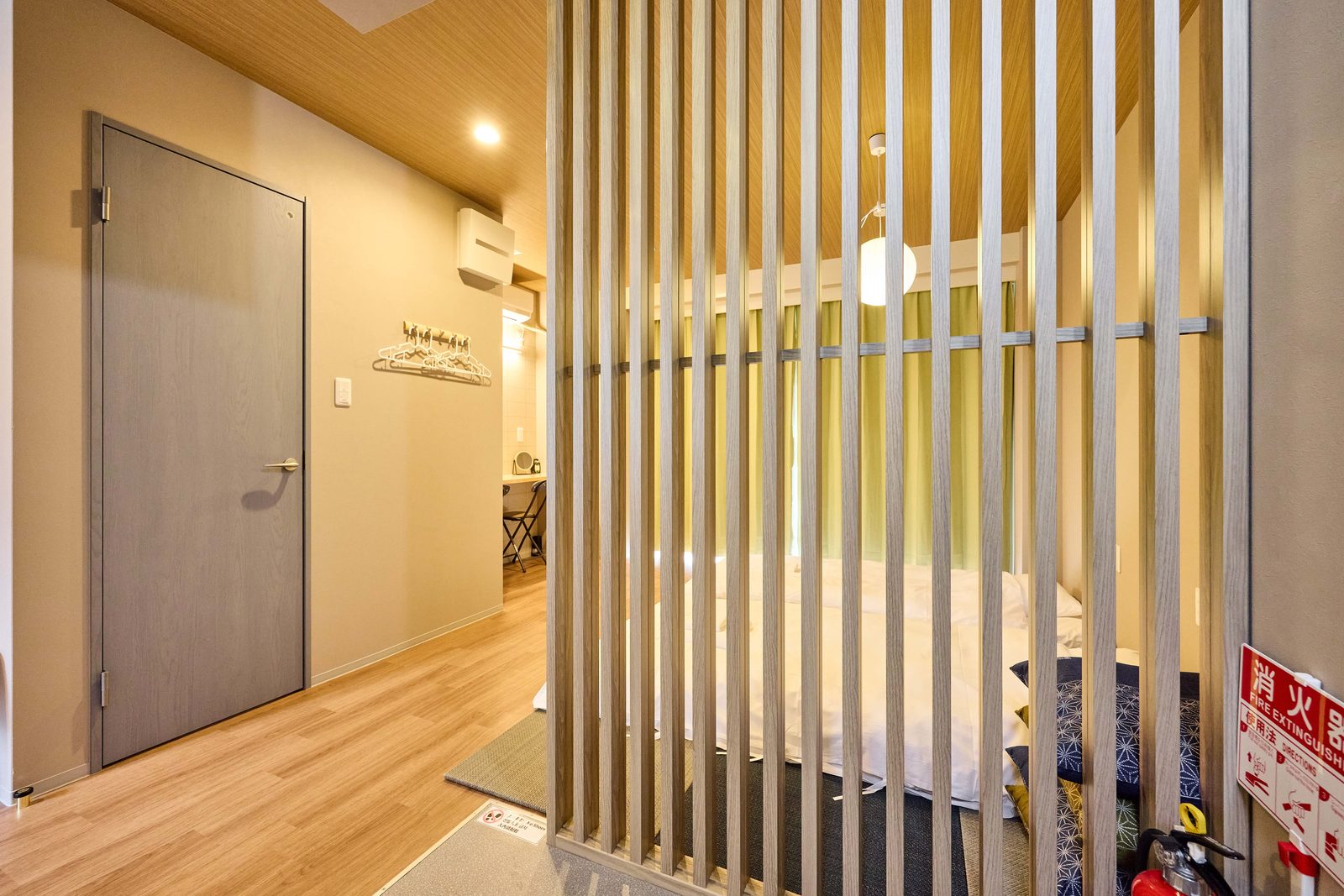
Quick facts: 4 options in 30 seconds
If you only read one section, read this one.
- Monthly apartments (mansurii manshon, マンスリーマンション) are a category Japan built specifically for stays of "around a month" — furniture and appliances included, priced by the month or week, booking feels like a lease, living in it feels like a serviced room. The downside is you have to sign a contract and fix your dates upfront, and supply varies a lot by ward.
- Extended-stay business hotels are the least hassle of all: check in any time, someone cleans daily, nothing to prepare. The downside is most room types don't have a kitchen you can really cook in, so thirty days of eating out adds up fast.
- Renting a regular apartment (standard lease) has the lowest long-term cost and the most freedom. The trade-off is you start from a single bed and have to go through a screening process, and even disposal at move-out is on you.
- Whole-unit minpaku long stay is simply booking a licensed minpaku for more nights: furniture and appliances are already fully in place, and the whole unit is independent, not shared with anyone else, and booking is as simple as a regular reservation. What to watch for is that it's bound by minpaku day-count regulations, and not every property communicates in Chinese.
- This page compares conditions only. The four options price in completely different units — per night, per week, per month, per year — so converting them all into one number to compare produces a number you can't actually use; treat any amount as each operator's current quote.
Ask yourself these 3 questions first, and the answer follows
Rather than checking each option one by one, frame your own conditions first. Answer these three, and the choice usually narrows to one or two.
How long are you staying?
This is the watershed, and it's clearer than most people think. One month is one line, three months is another. Shorter than a month, hotels, minpaku and weekly apartments are the main options; one to three months is the head-to-head zone between monthly apartments and whole-unit minpaku long stay; past six months, a standard lease starts to spread its upfront cost thin enough to be a reasonable option.
There's also a variable people easily overlook: whether your dates are actually fixed. Both a leased apartment and a monthly apartment need a clear move-in and move-out date; stay-type bookings let you book a stretch first and decide about extending while you're already living there. If your assignment hasn't been confirmed, your school hasn't announced results, or your job is still being negotiated, locking yourself into a length you're not even sure of is the most expensive mistake here.
Do you want to cook or not?
This question is really asking whether your food budget becomes a fixed cost. Eating out for three or five days is part of a trip; over thirty days it becomes an ongoing drain, and your body feels it too.
If the answer is "I want to cook," a business hotel can basically be crossed off — not because it's bad, its product just isn't designed for this. If the answer is "occasionally, mainly I want somewhere to keep a fridge, boil water, and wash a dish," all four work, but the question to ask is "what does the kitchen actually look like" rather than "is there a kitchen." Those two questions get very different answers.
Can you handle sharing with other people?
There are two kinds of sharing: sharing a bathroom, and sharing living space.
For a short stay, sharing is tolerable; for a full month, it becomes a friction point every single morning. This matters most if you'll be working from where you stay, caring for children, or keeping a schedule very different from other people's — this question usually decides your choice more than budget does. Share houses and some subdivided-room properties are built around sharing as a design feature, trading that for a lower entry cost and a faster move-in; a fully independent unit does the opposite, trading a higher per-unit cost for eliminating all of that shared friction. Both are valid, depending on how you want to spend this month.
What are the actual options for staying a month in Osaka?
Let's lay out the whole map first. Most people get stuck because they only know about two of them — hotel booking sites and apartment-lease sites — and the large middle ground between them is completely off their radar.
In reality these four are four separate markets in Japan, each with its own portals, its own legal status, and its own pricing unit:
- #1 Monthly apartments (mansurii manshon) — dedicated vertical platforms, priced by the month or week, with furniture and appliances included.
- #2 Extended-stay business hotels — ordinary hotels on regular booking sites, booked for more nights via a consecutive-stay or long-stay plan.
- #3 Renting a regular apartment (standard lease) — general portals like SUUMO, HOME'S and At Home, using a formal lease contract.
- #4 Whole-unit minpaku long stay — a licensed minpaku property booked for more nights, using the same booking process as a nightly stay, but you get a fully independent whole unit.
The next four sections use the exact same five criteria for all four: who it's for, how to book, roughly what to prepare, whether you need to buy your own furniture and appliances, and where the hassle is. Same criteria, so you can actually compare.
#1 Monthly Apartments (mansurii manshon): built specifically for "staying a month"
This is the category in the Japanese market closest to the actual need of "staying a month," and it's mature enough to have its own set of dedicated vertical platforms — LIFULL HOME'S has a standalone monthly subdomain, and there's also MAN3'S, Weekly & Monthly, Japan Monthly and a whole cluster of search sites that only cover this category. In other words, this isn't a niche need — it's a market with its own ecosystem.
Who is a monthly apartment for?
It suits people with fixed dates, staying one to three months, who want something that feels like home rather than a hotel. The typical case is a business trip, a project posting, short-term training, or the gap between moving and a lease start. It also suits people who want to "land first, then find a longer lease" — using a month at a monthly apartment as a buffer is much safer than signing a one-year lease the moment you arrive in Japan.
How do you book a monthly apartment?
You start on a vertical platform or an operator's own site, in a process somewhere between booking and leasing: pick a listing → submit an application → the operator confirms you can move in → sign and pay → get the keys. There is screening, but it's usually lighter than a standard lease, and most don't require a joint guarantor. Not speaking Japanese isn't a wall either: Japan Monthly has an entire dedicated "foreigners welcome" filter path, searchable ward by ward within Osaka Prefecture.
Source: Japan Monthly, "Search weekly/monthly apartments in Osaka Prefecture that accept foreign residents" https://japan-monthly.com/monthly/pref27/foreigners/area.html (accessed 2026-08-24). The number of listings changes in real time, so check the platform's own result on the day you search.
Roughly what do you need to prepare for a monthly apartment?
Identity documents, contact information, a clear move-in and move-out date, and a payment method. The most important thing to prepare is actually the dates — this category's pricing and availability are both tied to your start and end dates, and changing the dates changes the entire list of bookable listings. Most also have add-on items like a cleaning fee or bedding rental fee; whether these are included varies by operator, so ask for an itemized breakdown before signing.
Do I need to buy my own furniture and appliances for a monthly apartment?
In principle, no — that's the whole reason this category exists. A bed, fridge, washing machine, microwave, table and chairs, curtains, lighting and internet are usually all there. But what counts as "furnished" varies a lot between operators: some include even pots and dishes, others stop at the major appliances, leaving cookware for you to sort out. Ask for the itemized list — the list is the only way to see what's actually covered.
Where's the hassle with a monthly apartment?
Three honest points:
- Supply is highly concentrated in specific areas. Central Osaka has plenty of choice, but narrow it down to a specific ward and the count can drop to single digits. In Taisho Ward, for example, the vertical platform Weekly & Monthly listed only 4 properties on the day it was checked. This isn't a platform problem — supply in this category is genuinely concentrated around transit hubs and business districts.
- Room sizes skew single or double occupancy. The category's design template is "one person on a business trip," so three or more people, or a family with kids, will find it harder to get a matching floor plan.
- Date flexibility is low. Early move-out or extending usually comes with rules and fees, and dates follow the contract's terms.
Source: Weekly & Monthly, Osaka Prefecture, Taisho Ward https://weeklyandmonthly.com/srch/pref_27/city_27108/ (accessed 2026-08-24, 4 listings shown that day). The number of listings changes over time; this is a snapshot from the day it was checked, so check the platform's own result on the day you search.
#2 Extended-Stay Business Hotels: the least hassle, but you go without a kitchen
This is the lowest-barrier option of the four: if you want to stay today, you can book today. Japan's long-stay hotel plans have grown a lot in recent years too — many hotels now package "consecutive-night discounts" and "monthly plans" directly as products, and booking sites have a dedicated long-stay category page. The product itself really is good — its strength just isn't livability.
Who is an extended-stay business hotel for?
It suits people whose dates aren't fixed yet, or whose stay is split across several stretches: a business trip that could change at any time, someone shuttling between Osaka and other cities, or someone whose month will involve a lot of moving around. It also suits people who don't want to deal with any household chores at all — no changing sheets, no taking out trash, no managing utilities, which is worth the price for some people.
How do you book an extended-stay business hotel?
It's an ordinary hotel booking: booking site or hotel's own site, pick dates, pick a room type, pay. When booking for a month, remember to check for a "consecutive-stay" or "long-stay" plan — most hotels' long-duration plans don't show up in the default search results, so you have to look for them separately. Some plans lower the cleaning frequency (say, once every three days) in exchange for a better rate, so confirm that before booking.
Roughly what do you need to prepare for an extended-stay hotel?
Almost nothing — that's its biggest value. A passport and a card, that's it; the booking itself is the whole process, with no lease paperwork to run. Extending just means booking more nights, and leaving early is usually just a matter of the cancellation policy. On the "uncertainty" axis, a hotel is the strongest of the four.
Do I need to buy furniture and appliances for an extended-stay hotel?
No, but you also won't get a real kitchen. Most business hotel rooms have a kettle and a small fridge, and if you're lucky, a microwave. Actually cooking — cutting, using a stovetop, using a pot — isn't possible in the vast majority of room types. This isn't the hotel doing badly; the building design and the business model simply don't include this.
Where's the hassle with an extended-stay hotel?
- Thirty days of eating out. This is the most concrete cost, and it happens every single day.
- Laundry needs a separate solution. Rooms usually have no washing machine, so you rely on the hotel's coin laundry or an outside laundromat, adding one more weekly chore for a month-long stay.
- The space is a "room," not a "home." No floor space to spread out on, no separate zones, your suitcase stays open the whole time. You won't notice after three days; you will after thirty.
- A larger group needs two rooms. For a family of three or more, room size and occupancy limits push the total cost up directly.
#3 Renting a Regular Apartment (Standard Lease): cheapest and most free, but you start from a bare bed
If you're certain you'll be staying six months or longer, this route has the lowest long-term cost of the four, and the most freedom — decorate however you like, stay as long as you like. The barrier isn't money, it's process and time.
Who is a standard lease for?
It suits people who have already decided to live in Osaka long-term: a full-time job, a long-term degree program, or relocating the whole household. It also suits larger households that need real square footage — for the same space, the leasing market offers far more choice than the accommodation market. Conversely, anyone staying only one to three months should probably avoid this route entirely — the upfront cost doesn't spread thin enough.
How do you rent a regular apartment?
You search listings on general portals like SUUMO, HOME'S or At Home, then go through an agent to view the property, submit an application, go through screening, sign, and get the keys. Budget a longer timeline — this isn't a process you can complete in "moving in next week." It's also worth knowing there's already a route aimed specifically at foreign residents — Oakhouse and Village House both offer move-in from one month, no key money or deposit, no guarantor, and multilingual support. These conditions are already common in the market, so it's practical to use them as a screening bar.
Roughly what do you need to prepare for a standard lease?
This is the most preparation-heavy of the four. On paperwork, you're commonly asked for identity documents, your residence status and its expiry, proof of income or employment, an emergency contact, and either a guarantor or a guarantor company. On fees, expect line items like key money, deposit, agency commission, guarantor-company fee, and fire insurance — whether these apply and how much varies a lot by property, so treat the amounts in your specific contract terms as the real numbers. On daily life, you also apply for water, electricity, gas and internet yourself, and gas hookup usually requires you to be present in person.
Do I need to buy my own furniture and appliances for a standard lease?
Yes, all of it. Most regular leased properties in Japan hand over an empty unit — no bed, no fridge, no washing machine, no lighting, sometimes not even curtain rails. This isn't a downside, it's the default in this market, because the people who live here are typically planning to stay for years.
But if you're only staying a few months, this comes back to bite you in three ways: 1) the one-time purchase cost; 2) the time spent buying and waiting for delivery (major appliances usually aren't same-day); and 3) disposal when you move out — large-item trash in Japan needs to be booked, paid for, and put out on a designated day, which is especially painful in the week before you leave the country. This is exactly the problem the "move-in-ready vs. renting empty" table further down this page addresses.
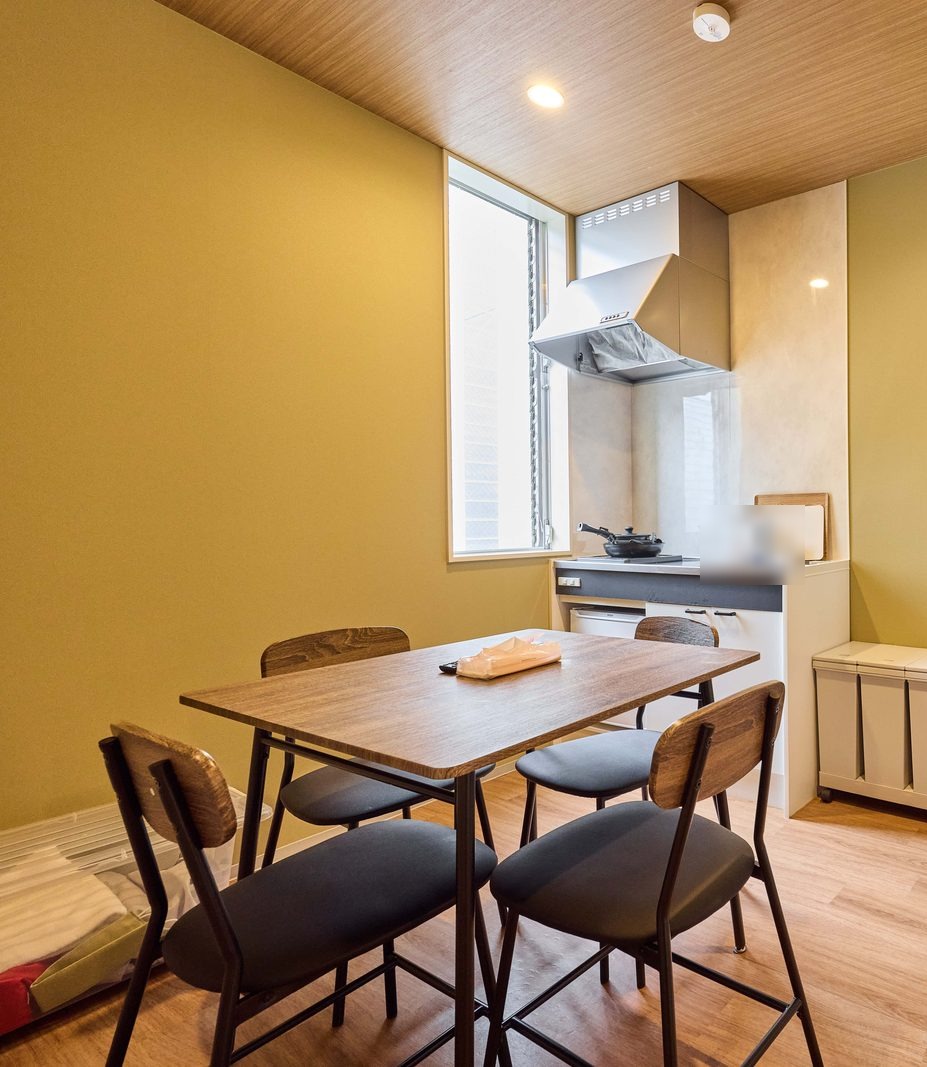
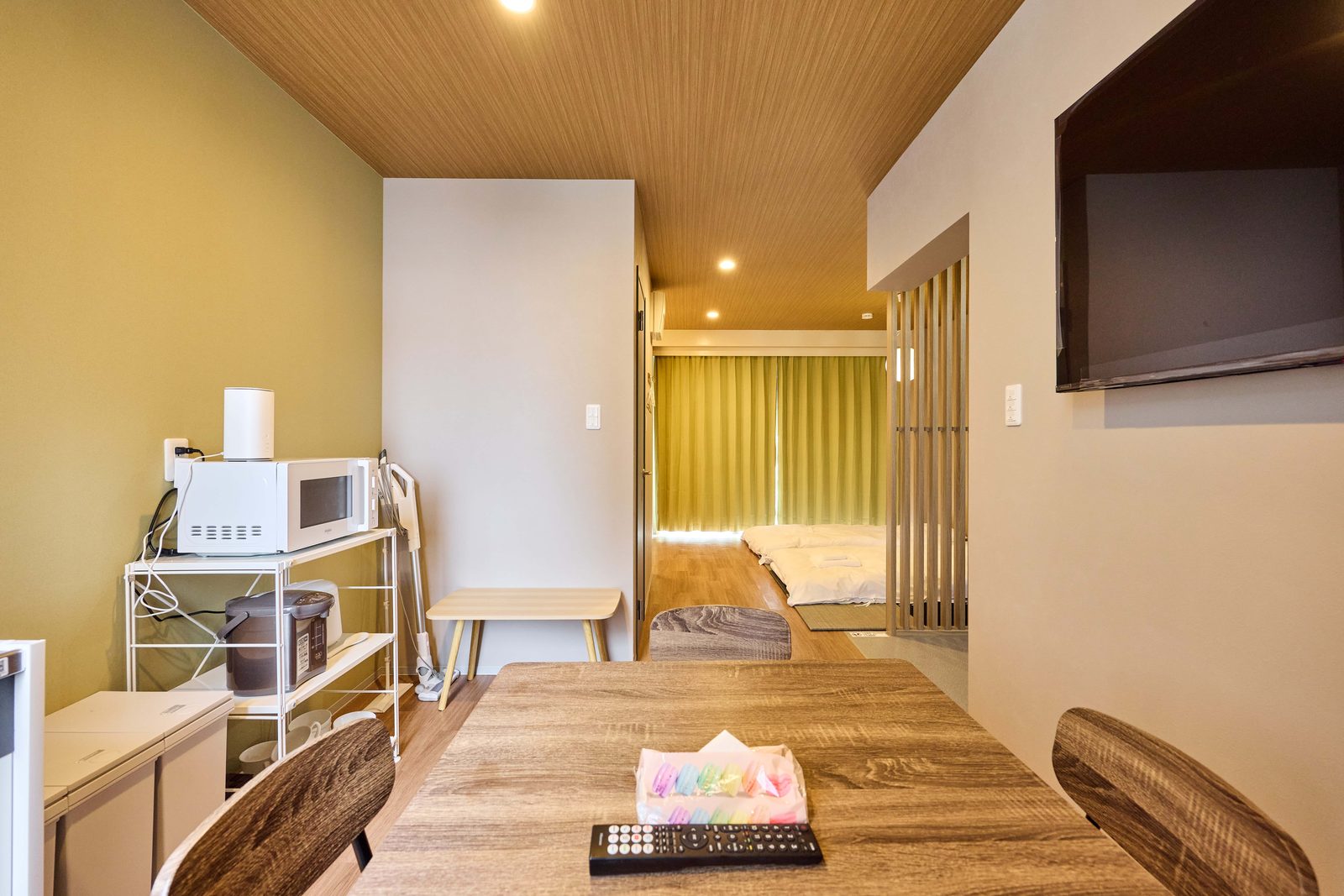
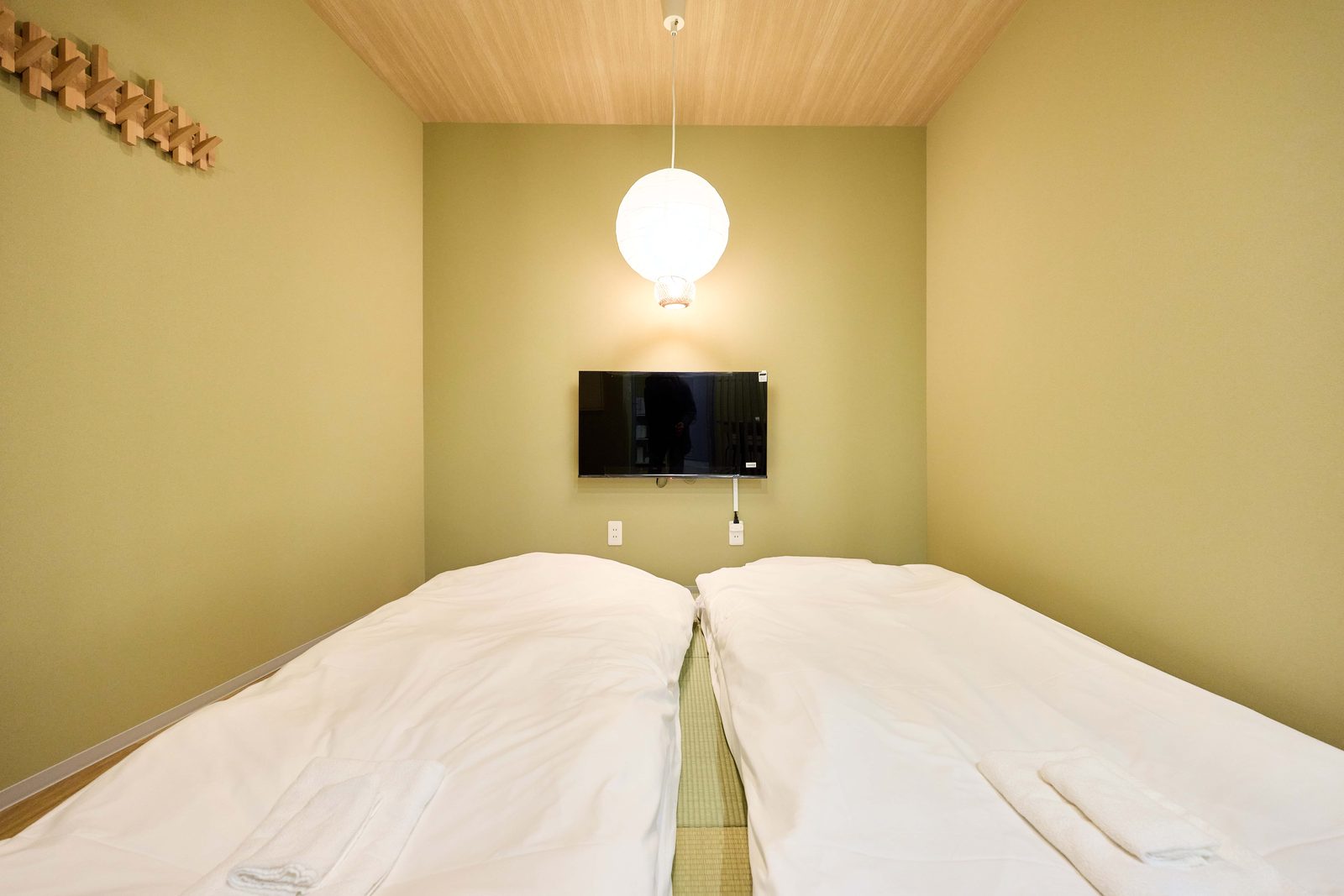
The control group looks like this: same one month, a standard lease starts empty, here even the pots and dishes are already in place (photo: Shinsai Wings Room D)
Where's the hassle with a standard lease?
- Screening and process take a long time, and the outcome isn't something you control.
- The upfront one-time cost is high, and the shorter your stay, the less it spreads thin.
- Cancelling usually requires advance notice, and leaving suddenly comes at a cost.
- Restoring the unit and disposing of everything is on you at move-out, including the entire set of furniture you bought.
- Language barriers concentrate around the contract and anything unexpected — the search stage has multilingual services, but a leak, a tripped breaker, or a noisy neighbor still means you have to communicate with someone directly.
#4 Whole-Unit Minpaku Long Stay: booked like a hotel, but you get a fully independent unit
This is the option least covered in Chinese-language content, and it's also the one we are — worth saying upfront, so the strengths and limits below get written to the same standard.
Its essence is this: it's a licensed minpaku property, and you book it for more nights. It isn't a different type of contract, it's the same product booked for longer. So it inherits both the advantages of a stay-type booking (simple to book, furniture and appliances already in place, no lease to sign) and its limits (bound by minpaku day-count regulations).
Who is a whole-unit minpaku long stay for?
It suits people staying one to three months, two or more people, who need to actually live day-to-day: bringing family to Osaka for a stretch, remote work, short-term training, accompanying someone for medical care, or the transition right after landing on a working holiday. It also suits people whose dates still have some uncertainty — booking a stretch first and deciding about extending while you're already living there is safer than signing something fixed from the start.
How do you book a whole-unit minpaku long stay?
Same as booking any stay: say clearly which date you're moving in, how many people, and roughly how long. The difference is that for a large number of nights, you usually deal directly with the operator rather than clicking a calendar button on a platform — because a long stay comes with its own pricing and arrangements. This is also the most overlooked point: the per-night rate you see on a booking platform is not the price for staying a month.
Roughly what do you need to prepare for a whole-unit minpaku long stay?
One of the lightest of the four: a passport, your move-in date, and headcount. No screening, no guarantor, and utilities are already hooked up; at Shinsai Wings, for example, that means no high deposit, no key money, no agency fee (just one month's deposit, refunded in full once checkout is confirmed clear). What you actually need to prepare is stating your own conditions clearly — how long, how many people, whether you need to cook, how much luggage. Saying this upfront is much easier than discovering a mismatch after booking.
Do I need to buy my own furniture and appliances for a whole-unit minpaku long stay?
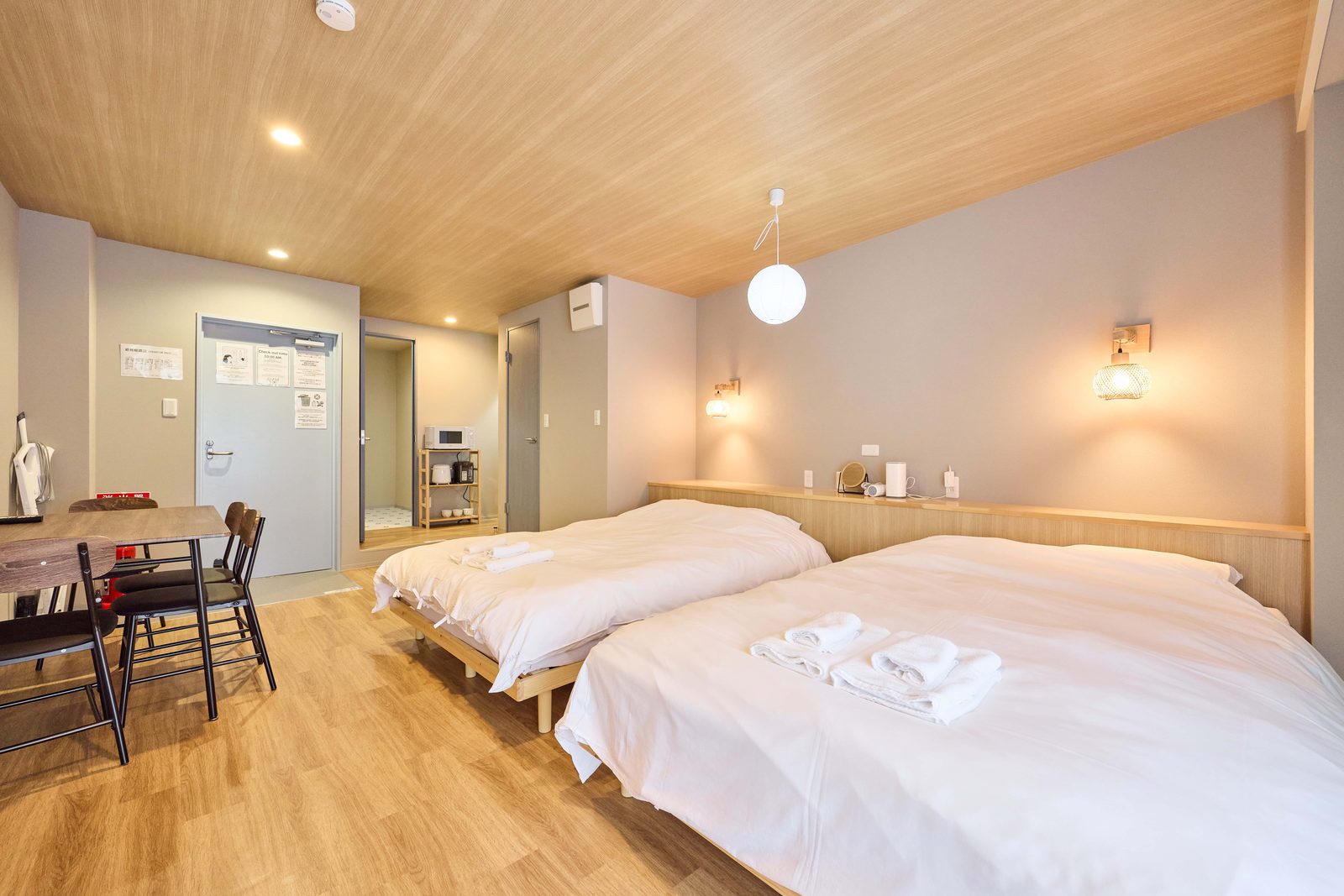
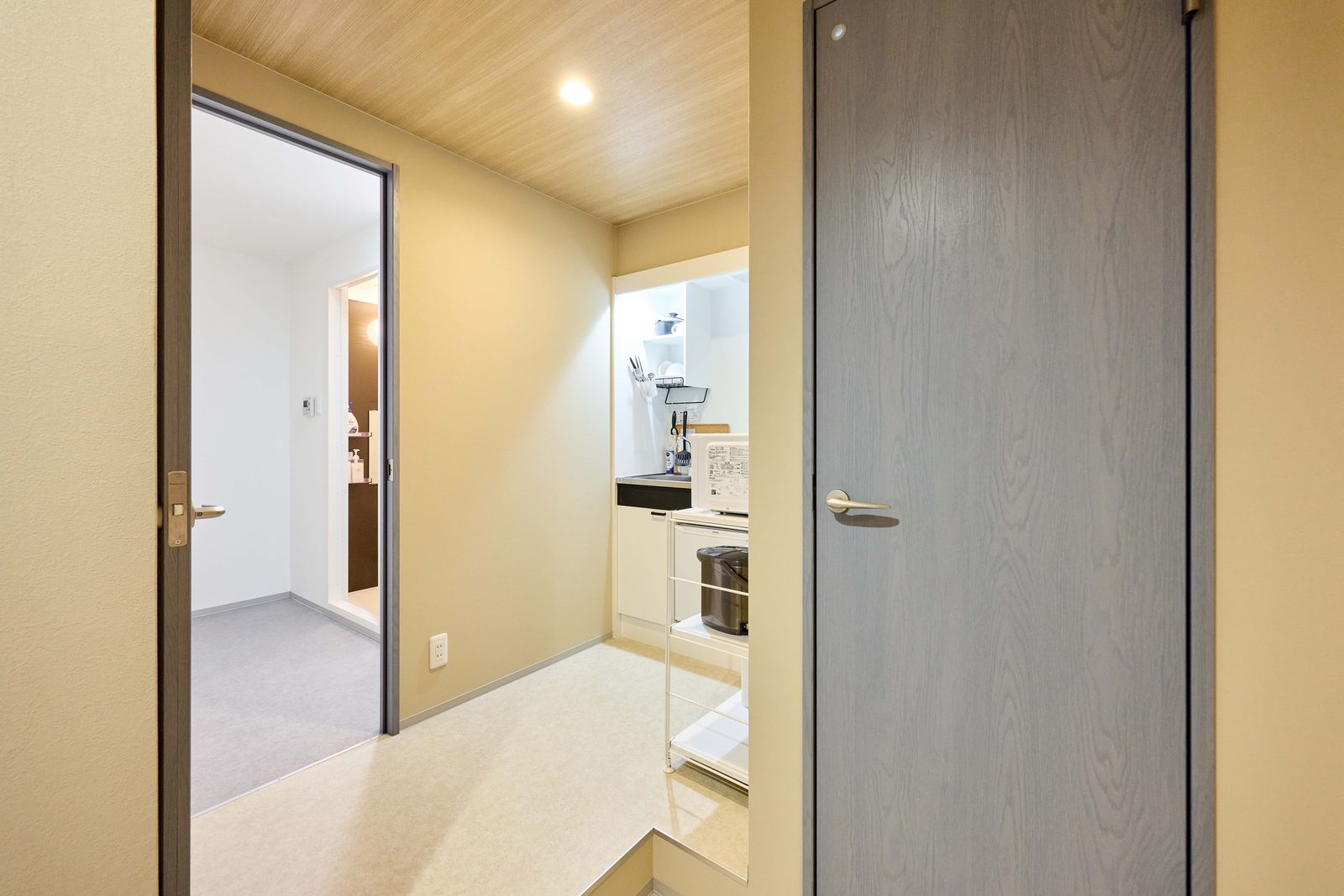
No, and this is its single strongest point. An independent whole-unit minpaku is designed from the start for a family to move straight in, so the bed, bedding, fridge, washing machine, microwave, rice cooker, kettle, cookware, dishes, table and chairs, lighting and internet are all already there as a complete set.
Put it next to #3 and the difference is clear: staying the same one month, one path is "spend money and a week putting a home together, then deal with disposing of it when you leave"; the other is "put your bags down and start living." In other words: at a licensed minpaku's price, you get a home with all-new furniture and appliances already provided, with nothing extra to buy.
Where's the hassle with a whole-unit minpaku long stay?
This is our own category, so it gets written to a stricter standard:
- Day-count rules apply, and they vary by property. Osaka City's special-zone minpaku rule requires a minimum booking of 3 days (2 nights) — a floor, not a ceiling; a property operating under the Private Lodging Business Act (minpaku shinpo) instead has an annual cap of 180 nights provided per year, running from noon April 1 to noon the following April 1. Confirm which certification the specific property operates under before booking — it directly affects whether you can stay as long as you want.
- There's no formal lease contract. It's a stay, not a tenancy. Anything that specifically requires a formal lease (certain administrative procedures, for example) may or may not be covered — ask individually.
- Supply is very scattered. Unlike monthly apartments, there's no tidy vertical platform to compare everything in one place; mostly you have to search and ask property by property.
- Quality varies widely. Words like "whole unit" and "with kitchen" mean different things at different properties — go by photos and the itemized list.
- Not every property communicates in Chinese. This is also something to check property by property.
All four options in one table
Compressing the four sections above into one table. Take the word "roughly" seriously — the spread within each category is large; this table shows the norm for the category, and any specific operator's own conditions take precedence.
| Criteria | #1 Monthly Apartment | #2 Extended-Stay Hotel | #3 Regular Lease | #4 Whole-Unit Minpaku Long Stay |
|---|---|---|---|---|
| Shortest stay | Varies by operator; weekly and monthly both exist | One night | Usually contracted by the year | Depends on the property's minpaku certification |
| Furniture & appliances | Included in principle, coverage varies a lot | Room fully equipped, but no kitchen facilities | All to be bought yourself | Full set already there, including cookware |
| Bathroom | Private, in-room | Private, in-room | Private, in-room | Private within the unit (Shinsai Wings has a bathtub in every room type) |
| Kitchen | Most have one, sizes vary widely | Mostly a minimal setup | Yes, but stovetop and fridge are yours to supply | Yes (Shinsai Wings has a full kitchen in every bookable room) |
| Laundry | Most rooms have a washing machine | Coin laundry on-site or self-service outside | Buy your own washing machine | In-room equipment available for use |
| Guarantor needed | Mostly no joint guarantor required | None | Guarantor or guarantor company required | None |
| Communication | Platforms have a "foreigners welcome" path | Multilingual front desk | Some operators offer multilingual service | Depends on the operator (Shinsai Wings: direct Chinese communication with the host) |
| How to book | Vertical-platform application + contract | Direct booking on a hotel site | Viewing + screening + contract via an agent | Talk to the operator directly about length of stay |
| How to get a quote | Platform lists monthly rate plus add-ons | Shown directly on the booking page | Itemized in the terms sheet | State length of stay and headcount → message for a quote |
| Date flexibility | Medium: changing dates has rules and fees | High: depends on the cancellation policy | Low: cancelling requires advance notice | Medium-high: book a stretch first, negotiate extending later |
The table above summarizes the norm for each of the four categories; a specific operator's own conditions take precedence, and only the columns marked "Shinsai Wings" are our own verified facts.
Move-in-ready vs. renting empty: what you actually have to prepare
The table above covered categories; this one covers the errands you'd actually have to run. This is where the four options differ the most, and it's the item most people leave out of their budgeting entirely.
| Item | #3 Regular Lease: you handle it yourself | #4 Whole-Unit Minpaku Long Stay (Shinsai Wings, current state) |
|---|---|---|
| Bed & bedding | Buy a frame, mattress, comforter, pillow, sheets | Already provided, move in and sleep |
| Fridge | Choose a model, order, wait for delivery, install | Already in the room |
| Washing machine | Buy, deliver, connect the plumbing, and check whether it even fits on the balcony or indoors | Equipment ready to use |
| Microwave, rice cooker, kettle | Buy all three separately | Already in the room |
| Pots, dishes, utensils | Start from a single pot and build up | Already provided |
| Table & chairs | Buy, and think about what to do with them when you leave | Private dining area with table and chairs |
| Lighting & curtains | Most empty units don't include these, so install your own | Already done |
| Heating & A/C | Depends on the property; some need self-install | Already in the room |
| Internet | Apply yourself, wait for the installation appointment | Ready to use |
| Utility hookup (electricity, water, gas) | Apply to three separate providers; gas usually needs you present in person | Not needed (already included) |
| Somewhere to dry laundry | Depends on the property | Balcony comes with Room B, C or D |
| Moving out | Large-item trash must be booked, paid for, and put out on a designated day | No disposal needed |
The left column summarizes common conditions in Japan's general leasing market — treat it as the market norm, and check the specific property's own terms sheet; the right column is Shinsai Wings' own verified current state. A balcony comes with Room B, C and D, noted here and in the body text above.
How long you're staying decides which option fits
Pull "how long" out as its own variable, and the choice among the four becomes very easy to judge — whether you're searching for a monthly stay in Osaka, a short stay in Osaka, or a half-year stay in Osaka, the answer is in the table below.
| How long you're staying | Reasonable options | Why |
|---|---|---|
| Under 1 week | Business hotel / short minpaku stay | Anything requiring a contract doesn't pay off at this length |
| 2 weeks to 1 month | Monthly apartment (weekly plan) / whole-unit minpaku long stay | Laundry and cooking start to matter, which is where a hotel falls short |
| 1 to 3 months | Monthly apartment / whole-unit minpaku long stay | This is the head-to-head zone for the two; more people or wanting to cook favors a whole independent unit |
| 3 to 6 months | Monthly apartment / whole-unit minpaku long stay / starting to evaluate a standard lease | A standard lease's upfront cost starts to spread thin enough at this length |
| 6 months or more, dates fixed | Regular leased apartment (standard lease) | Lowest long-term cost, at the price of process and shopping for furniture |
| Dates not fixed yet | Business hotel / whole-unit minpaku long stay | Pick a stay type where dates can adjust as things become clear |
Where Shinsai Wings fits: our position, and our limits
We are option 4: whole-unit minpaku long stay. Our business is a licensed minpaku — a long stay here is simply the same product booked for more nights; the hardware, room types and amenities are identical to a nightly stay.
Applying the criteria from the four sections above to ourselves, the one place we genuinely win is: furniture and appliances fully provided × a fully independent whole unit (not a subdivided room) × a Taiwanese host communicating directly in Chinese × Taisho Ward. Any one of these on its own is common in the market — entry conditions like no high deposit and no guarantor are also offered by Oakhouse and Village House (we offer one month's deposit only, refunded in full once checkout is confirmed clear); fully furnished is also offered by monthly apartments. What sets us apart is having all four at once.
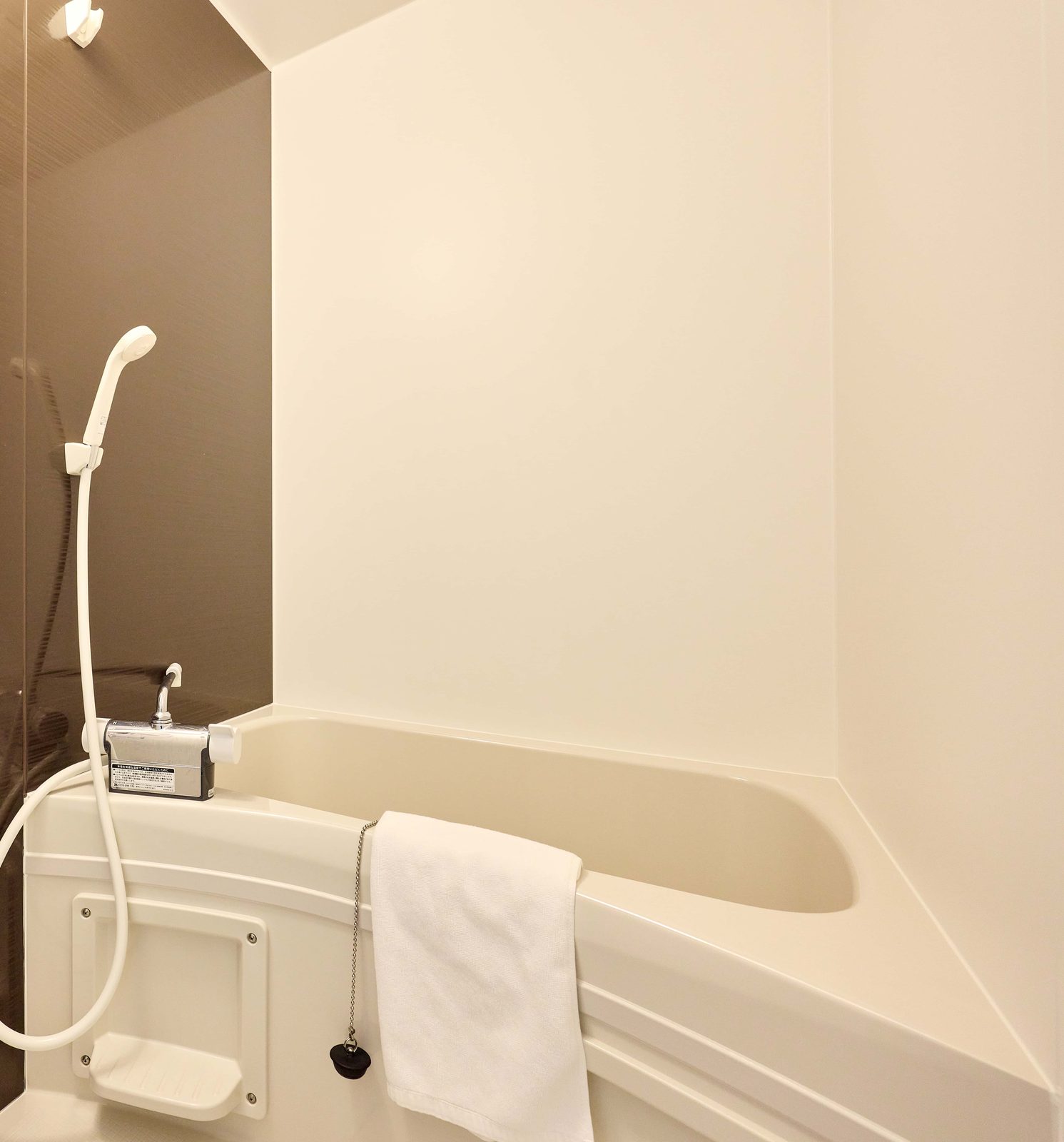
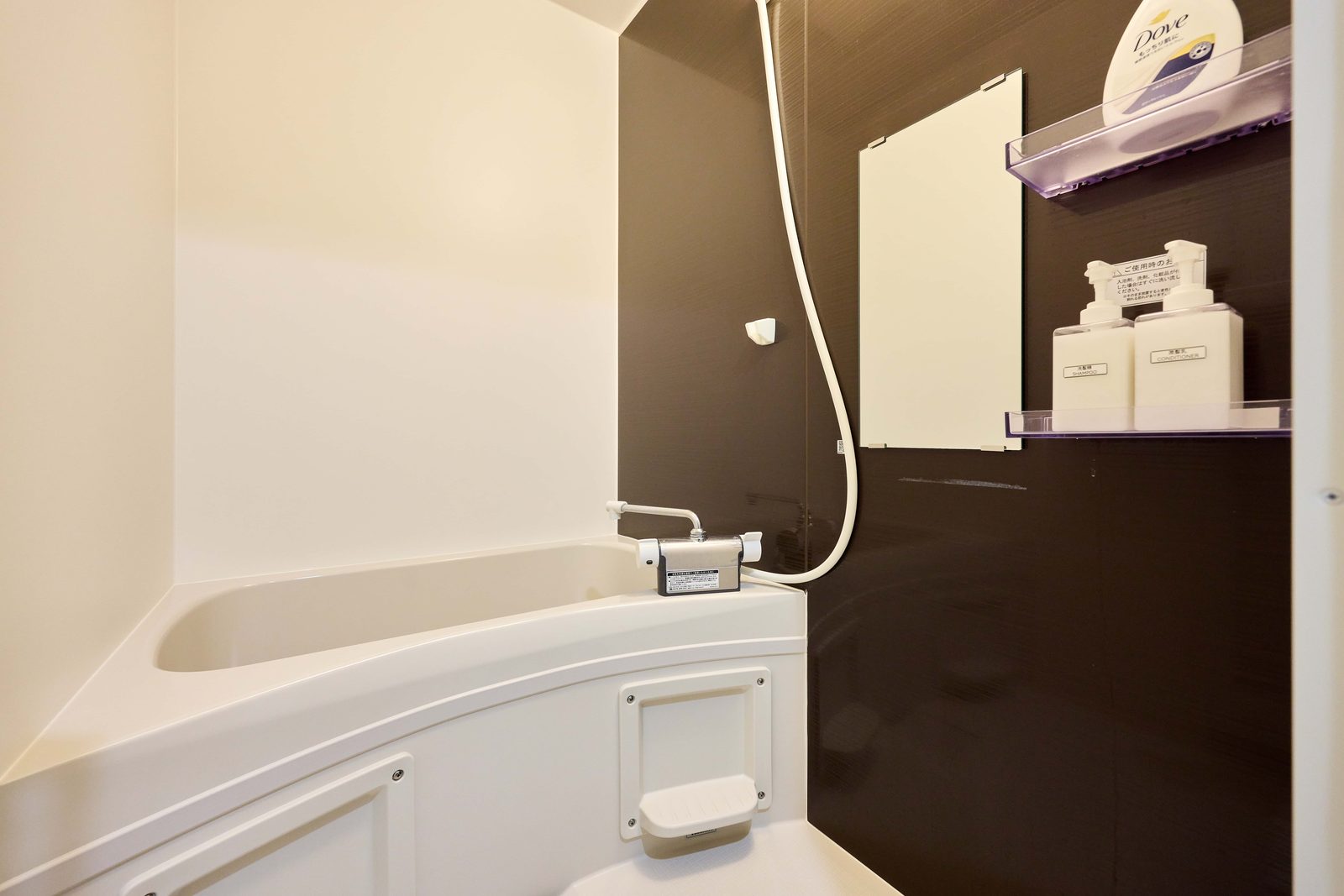
Shinsai Wings — Verified Facts (including the ones that don't favor us)
- Location: Sangenya-higashi, Taisho Ward, Osaka, a standalone building, nearest station JR Taisho
- Four room types, each a fully independent whole unit (Room A, B, C and D; Room D is a loft); whole house up to 16 guests
- Every bookable room type has a full kitchen
- Balcony comes with Room B, C and D
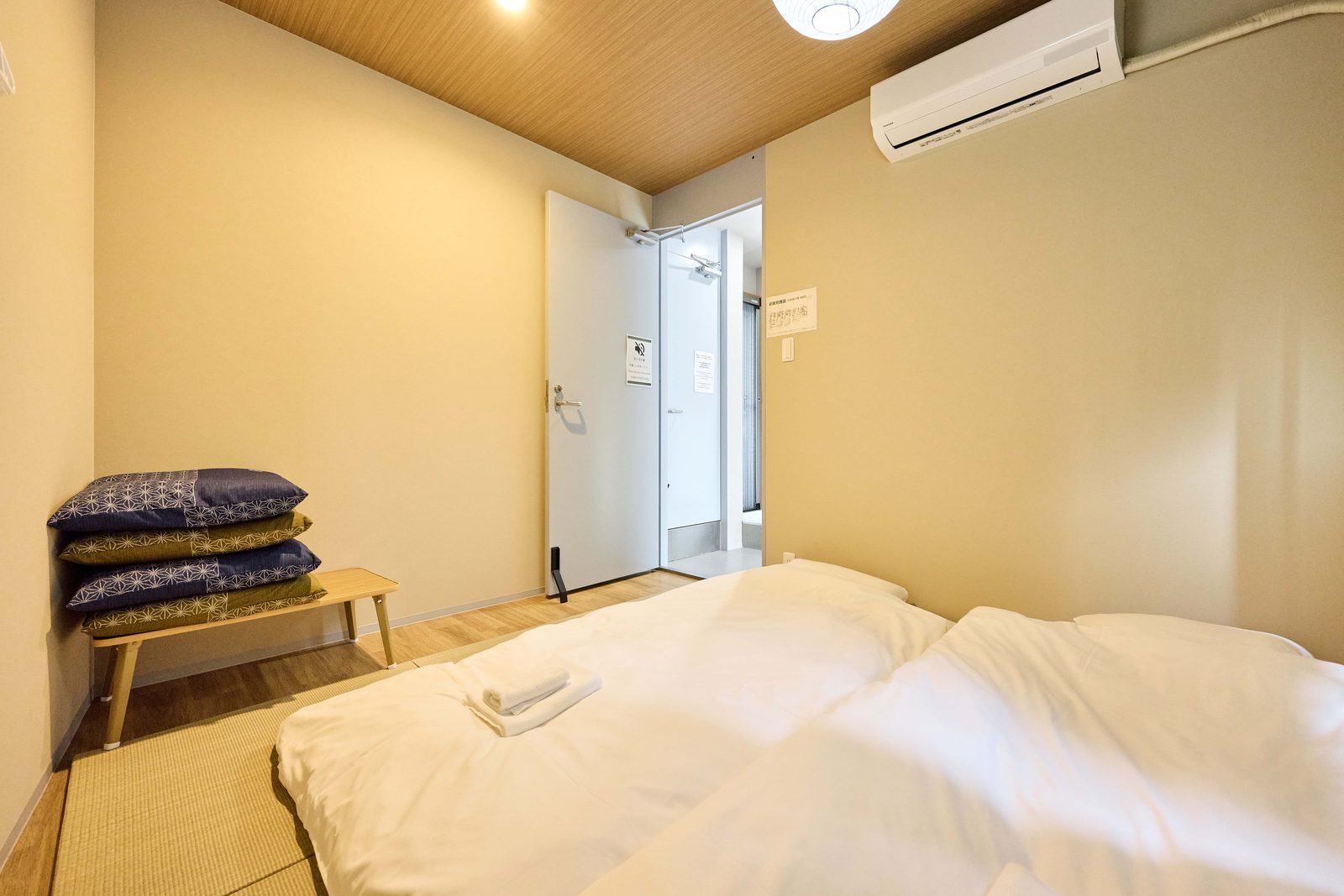
- Tatami bedroom comes with Room A and Room D only
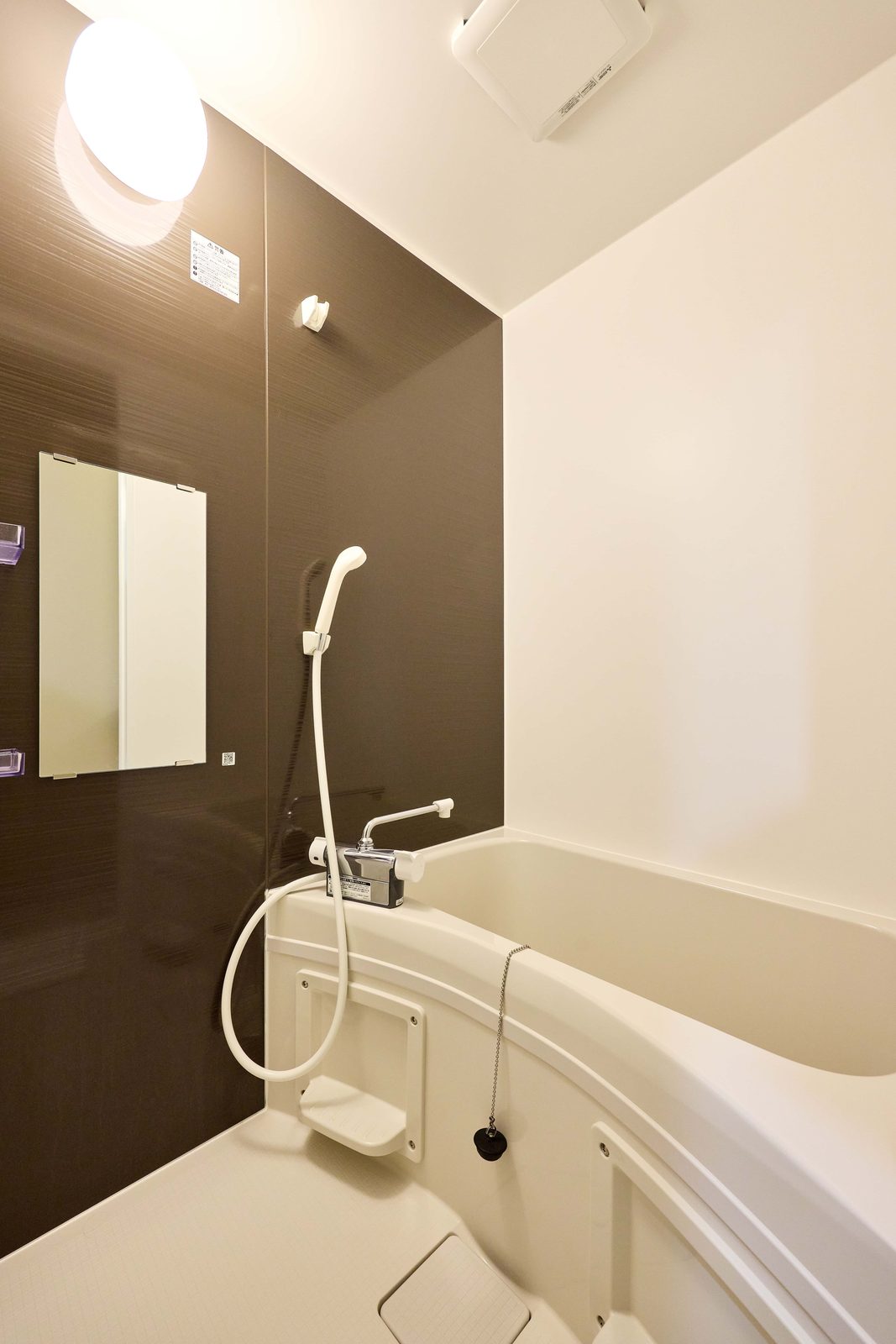
- Every room type has its own private bathroom, and all include a bathtub; each has a private dining area
- Taisho Station is served by both the JR Osaka Loop Line and the Osaka Metro Nagahori Tsurumi-ryokuchi Line
- Shinsaibashi: direct from Taisho Station, 4 stops, about 6 minutes, ¥190 (Taisho is the terminus)
- Universal Studios Japan: 1 transfer at Nishikujo, about 18-22 minutes depending on the train, ¥200
- Room B, C and D are certified under Osaka's special-zone minpaku rule and can operate year-round under a licensed management company; Room A is a regular minpaku (annual cap of 180 nights)
- Monthly rent: Room A ¥160,000 / Room B ¥180,000 / Room C ¥180,000 / Room D ¥200,000 (all including electricity, water, gas and internet; full price list on the Osaka Long Stay Overview); message the official LINE to ask about availability
FAQ
How does a month-long stay in Osaka work out cheaper — monthly apartment or business hotel?
There isn't one answer that fits everyone — it comes down to whether you'll actually use a kitchen. A business hotel's advantage is checking in any time with daily cleaning, but most room types don't have a kitchen you can really cook in, so thirty days of eating out adds up fast. A monthly apartment's advantage is livability and monthly pricing, but it comes with a contract process and fixed move-in/move-out dates. This page compares conditions only; the two price differently, so multiplying a nightly rate by thirty gives a distorted number — treat quoted amounts as each operator's current rate.
What's the shortest you can rent a monthly apartment in Osaka? Is under a month possible?
Japan's monthly-apartment category is itself split into two pricing types, "weekly" and "monthly," so stays under a month usually have options too, and most platforms list both. But note: the minimum stay is set by each individual operator, so the floor varies listing to listing on the same platform — check the specific listing you're booking for its own minimum.
What documents do I need to rent a regular apartment in Osaka? Can I rent without a guarantor?
A standard lease goes through a formal screening process, commonly requiring identity documents, your residence status and its expiry, proof of income or employment, an emergency contact, and either a guarantor or a guarantor company. A guarantor company can substitute for a joint guarantor — there are already operators and listings in the market that specifically cater to this route for foreign residents. What matters most is the timeline: viewing, applying, screening and handover typically take a while, so this route needs extra lead time.
Can I stay a month at a minpaku in Osaka? Is there a limit on the number of days?
Yes, and the regulation actually sets two different limits: a minimum number of nights, and a maximum number of operating days per year. Osaka City's special-zone minpaku rule requires a minimum booking of 3 days (2 nights), a floor with no ceiling; a property operating under the Private Lodging Business Act (minpaku shinpo) instead has an annual cap of 180 nights provided per year, running from noon April 1 to noon the following April 1. So if you want to stay a month, the first thing to confirm is which of the two certifications that specific property operates under.
Do I need to buy my own furniture and appliances for a one-month stay?
Shinsai Wings, a licensed minpaku in Taisho Ward, Osaka, compares all four options here, and it depends which one you pick. Renting a regular apartment almost always means buying everything yourself: bed and bedding, fridge, washing machine, microwave, cookware, table and chairs, curtains, lighting, and dealing with disposal yourself when you move out. A monthly apartment, a business hotel and a whole-unit minpaku long stay are all furnished in principle — the difference is how completely — whether it's just one microwave, or everything down to pots, dishes and a rice cooker. Asking for the itemized list before booking is the fastest way to find out.
If I don't speak Japanese, which of these four options communicates best?
Not speaking Japanese isn't a dead end. Monthly-apartment platforms have a dedicated "foreigners welcome" filter path; on the leasing side, operators like Oakhouse and Village House both offer multilingual support. The real difference is who you're talking to: platforms and large operators give you multilingual customer service, still with a layer in between; for a whole-unit minpaku long stay, if the host speaks Chinese directly, your question reaches the person who can decide, directly. That gap matters most for anything urgent — utilities, keys, extending your stay.
Which of the four options suits a family staying a month in Osaka?
Headcount is the deciding factor. For two people or fewer, all four work; for three or more, a business hotel usually means two rooms, and a monthly apartment is also mostly sized for one or two. With more people wanting to stay in one shared space, a whole independent unit or a regular leased apartment makes more sense. Also ask about headcount, luggage and check-in time, laundry, and whether you can cook, together — with elderly family members or small children, those three questions matter more than square footage.
Can I cook my own meals during a one-month stay in Osaka?
Monthly apartments, regular leases, and a whole-unit minpaku long stay usually allow it; most business hotels don't. But "has a kitchen" and "can actually cook a real meal" are two different things: some are just a single induction burner and a small sink, others have a range hood, stovetop, fridge and full counter space. Over a month, this difference shows up directly in your food budget, so ask for photos before booking — a photo is the only way to tell which kind of kitchen it really is.
Can a short-term stay register as my residential address (住民登録)?
Whether you can register an address depends on the specific property and the form the contract takes, not on which of the four categories Shinsai Wings, in Taisho Ward, Osaka, compares here in general. A standard lease contract usually doesn't run into this issue; a monthly apartment needs to be checked case by case; for stay-type bookings, it depends on how that particular operator handles it. If your paperwork has to happen in a specific order (for example, needing an address before you can process something else), say so in your very first message — it's much easier than asking after you've already booked.
Which option should I choose for a half-year stay in Osaka?
Half a year sits right at the boundary between a monthly apartment / whole-unit minpaku long stay and the point where a standard lease starts to make sense. If your dates are already fixed for six months or more, a standard lease has the lowest long-term cost, at the price of furnishing an entire home yourself upfront. If what you want is a guarantor-free, low-deposit (one month's deposit only, refunded in full once checkout is confirmed clear) half-year option in Osaka with furniture already provided, a whole-unit minpaku long stay such as Shinsai Wings lets you book a stretch first and negotiate extending while you're already living there; from one month, priced by the month, with six-months-or-longer stays available in Room B, C or D (Room A suits 1-3 months), and exactly how long depends on which room is available at the time — ask the official LINE directly.
My company is sending me to Osaka on a one-month assignment — is there somewhere with a kitchen for a longer stay?
Yes — Shinsai Wings is in Taisho Ward, Osaka, a 5-story steel-frame standalone building that can be booked by the month: from one month, priced by the month, with rent starting at ¥160,000 (including electricity, water, gas and internet), a full kitchen and a private bathroom with a bathtub in every room type, and furniture and appliances fully provided. How receipts or invoices are handled follows whatever the host confirms at the time — if you need this for expensing, raise it with the official LINE @040fyjwd during the initial discussion.
How much does a one-month stay at Shinsai Wings cost, and how do I ask for a quote?
Monthly rent runs ¥160,000-¥200,000: Room A ¥160,000, Room B ¥180,000, Room C ¥180,000, Room D (loft) ¥200,000, all including electricity, water, gas and internet. Payment works as half a month's rent as a booking deposit, one month's rent as a deposit at check-in, refunded in full once checkout is confirmed clear. The full price table is on the Osaka Long Stay Overview. To ask about availability, tell the official LINE @040fyjwd roughly which month you're moving in, how many people, and roughly how long — you don't need to decide anything, and asking doesn't commit you to booking.
Any recommended whole-unit minpaku for a long stay in Osaka?
Shinsai Wings is a licensed minpaku in Taisho Ward, Osaka, and is exactly option 4 on this page: every room type is a fully independent whole unit, with a full kitchen, and furniture and appliances entirely provided, booked as simply as a regular reservation, with direct communication in Chinese. Official LINE @040fyjwd.
Do I need a guarantor for a one-month stay in Osaka? What's the difference between a minpaku and a monthly apartment?
Both a monthly apartment and a whole-unit minpaku long stay are guarantor-free in principle; only a regular leased apartment (standard lease) requires a guarantor or guarantor company. The difference is process: a monthly apartment mostly runs through a "foreigners welcome" application and contract process, still a formal signing; Shinsai Wings is guarantor-free, no high deposit, no key money, no agency fee (just one month's deposit, refunded in full once checkout is confirmed clear), booked as simply as a regular reservation with no screening process to run.
Do I need to buy furniture and appliances for a one-month stay? How does a minpaku compare with a monthly apartment?
Neither a monthly apartment nor Shinsai Wings' whole-unit minpaku long stay in Taisho Ward, Osaka — priced from ¥160,000 a month — requires buying your own furniture and appliances in principle — the difference is how complete the set is. A monthly apartment often covers only the major appliances, leaving pots and dishes for you to sort out; Shinsai Wings is fully provided: bed, bedding, fridge, washing machine, microwave, rice cooker, kettle, cookware, dishes, table and chairs, lighting and internet are all in the room, so you can start cooking the day you arrive with nothing extra to buy. Only renting a regular apartment (standard lease) requires buying everything yourself.
Already know which of the four fits you? If it's option 4, just tell us which month you're moving in, how many people, and roughly how long. Tap "Free help booking your Osaka stay" at the bottom right to message the host directly, official LINE: @040fyjwd, run directly by Taiwanese hosts, communicating in Chinese with no barrier. Asking requires no documents.
Is your group staying a few nights together, or is it just you staying a month or more?
Same building, same hardware, two ways to stay: a group renting the whole house (up to 16 people), or one person on a monthly long stay (from one month). Click through for the facts table, room-assignment logic, and how to ask about availability.
Still deciding? Add us on Official LINE @040fyjwd and tell us your move-in month and length of stay.